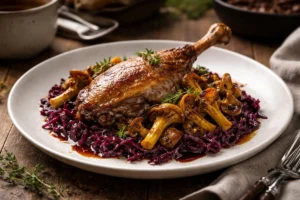
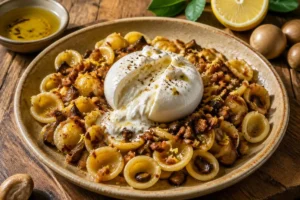
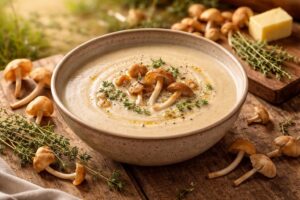
A technical masterclass in the Aquitaine method of slow-fat preservation applied to Marasmius oreades. This article examines the lipophilic nature of mushroom aromatics and the stabilization of fungal cell walls in poultry fats.
Aquitaine Duck Fat Confit with Marasmius oreades
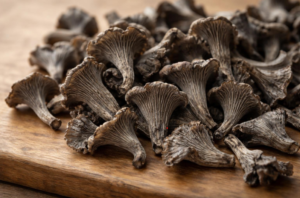
In the culinary landscape of Aquitaine, the technique of "confit" is more than a preservation method; it is a transformative process that redefines the texture of the ingredient. While typically reserved for poultry, the application of duck fat to Marasmius oreades (Fairy Ring mushroom) yields a result that is nothing short of extraordinary. The mushroom's inherent ability to survive extreme desiccation makes its cellular structure uniquely suited to low-temperature lipid poaching, resulting in a silkiness that contrasts beautifully with its natural resilience.
The Culinary Physics of This Dish
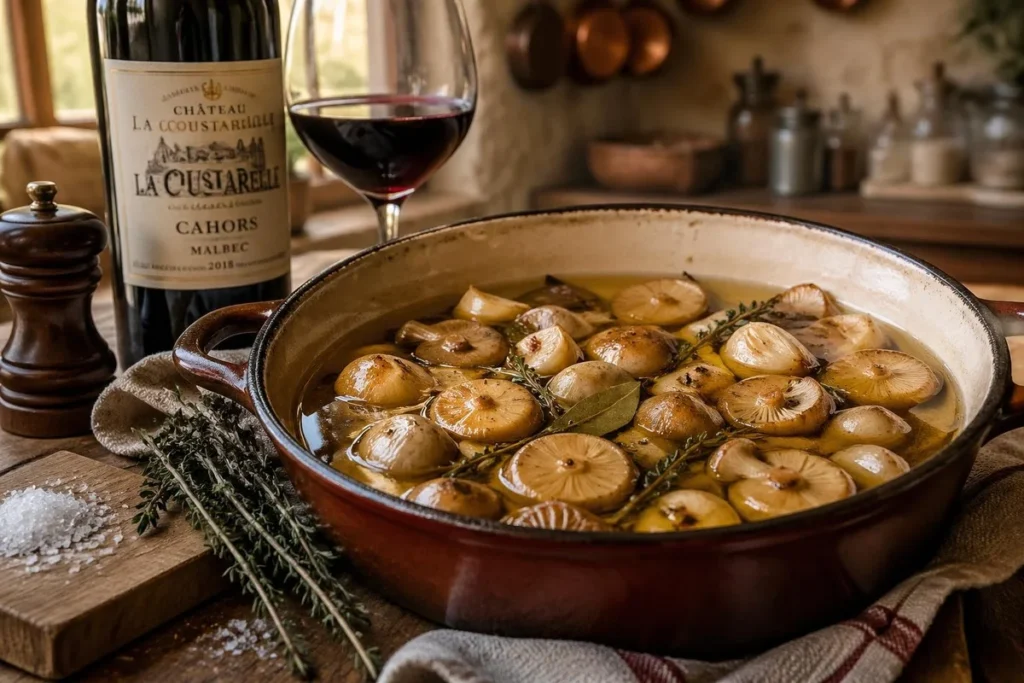
The core of this preparation is lipid-mediated aromatic extraction. Most of the flavor compounds in Fairy Ring mushrooms are lipophilic, meaning they dissolve and stabilize better in fats than in water. By poaching the mushrooms in duck fat at a constant temperature of 85°C, we avoid the rapid evaporation of fungal moisture. Instead, a slow exchange occurs: the water within the mushroom cells is replaced by the rich, monounsaturated fats of the duck.
Furthermore, the polysaccharides in the mushroom walls do not break down at this temperature, allowing the caps to maintain their shape while becoming fully saturated with flavor. This process creates a "confit" that is shelf-stable and possesses a depth of umami that is chemically heightened by the presence of animal lipids.
Terroir Narrative
The Southwest of France, from the forests of Landes to the meadows of Périgord, is the spiritual home of the duck. Here, "Graisse de Canard" is treated with the same reverence as olive oil in the south. Foragers in Aquitaine often preserve their autumn harvest of Marasmius oreades in the rendered fat of the ducks harvested during the same season. This recipe is a sophisticated nod to that peasant tradition, bringing the rustic flavors of the French farmhouse to the professional kitchen.
Prep Time
Cook Time
Complexity
Calories
Region
30 min
90 min
Grand Officier
320 kcal
Aquitaine, France
Master Recipe (1:10 Rule)
In a confit, the 1:10 rule applies to the ratio of aromatics to the poaching medium to ensure the fat remains the dominant sensory vehicle.
500 g Fresh Fairy Ring Mushroom caps (Marasmius oreades)
600 g Rendered Duck Fat (filtered and clarified)
4 cloves Garlic, smashed (unpeeled for "en chemise" style)
2 sprigs Fresh Thyme
1 Bay Leaf (Laurus nobilis)
8 g Coarse Sea Salt
1 tsp Black Peppercorns, slightly cracked
The Technique
Curing: Toss the mushroom caps with the sea salt and let them sit for 20 minutes. This draws out excess surface moisture, which prevents the fat from spluttering during the confit process.
Melting: Gently melt the duck fat in a heavy-bottomed cocotte or sous-vide bag. The temperature must not exceed 90°C.
Submerging: Add the aromatics (garlic, thyme, bay leaf, pepper) to the fat first to infuse the medium. Carefully slide the mushrooms into the fat, ensuring they are completely submerged.
Poaching: Place in a low oven (90°C) or use a thermal circulator for 90 minutes. The mushrooms should appear translucent but not browned.
Storage: If not serving immediately, transfer the mushrooms and fat to a sterilized jar. As the fat solidifies, it creates an anaerobic seal that preserves the mushrooms perfectly.
Serving: To serve, remove from the fat and sear briefly in a hot pan to crisp the exterior while the interior remains butter-soft.
"In Aquitaine, the fat is the lifeblood of the kitchen. When you confit a Fairy Ring mushroom, you are not just cooking it; you are suspending it in time and flavor." – Chef's Perspective, Bordeaux
The Umami Profile
The combination of poultry fat and Marasmius oreades creates a dense umami sensation. Duck fat contains high levels of linoleic acid, which enhances the perception of the mushroom's savory "meaty" qualities. This result is a profile that rivals aged charcuterie in complexity. At Pure Umami, we provide the raw materials for these culinary transformations, including Porcini, Caesar's mushroom, Chanterelle, Gray Chanterelle, and Morel.
Explore our seasonal foragers' finds and start your own preservation journey with our Premium Fairy Ring Mushrooms.
Sommelier’s Choice
A wine with significant structure is required to cut through the richness of the duck fat. A Malbec from Cahors or a robust Saint-Émilion (Merlot-based) provides the tannins and dark fruit notes needed to balance the dish. The wine's acidity acts as a palate cleanser between bites of the decadent confit.
The Etymological Chronicle
In the German-speaking regions of Europe (Post C), this mushroom is known as the Nelkenschwindling. This poetic name translates roughly to "clove-scented fader." "Nelken" refers to the scent of cloves, which some find similar to the mushroom's aroma, while "Schwindling" describes its habit of shriveling up and "vanishing" during dry weather, only to reappear after rain. This linguistic root highlights the mushroom's magical and resilient nature, recognized across the continent.
To provide the best experiences, we use technologies like cookies to store and/or access device information. Consenting to these technologies will allow us to process data such as browsing behavior or unique IDs on this site. Not consenting or withdrawing consent, may adversely affect certain features and functions.
Functional
Always active
The technical storage or access is strictly necessary for the legitimate purpose of enabling the use of a specific service explicitly requested by the subscriber or user, or for the sole purpose of carrying out the transmission of a communication over an electronic communications network.
Preferences
The technical storage or access is necessary for the legitimate purpose of storing preferences that are not requested by the subscriber or user.
Statistics
The technical storage or access that is used exclusively for statistical purposes.The technical storage or access that is used exclusively for anonymous statistical purposes. Without a subpoena, voluntary compliance on the part of your Internet Service Provider, or additional records from a third party, information stored or retrieved for this purpose alone cannot usually be used to identify you.
Marketing
The technical storage or access is required to create user profiles to send advertising, or to track the user on a website or across several websites for similar marketing purposes.