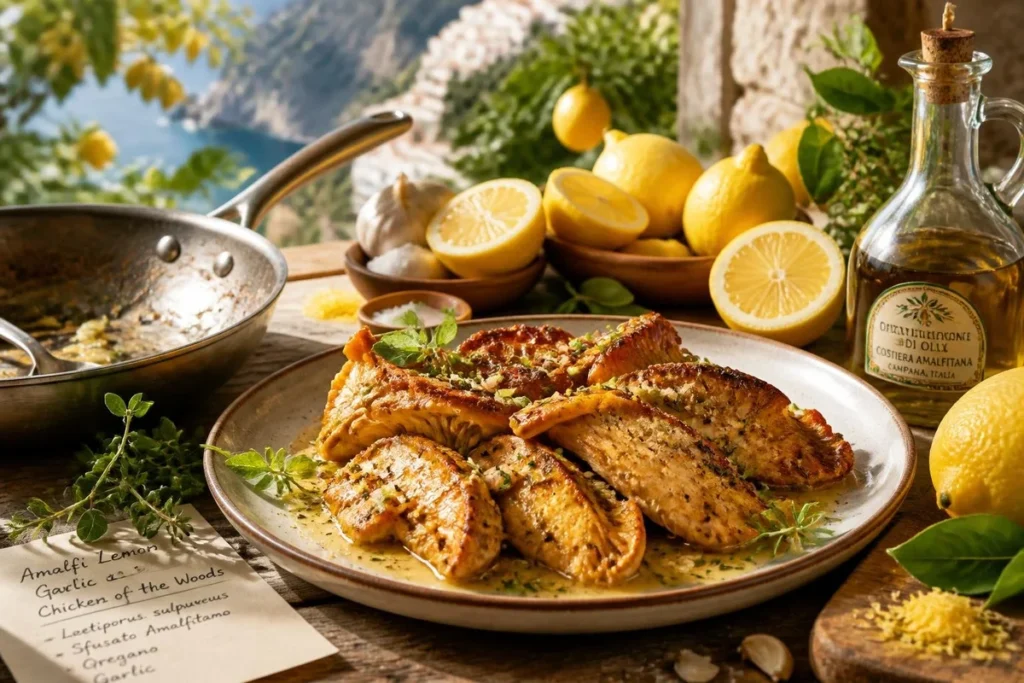
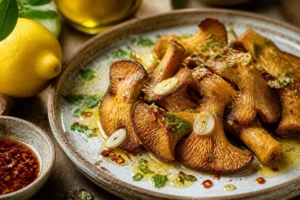
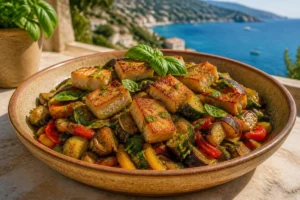
Elevate your culinary repertoire with this sophisticated take on (Laetiporus sulphureus), featuring the vibrant zest of Sorrento lemons and a professional garlic emulsion, rooted in the heritage of the Campania region.
Amalfi Lemon Garlic Chicken of the Woods
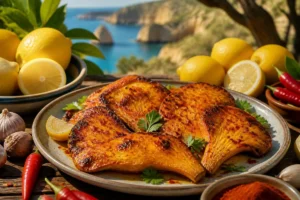
Deep within the sun-drenched cliffs of the Amalfi Coast, the intersection of forest and sea creates a unique microclimate for the prized Laetiporus sulphureus. Known as "Chicken of the Woods," this polypore is celebrated in high-end gastronomy for its remarkably fibrous, meat-like texture that mirrors avian protein. By pairing this forest treasure with the world-renowned Sfusato Amalfitano lemons, we create a dish that honors the Italian terroir while pushing the boundaries of modern mycological cuisine.
The Culinary Physics of This Dish
The cellular architecture of Laetiporus sulphureus is dominated by dense chitinous walls and cross-linked proteins. To transform its texture from "woody" to "succulent," we employ a dual-phase thermal strategy. First, the introduction of citric acid acts as a gentle surfactant, beginning the breakdown of complex polysaccharides. During the roasting phase, the high surface-to-volume ratio of the fronds allows for an accelerated Maillard reaction, where amino acids and reducing sugars produce the characteristic savory, "roasted chicken" aroma.
Terroir Narrative: The Spirit of Campania
In the Campania region, the culinary philosophy is built upon the purity of ingredients. The Sfusato lemons of Amalfi are not merely fruit; they are a geographic indication of quality, characterized by their high essential oil content and lack of bitterness. When the earthy, sulfurous base notes of the Laetiporus meet these bright, volcanic-soil-grown citruses, the result is a balanced profile that reflects the vertical landscapes of Southern Italy—from the mountain chestnut groves where these mushrooms thrive to the lemon terraces overlooking the Tyrrhenian Sea.
Quick Info Bar
Attribute
Specification
Prep Time
45 Minutes
Cook Time
30 Minutes
Complexity
Grand Officier
Calories
320 kcal
Region
Campania, Italy
Master Recipe (1:10 Rule)
For professional results, maintain a precise ratio of aromatic fats to mushroom mass to ensure a perfect emulsion.
50ml Extra Virgin Olive Oil (Coratina or Itrana variety)
5g Sea Salt (Maldon)
30g Garlic, processed into a micro-paste
100ml Fresh Sorrento Lemon Juice
2g Fresh Oregano (Origanum vulgare)
10g Cold Grass-Fed Butter (for mounting)
The Technique
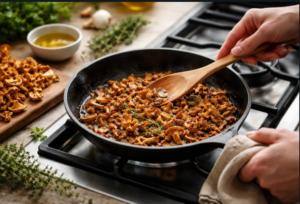
The preparation begins with Degorging—soaking the mushroom fronds in a 2% saline solution for 15 minutes to hydrate the fibers and remove any lingering tannins. This is followed by a high-heat Sautéing phase in a stainless steel pan to lock in moisture.
Once the edges achieve a golden-brown hue, we execute a Deglazing move with the lemon juice, lifting the concentrated flavors (fond) from the pan. The final step is Mounting with Butter (Monter au Beurre). By whisking cold butter into the lemon-garlic reduction off the heat, we create a stable, velvety emulsion that coats the Laetiporus in a layer of pure umami.
Shop Integration
While Laetiporus sulphureus offers a unique poultry-like experience, our collection features the absolute staples of European mycological tradition. You can explore other premium species in our shop, such as the robust Porcini (Boletus edulis) or the delicate Fairy Ring Mushrooms (Marasmius oreades). For those seeking refined elegance, we offer the Caesar's Mushroom (Amanita caesarea), Grey Chanterelle (Craterellus cinereus), and the classic Chanterelle (Cantharellus cibarius). For the ultimate connoisseur, our seasonal Morels (Morchella conica) provide an unmatched depth of flavor.
The Umami Profile
Biochemically, Laetiporus sulphureus is a powerhouse of natural glutamates. When roasted, these compounds are intensified, particularly when paired with garlic's allicin and the volatile thiols present in lemon zest. This synergistic effect creates a "long-lasting" taste sensation, where the acidity of the lemon heightens the perception of salt and savory notes without the need for excessive seasoning.
Sommelier’s Choice
We recommend a Greco di Tufo DOCG. This ancient Campanian white wine possesses a distinct volcanic minerality and a sharp acidity that cuts through the buttery garlic emulsion. Its notes of green apple and jasmine provide a sophisticated aromatic counterpoint to the earthy, forest-floor essence of the mushroom.
THE ETYMOLOGICAL CHRONICLE
Italian: In the South of Italy, particularly near Naples, this mushroom is affectionately called Fungo del pollo, directly translating to "Chicken Mushroom" due to its culinary resemblance to poultry.
French: Known in France as Polypore soufré, the name highlights its vibrant sulfur-yellow pores and its classification within the polypore family.
German: The term Schwefelporling is used in Germany, focusing on the bright "sulphur" color and its shelf-like growth pattern on hardwood trees.
Spanish: In Spain, it is identified as Políporo azufrado, where it is often featured in rustic mountain stews alongside local olive oils and woody herbs.
Pure Umami | Mycological Research & Culinary Arts | 2026
To provide the best experiences, we use technologies like cookies to store and/or access device information. Consenting to these technologies will allow us to process data such as browsing behavior or unique IDs on this site. Not consenting or withdrawing consent, may adversely affect certain features and functions.
Functional
Always active
The technical storage or access is strictly necessary for the legitimate purpose of enabling the use of a specific service explicitly requested by the subscriber or user, or for the sole purpose of carrying out the transmission of a communication over an electronic communications network.
Preferences
The technical storage or access is necessary for the legitimate purpose of storing preferences that are not requested by the subscriber or user.
Statistics
The technical storage or access that is used exclusively for statistical purposes.The technical storage or access that is used exclusively for anonymous statistical purposes. Without a subpoena, voluntary compliance on the part of your Internet Service Provider, or additional records from a third party, information stored or retrieved for this purpose alone cannot usually be used to identify you.
Marketing
The technical storage or access is required to create user profiles to send advertising, or to track the user on a website or across several websites for similar marketing purposes.