You want a mushroom that lifts simple dishes into memorable ones while also adding real nutritional value. Yellowfoot chanterelles deliver both.
Yellowfoot chanterelles offer a compact package of vitamins D and B, potassium, copper, dietary fiber, and beta-carotene. Their culinary umami elevates sauces, pastas, and preserves.
As you move through this post, you'll learn the star story and botanical characteristics that make yellowfoot chanterelles easy to identify and safely forage. Discover how their polysaccharides and beta-glucans contribute to health benefits, along with practical culinary uses and a step-by-step gourmet recipe that shows how to rehydrate dried mushrooms for maximum flavor.
Expect clear guidance on texture, flavor pairing, and why chefs prize their concentrated savory notes.
The Star Story
Yellowfoot chanterelles appear late in the season when many other wild mushrooms fade. You'll often find them clustered on mossy slopes or beneath conifers during cooler months, making them a reliable autumn-to-winter prize.
These small, delicate chanterelles deliver concentrated flavor that belies their size. You can sauté them quickly to preserve their texture and make the most of their apricot-like aroma.
Foraging is straightforward once you learn the key features: a thin, yellow stem, a smooth to slightly wrinkled cap, and false gills that run down the stem. Keep in mind chanterelle season varies by region; check local reports before you head out.
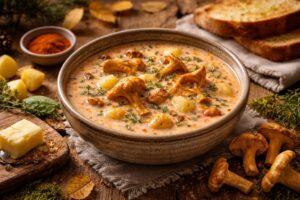
Nutritionally, yellowfoot chanterelles contribute modest protein, B vitamins, and minerals without heavy calories. Adding them to soups or risottos boosts umami and nutrient density without overpowering other ingredients.
Treat them gently during harvest to avoid bruising; a soft brush or cloth works well for cleaning. Store them loosely in paper bags in the refrigerator and use within a few days for best texture and flavor.
Cooking highlights include quick pan-frying with butter or olive oil, finishing with lemon or fresh herbs to brighten the natural earthiness. You'll notice they pair well with eggs, pasta, and roasted root vegetables.
Umami Secret: Finish with a touch of soy or aged cheese to amplify savory depth without masking the chanterelle's delicate notes.
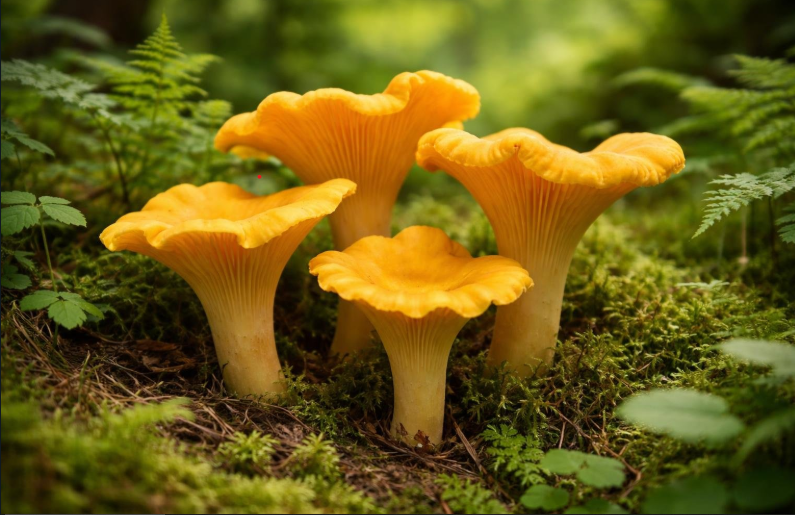
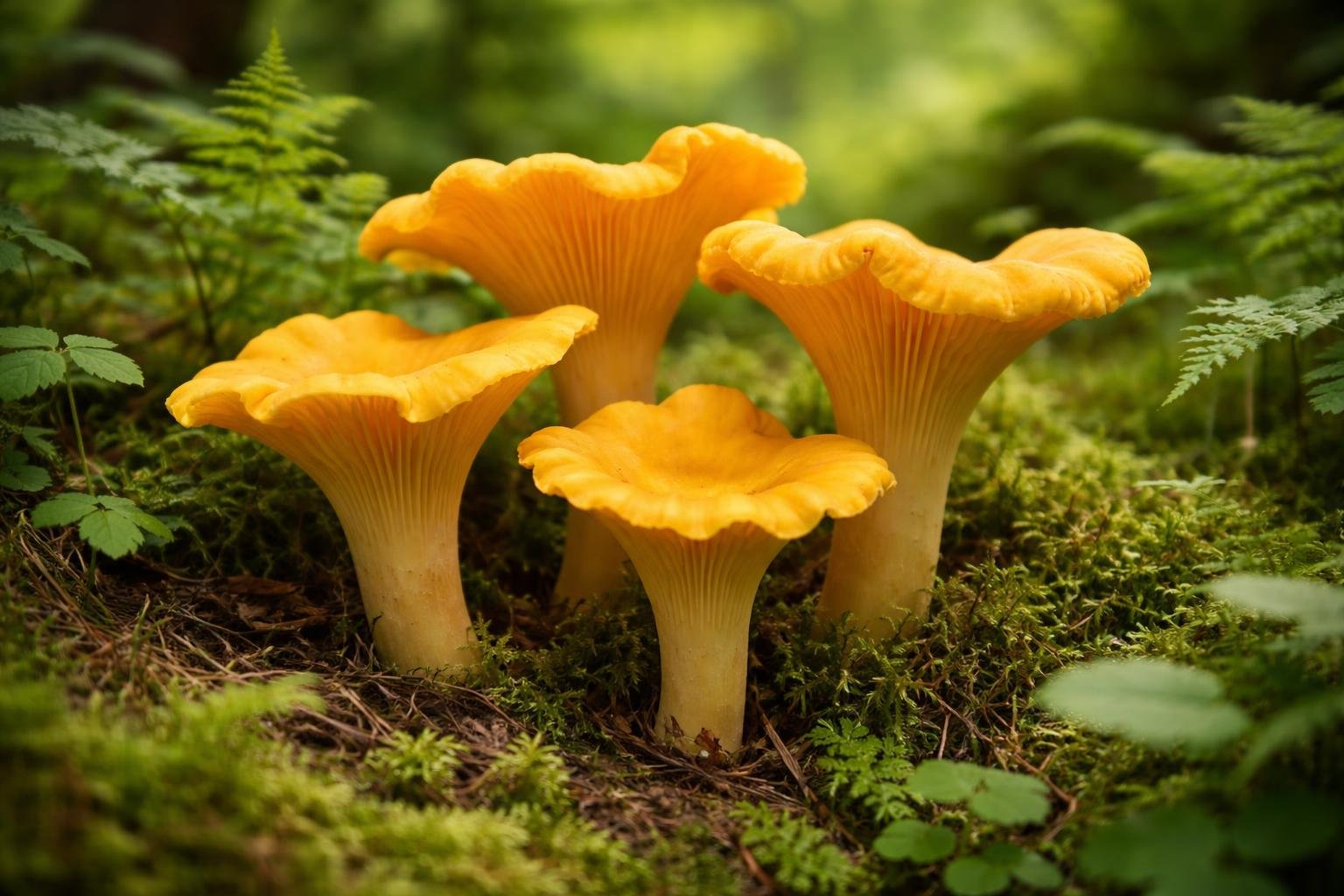
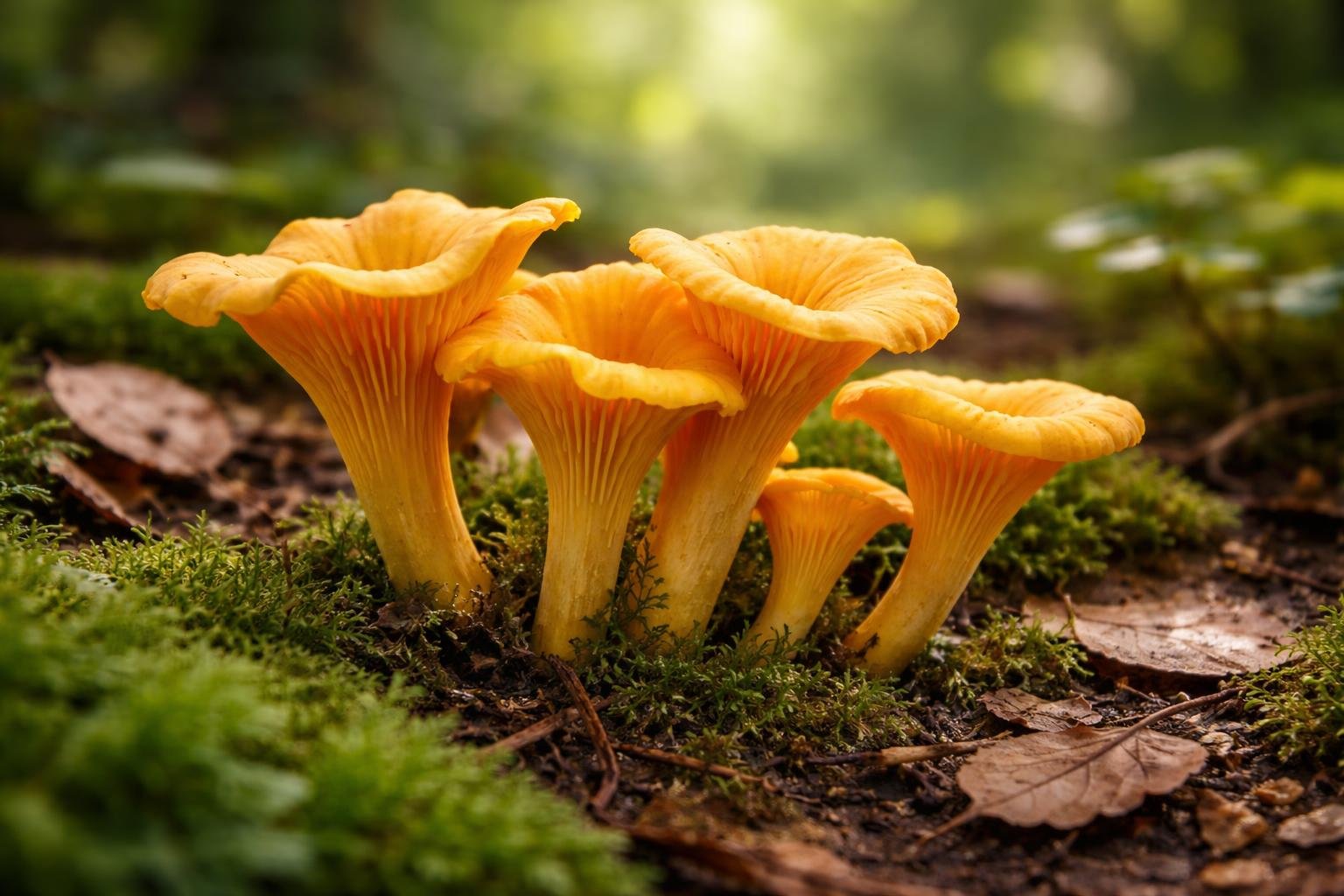
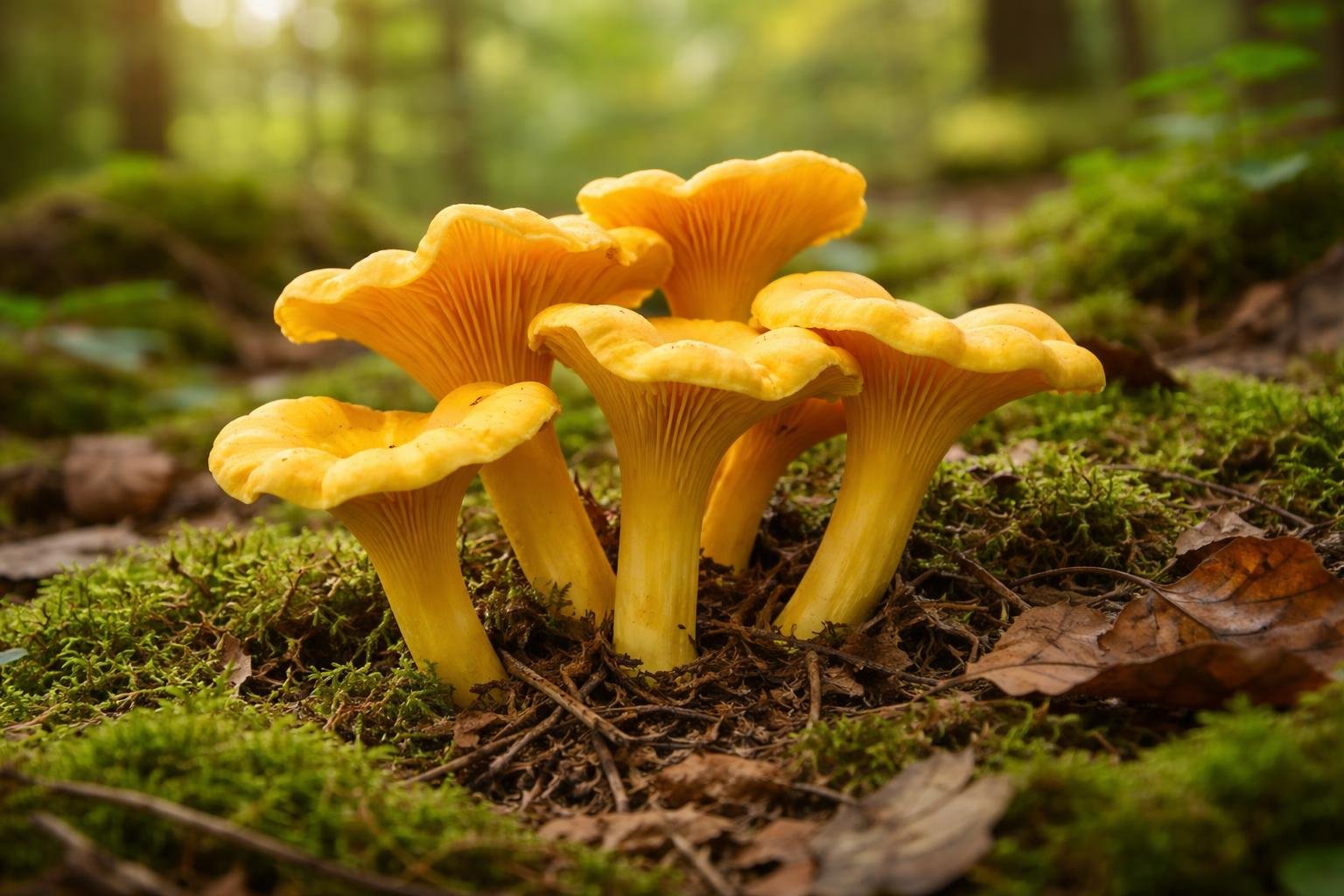
Yellowfoot chanterelle (Craterellus tubaeformis) grows as a small, funnel-shaped mushroom often called the winter chanterelle or funnel chanterelle. You'll spot a thin, hollow stem and a cap that deepens into a central depression, giving the species its characteristic trumpet-like silhouette.
The underside shows false gills: shallow, forked ridges rather than true blade-like gills. These ridges run decurrently down the stem and can appear vein-like, which helps you distinguish this chanterelle from many lookalikes.
Color ranges from yellow-brown to deep yellow; caps often darken with age while the stem remains paler. You can find clusters in mossy coniferous forests; they fruit in cooler, late-season months, hence the common name winter chanterelle.
Size is modest—caps typically measure 2–8 cm across—so you'll often see groups rather than solitary specimens. Texture stays thin and delicate; the flesh is not dense like some bolete species.
Microscopically, spores are smooth and ellipsoid, produced on the hymenium that forms the false gills. The species belongs to the Craterellus genus, closely related to other chanterelles but set apart by its hollow stem and funnel form.
You should note similar chanterelle mushrooms and Craterellus relatives include golden chanterelles and black trumpets. Careful attention to gill structure, color, habitat, and season helps ensure correct identification.
Culinary Uses And Flavor Profile
Yellowfoot chanterelles offer a concentrated, earthy mushroom flavor with a mild fruity note. You'll notice a firmer texture than golden chanterelles, and they hold up well to quick, high-heat cooking.
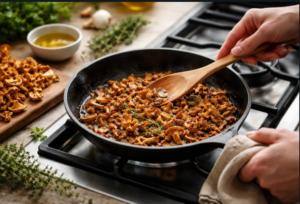
Use them in sautés to highlight their aroma. Heat a pan, add butter or oil, and cook briefly so they brown without becoming soggy.
They dry and rehydrate exceptionally well, which intensifies their flavor for stocks and long-simmered sauces. Dried yellowfoot pieces add a rounded umami to soups and risottos.
Try them raw in small amounts in salads for a crunchy, slightly nutty element. Slice thin and dress simply so the mushroom taste remains central.
Pairings lean toward simple, savory ingredients: butter, garlic, cream, onions, fresh herbs, and grains. They complement proteins like chicken, pork, and firm fish without overpowering them.
Quick pan sauce idea:
– Sear mushrooms until golden.
– Add shallots and a splash of white wine.
– Finish with butter and chopped parsley.
Their bright stem color and hollow center make identification and cleaning easier. Remove heavy debris and trim bases; avoid soaking to preserve texture and flavor.
For a concentrated boost, grind dried yellowfoot into powder and use sparingly as a seasoning. It lends depth to stews, marinades, and compound butters.
Keep portions modest when introducing them to new eaters. Their pronounced mushroom character can be unexpectedly strong if used in excess.
How To Rehydrate Dried Mushrooms
Rehydrating dried chanterelles or other dried mushrooms restores texture and releases concentrated flavor quickly. Work on small batches so you can use the soaking liquid as a flavorful stock for sauces and soups.
– Use a bowl large enough for the mushrooms to expand.
– Rinse briefly to remove dust, then cover with room-temperature water or warm (not boiling) water to preserve delicate texture.
1. Place dried mushrooms in the bowl and pour just enough water to cover them by about an inch.
2. Soak 10–30 minutes depending on size; smaller chanterelles need about 10–15 minutes, thicker porcini or shiitake may need 20–30 minutes.
3. Gently agitate once or twice to help release grit and aroma.
After soaking, lift mushrooms out with a slotted spoon and reserve the liquid. Strain the liquid through a fine sieve or coffee filter to remove grit before using it in risottos, stews, or sauces.
Pat mushrooms dry with paper towels if you plan to sauté them to avoid splattering. For quick use: chop rehydrated mushrooms and add directly to dishes.
For intense flavor: reduce the strained soaking liquid by simmering to concentrate umami. You can also rehydrate in stock or wine for added flavor, but use plain water if you want a neutral base.
Store rehydrated mushrooms refrigerated in an airtight container and use within a few days for best quality.
Umami Secret: Save and reduce the soaking liquid to add depth to pan sauces and risottos.
Step-By-Step Gourmet Recipe
You will need fresh yellowfoot chanterelles, but the recipe adapts to mixed chanterelles if that's what you have. Clean them with a soft brush or a quick rinse and pat dry; avoid soaking to preserve texture.
– Ingredients:
– 8 oz yellowfoot chanterelles, trimmed and halved
– 2 tbsp unsalted butter
– 1 tbsp olive oil
– 1 small shallot, finely minced
– 1 garlic clove, minced
– 1/4 cup dry white wine or broth
– 2 tbsp heavy cream (optional)
– Salt and freshly ground black pepper to taste
– 1 tbsp chopped fresh parsley
– Crusty bread or cooked pasta to serve
Follow these steps for a simple, elegant dish that highlights the mushrooms' flavor. Work quickly once the pan is hot to get good color without losing firmness.
1. Heat a large skillet over medium-high heat; add butter and oil.
2. When foaming subsides, add shallot and cook until translucent, about 1 minute.
3. Add chanterelles in a single layer and let them brown undisturbed for 2–3 minutes.
4. Stir and continue to brown for another 2 minutes; season lightly with salt and pepper.
5. Add garlic and cook 30 seconds until fragrant.
6. Deglaze with white wine or broth, scraping up browned bits; reduce by half.
7. Stir in cream if using and cook until sauce coats the mushrooms, about 1 minute.
8. Finish with chopped parsley and adjust seasoning.
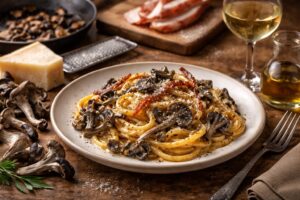
Tip: Serve spooned over toasted bread or tossed with freshly cooked pasta for a quick, restaurant-quality plate. This method preserves the mushrooms' texture and brings out their fruity, earthy notes.
Umami Secret: Finish with a light drizzle of high-quality olive oil and a small pinch of flaky sea salt to lift the flavors.
Why Choose Pure-Umami
Pure-Umami sources yellow foot chanterelles to preserve their natural flavor and nutritional value. You receive wild-harvested mushrooms that retain higher vitamin D and a distinctive aroma compared with cultivated varieties.
Harvesting practices are designed to prioritize the ecosystem. Sustainable foraging minimizes disturbance, ensuring future seasons remain productive and that forests retain biodiversity.
Small-batch processing is emphasized to protect both texture and taste. This approach preserves the delicate, peppery notes that make chanterelles so prized in both simple sautés and refined culinary creations.
The supply chain focuses on traceability for reliably clean specimens. You gain clarity about where and how each mushroom was gathered, an important consideration for food safety and ethical sourcing.
Pure-Umami supports foragers committed to best practices for regrowth and habitat care. These efforts help maintain healthy mushroom populations while letting you enjoy wild, seasonal flavors.
You receive a product that arrives ready for use in your kitchen. Minimal preparation preserves nutrients and allows you to add chanterelles to pastas, risottos, and egg dishes with ease.
For direct access to wild-harvested varieties from a dedicated foraging region, consider checking listings that offer multiple types of hand-picked mushrooms.
Conclusion
Yellowfoot chanterelles are a culinary treasure prized for their subtle, peppery flavor and firm texture. These mushrooms elevate a wide range of dishes, from rustic stews to refined sauces, making them a versatile addition to any kitchen.Rich in vitamin D, B vitamins, and trace minerals, yellowfoot chanterelles contribute to everyday nutrition. Their nutrients become more bioavailable when cooked, so gentle sautéing or roasting is recommended.
When preparing yellowfoot chanterelles, start by cleaning them gently with a brush or damp towel. Avoid soaking them in water, as their delicate structure can become soggy.
Sautéing in butter or olive oil brings out their earthy aroma and preserves their firm bite. For best results, add them near the end of cooking to maintain their flavor and texture.
These mushrooms pair beautifully with poultry, root vegetables, and light cream sauces. Toss them into risottos, fold them into creamy scrambled eggs, or scatter over roasted chicken for a sophisticated touch.
Yellowfoot chanterelles also shine in vegetarian dishes. Combine them with caramelized onions, fresh herbs, and a splash of white wine for a simple pasta topping.
To enhance their natural flavors, try finishing with a sprinkle of sea salt and a dash of fresh thyme. Their mild peppery notes complement both delicate and hearty ingredients.
If you're experimenting with new recipes, start with smaller amounts to let their flavor come through. Their versatility means they can be the star of the plate or a subtle supporting player.
For storage, dry or freeze yellowfoot chanterelles soon after harvest. Drying intensifies their flavor and allows for year-round use, while freezing preserves texture for quick weeknight meals.
Store dried mushrooms in an airtight container in a cool, dark place. When ready to use, rehydrate in warm water or broth to restore their supple texture.
Freezing works best after a brief sauté in butter or oil. Spread cooled mushrooms on a tray, freeze, then transfer to sealed bags for easy portioning.
Always handle wild mushrooms with care. Accurate identification is crucial, as some lookalikes can be harmful.
Consult reliable field guides or experienced foragers before consuming any wild-harvested mushrooms. If in doubt, purchase from trusted vendors who provide clear harvest details and safe handling practices.
When foraging, respect local regulations and natural habitats. Use a knife to cut mushrooms at the base, leaving mycelium intact to support future growth.
Limit your harvest to what you can use, helping to sustain healthy mushroom populations for years to come. Responsible foraging benefits both the environment and fellow enthusiasts.
If you're new to yellowfoot chanterelles, try a small amount first to check for sensitivities. Most people tolerate them well, but it's wise to be cautious with any new wild food.
Beyond their culinary appeal, yellowfoot chanterelles offer modest nutritional value. They're a reliable source of micronutrients that support overall wellness.
Incorporate them into your weekly menu to explore new flavors and expand your cooking repertoire. Their subtle elegance enhances both simple and elaborate meals.
Whether you're a seasoned chef or a curious home cook, yellowfoot chanterelles open up creative possibilities in the kitchen. Their approachable flavor profile makes them easy to integrate into familiar recipes.
If foraging isn't an option, consider sourcing high-quality dried or fresh yellowfoot chanterelles online. Look for reputable sellers who provide detailed product descriptions and transparent sourcing information.
eBay's marketplace offers a range of yellowfoot chanterelles from trusted vendors. You can find both dried and fresh options, often with harvest dates and region details included for added confidence.
Shopping on eBay allows you to compare prices, read seller reviews, and choose quantities that fit your needs. Many sellers also share preparation tips and recipe ideas, making it easier to get started.
By sourcing from reliable online vendors, you can enjoy the unique flavor of yellowfoot chanterelles year-round. This convenience lets you experiment with new dishes and savor seasonal ingredients even when foraging isn't possible.
Bring the forest's subtle flavors to your table with yellowfoot chanterelles. Explore eBay's curated selection and discover how these mushrooms can transform your cooking.
To provide the best experiences, we use technologies like cookies to store and/or access device information. Consenting to these technologies will allow us to process data such as browsing behavior or unique IDs on this site. Not consenting or withdrawing consent, may adversely affect certain features and functions.
Functional
Always active
The technical storage or access is strictly necessary for the legitimate purpose of enabling the use of a specific service explicitly requested by the subscriber or user, or for the sole purpose of carrying out the transmission of a communication over an electronic communications network.
Preferences
The technical storage or access is necessary for the legitimate purpose of storing preferences that are not requested by the subscriber or user.
Statistics
The technical storage or access that is used exclusively for statistical purposes.The technical storage or access that is used exclusively for anonymous statistical purposes. Without a subpoena, voluntary compliance on the part of your Internet Service Provider, or additional records from a third party, information stored or retrieved for this purpose alone cannot usually be used to identify you.
Marketing
The technical storage or access is required to create user profiles to send advertising, or to track the user on a website or across several websites for similar marketing purposes.