This Sicilian Porcini Red Prawn Crudo is an ethereal, raw preparation featuring the world-renowned
Sicilian Porcini & Red Prawn Crudo
The Deep Blue and the Deep Woods: A Raw Dialogue of the Sun
Sicilian Porcini & Red Prawn Crudo: The Nebrodi Heritage
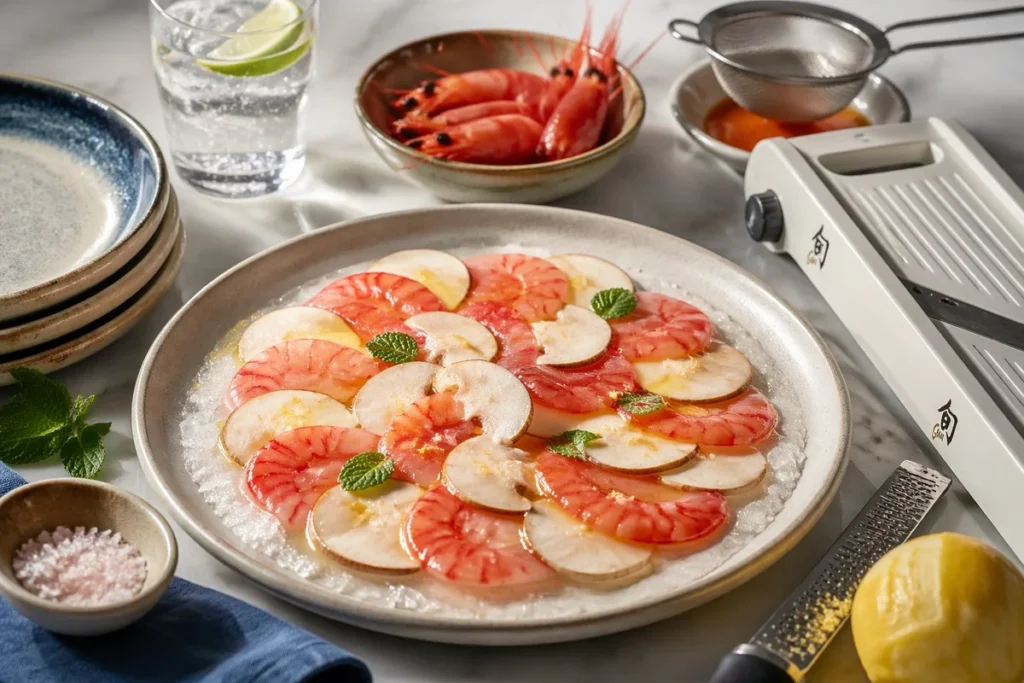
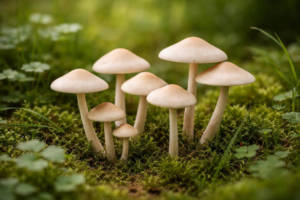
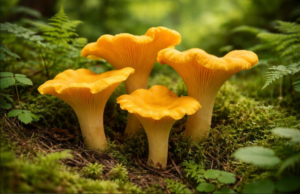
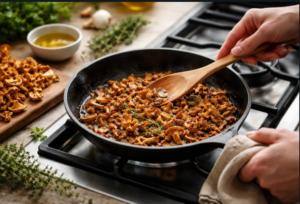
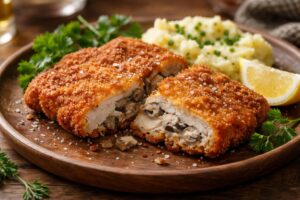
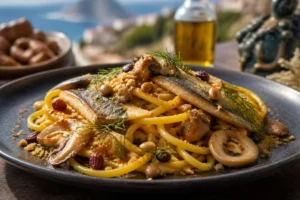
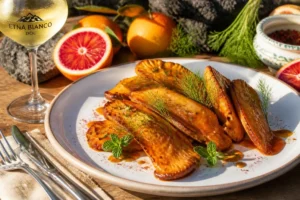
This Sicilian Porcini & Red Prawn Crudo is an ethereal, raw preparation featuring the world-renowned "Gambero Rosso" (Red Prawn) of Mazara del Vallo and razor-thin shavings of raw Boletus edulis. In the autumn, the Nebrodi Mountains—the greenest corner of Sicily—become a sanctuary for some of Italy's most pristine wild mushrooms.
The pairing with Gambero Rosso di Mazara is the ultimate status symbol. When sliced paper-thin, a young, raw Porcini possesses a texture similar to a crisp autumn apple. By combining the "Sea-Sugar" of the prawn with the "Earth-Nut" of the mushroom, this Sicilian Porcini & Red Prawn Crudo captures the island's paradoxical identity: a mountain surrounded by salt water.
⏱ Time: 20 Minutes
📊 Difficulty: Precision Knife Work
🔥 Calories: 185 kcal / Serving
🍄 Type: Ultra-Firm "Button" Porcini
Culinary Philosophy: The Purity of the Untouched
Sicilian philosophy for Crudo is Minimalist Intervention. We use "Cold-Pressed" Extra Virgin Olive Oil as the only cooking agent. The acidity of the lemon zest "cures" the surface just enough to release aromatics without changing the structural integrity. This is a dish of Sensory Clarity.
Sensory & Foraging Profile: The Volcanic Terroir
Latin Nomenclature:Boletus edulis (The Nebrodi phenotype). Terroir Analysis: Porcini from the Nebrodi grow in silica-rich soils. Because of the Sicilian sun, these mushrooms are remarkably dense, providing a satisfying "snap" rather than a soft texture, making them perfect for a Sicilian Porcini & Red Prawn Crudo.
Essential Equipment
🔸 Japanese Mandoline: To achieve the 0.5mm thickness required for the carpaccio.
🔸 Zester (Microplane): To harvest only the essential oils from the lemon skin.
🔸 Chilled Ceramic Plates: Crucial to maintain the "ocean-fresh" temperature.
The Master Recipe Steps
Stage 1: The Gambero Rosso Preparation
Peel 12 fresh Red Prawns. Place them between two sheets of parchment paper and very gently flatten them. They should become thin, delicate "petals." Keep on ice.
Stage 2: The Porcini Shaving
Clean the Porcini with a brush. Use the mandoline to shave the entire mushroom into paper-thin slices. Handle with tweezers to avoid bruising.
Stage 3: The Plating Mosaic
Arrange the prawn petals and Porcini shavings in an overlapping mosaic pattern. The visual goal is a "Terre-et-Mer" tapestry where colors alternate.
Stage 4: The Finishing “Aromatic”
Drizzle with light Sicilian oil. Sprinkle with Maldon Sea Salt and fresh lemon zest. Finish with fresh wild mint. Serve your Sicilian Porcini & Red Prawn Crudo immediately.
Chef’s Secret: The “Prawn Head” Vinaigrette
In the best restaurants of Taormina, chefs squeeze the coral from the prawn heads through a fine sieve, mix it with olive oil, and use this "Sea Umami" nectar to dress the raw mushrooms.
The Umami Secret: Raw Nucleotides
When raw, Boletus edulis contains high levels of Free Amino Acids. Prawns are rich in Inosinate, a nucleotide that acts as a flavor multiplier. When these meet, the savory perception is "cleaner" and more electric than in cooked dishes.
The Art of Pairing
Sommelier's Selection: A dry, volcanic white like an Etna Bianco. Its minerality is the perfect echo for the raw ingredients.
Non-Alcoholic: A chilled, sparkling water with a drop of bergamot essence.
The Porcini Directory: Global Names for Boletus edulis
The King Bolete, or simply Porcini, is arguably the most recognized wild mushroom in the culinary world. Its linguistic variety reflects its presence in forests from the Alps to the Himalayas:
Language
Regional & Folk Names
Expert Insights
Italian
Porcino, Brisa, Fungo di faggio
"Porcini" (little pigs) is the global trade name.
French
Cèpe de Bordeaux, Gros pied, Polonais
"Cèpe" comes from the Gascon word for trunk/stump.
German
Steinpilz, Herrenpilz, Edelpilz
"Steinpilz" (Stone mushroom) refers to its firm flesh.
To provide the best experiences, we use technologies like cookies to store and/or access device information. Consenting to these technologies will allow us to process data such as browsing behavior or unique IDs on this site. Not consenting or withdrawing consent, may adversely affect certain features and functions.
Functional
Always active
The technical storage or access is strictly necessary for the legitimate purpose of enabling the use of a specific service explicitly requested by the subscriber or user, or for the sole purpose of carrying out the transmission of a communication over an electronic communications network.
Preferences
The technical storage or access is necessary for the legitimate purpose of storing preferences that are not requested by the subscriber or user.
Statistics
The technical storage or access that is used exclusively for statistical purposes.The technical storage or access that is used exclusively for anonymous statistical purposes. Without a subpoena, voluntary compliance on the part of your Internet Service Provider, or additional records from a third party, information stored or retrieved for this purpose alone cannot usually be used to identify you.
Marketing
The technical storage or access is required to create user profiles to send advertising, or to track the user on a website or across several websites for similar marketing purposes.