A technical study in Carotenoid Lipid-Binding and Polysaccharide Emulsification, utilizing the Parasol mushroom as a high-surface-area absorbent for smoked capsicum pigments and fermented dairy proteins.
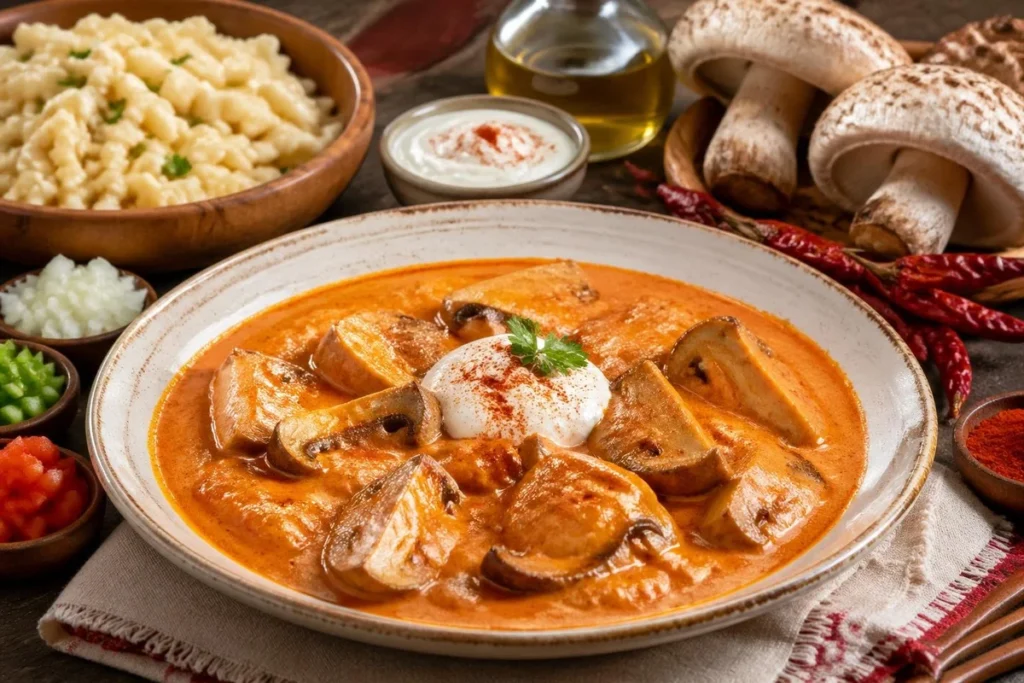
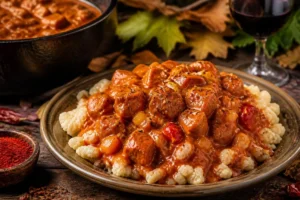
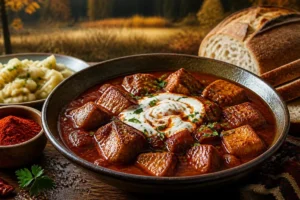
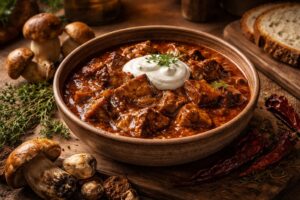
Hungarian-style Parasol “Paprikash”
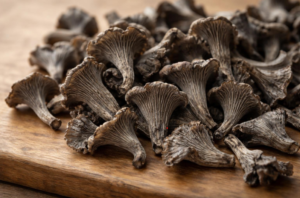
For our 104th technical formulation, we analyze Oleoresin Pigment Extraction and Acidic Dairy Stabilization. Macrolepiota procera (Parasol Mushroom), locally identified as Macrolepiota procera, serves as a structural analog for veal or poultry in this traditional Central European stew. At pure-umami.cc, we utilize the Hungarian Paprikás method. By blooming high-grade paprika in hot lipids and integrating the mushrooms with tejföl (sour cream), we achieve a high-viscosity, vibrant orange emulsion that encapsulates the mushroom's earthy guanylates within a spicy, lactic matrix.
The Culinary Physics of This Dish
The engineering of this paprikash relies on Lipophilic Volatile Release and Protein-Acid Balancing. Molecularly, the red pigments (carotenoids) in paprika are oil-soluble. Heating them in lard or oil triggers a Thermal Aromatic Release, which is then absorbed by the **Macrolepiota procera** gills. The introduction of sour cream requires Thermal Tempering; if added too quickly, the acidic proteins will coagulate (curdle). By whisking a small amount of hot sauce into the cold cream before full integration, we create a stable, smooth emulsion that provides the lipid-heaviness required to anchor the sharp, smoky capsicum notes.
Terroir Narrative
This formulation is a tribute to the Great Hungarian Plain (Alföld) and the heritage of the Magyars. We bridge the sun-baked pepper fields of Szeged and Kalocsa with the Balkan highland meadows. The terroir is expressed through the marriage of the forest's "wild" Macrolepiota procera and the intense, colorful depth of authentic Hungarian paprika. This follows the same technical rigor we apply to our Boletus edulis (Porcini) and Craterellus cinereus (Grey Chanterelle), treating the stew as a study in traditional Slavic and Pannonian flavor architecture.
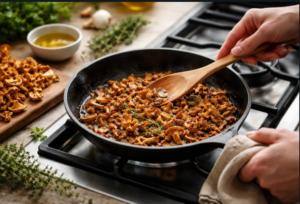
The Pörkölt Base: Sweat the onions in lard over low heat for 15 minutes until they begin to break down into a sweet paste. This is the Saccharide Foundation.
The Paprika Bloom: Remove the pan from the heat and stir in the paprika. This prevents burning (which causes bitterness) while allowing the Lipid Solubilization of the pigments.
The Mycelial Braise: Add the **Macrolepiota procera**, peppers, and tomato. Add a splash of stock or water. Cover and simmer gently for 20 minutes. The mushrooms will release their juices, creating a rich, natural gravy.
The Habarás Stabilization: Mix the sour cream with flour and a few spoonfuls of the hot liquid. Stir this back into the pot and simmer for 5 minutes until thickened and glossy.
The Nokedli Synthesis: Whisk the egg and flour to form a sticky dough. Drop small pieces into boiling water; they are cooked when they float. Serve the Parasol Paprikash over the hot dumplings.
Shop Integration
The Macrolepiota procera provides the essential succulent mass, but its umami depth can be reinforced. We recommend adding a handful of dried Boletus edulis (Porcini) to the initial braise for a deeper, "meaty" base. If you seek a brighter peppery contrast, garnish with sautéed Cantharellus cibarius (Chanterelle). For a luxury upgrade, finish the sauce with a drizzle of Morchella conica (Morel) oil. If available, a side of raw Amanita caesarea (Caesar's mushroom) with a simple vinegar-sugar dressing (Uborkasaláta style) provides a necessary mineral "reset." For a smoky baseline, our Craterellus cinereus (Grey Chanterelle) can be minced into the onion base for a dark visual and flavor depth.
The Umami Profile
This dish features **Carotenoid-Lactic Synergistic Umami**. The Macrolepiota procera provides the fungal guanylates, while the onions and peppers introduce high concentrations of free glutamates. The sour cream provides a Low-pH Flavor Bridge, where the acidity makes the savory notes of the mushroom feel sharper and more defined. The result is a savory experience that is exceptionally vibrant, creamy, and culturally resonant.
Sommelier’s Choice
A glass of **Kadarka (Red)** or a dry **Furmint (White)**. The spicy, light-bodied Kadarka matches the paprika's warmth, while the high acidity and minerality of the Furmint are the technical requirement to cut through the rich sour cream and highlight the Parasol mushroom.
The Etymological Chronicle
The term Paprikás is **Hungarian**, referring to the prominent use of paprika and sour cream. In **French**, this would be a Fricassée de Coulemelle à la Hongroise. In **German**, it is Ungarisches Parasol-Paprikasch. In **Spanish**, it is Galamperna al Pimentón con Crema. Regardless of the language, the **Parasol mushroom** Paprikash remains the definitive standard for technical capsicum-lactic mycological engineering.
Pure Umami | Mycological Research & Culinary Arts | 2026
To provide the best experiences, we use technologies like cookies to store and/or access device information. Consenting to these technologies will allow us to process data such as browsing behavior or unique IDs on this site. Not consenting or withdrawing consent, may adversely affect certain features and functions.
Functional
Always active
The technical storage or access is strictly necessary for the legitimate purpose of enabling the use of a specific service explicitly requested by the subscriber or user, or for the sole purpose of carrying out the transmission of a communication over an electronic communications network.
Preferences
The technical storage or access is necessary for the legitimate purpose of storing preferences that are not requested by the subscriber or user.
Statistics
The technical storage or access that is used exclusively for statistical purposes.The technical storage or access that is used exclusively for anonymous statistical purposes. Without a subpoena, voluntary compliance on the part of your Internet Service Provider, or additional records from a third party, information stored or retrieved for this purpose alone cannot usually be used to identify you.
Marketing
The technical storage or access is required to create user profiles to send advertising, or to track the user on a website or across several websites for similar marketing purposes.