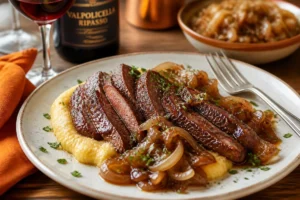
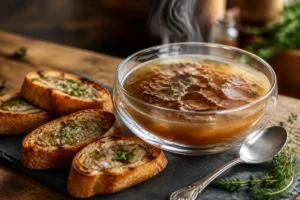
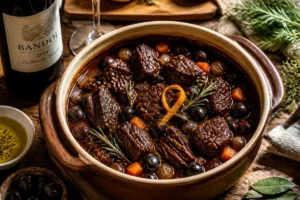
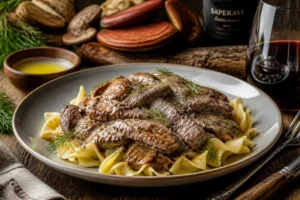
This technical execution focuses on the Lipid-Acidity Equilibrium between the sharp, penicillium-driven volatiles of Auvergne blue cheese and the natural oxalic acids of Fistulina hepatica. By utilizing a gratin technique, we employ the mushroom's dense, fibrous "steaks" as a structural substrate that withstands the high-heat proteolysis of the cheese, resulting in a complex interplay of creamy, metallic, and earthy notes.
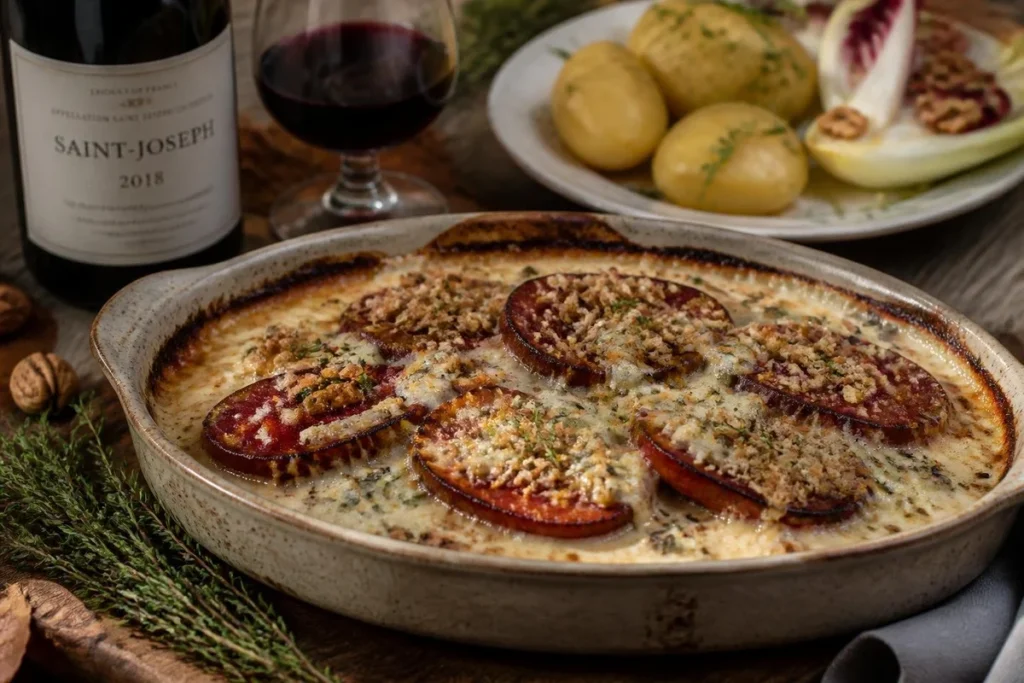
Auvergne Blue Cheese Crusted Beefsteak Fungus Gratin
This culinary protocol focuses on Enzymatic Counter-Balancing. The Beefsteak Fungus is unique for its astringent tannins and tartness, which can often overwhelm delicate dairy. However, in the presence of a high-intensity, mold-ripened cheese like Bleu d'Auvergne, a flavor-stabilization occurs. The mushroom's acidity acts as a "cleanser" for the palate, cutting through the heavy blue cheese lipids, while the cheese's alkalinity rounds out the mushroom's sharper edges during the gratiner process.
The Culinary Physics of This Dish
Fistulina hepatica possesses a cross-linked histological matrix that prevents it from turning to mush when baked. We employ Convective Lipid Encapsulation. As the gratin bakes, the melting blue cheese and cream create a pressurized thermal environment. The mushroom's pores absorb the liquified lipids, which "lock in" its red anthocyanin pigments. Simultaneously, the sourdough breadcrumbs create a Maillard-Starch Barrier, providing a necessary crunch that contrasts with the succulent, meat-like interior of the fungus.
Terroir Narrative
Inspired by the volcanic landscapes of the Auvergne region in France, this dish reflects the soul of the Massif Central. In these high-altitude forests dominated by oak and beech, the Beefsteak Fungus is an autumnal staple. Traditionally, the region's cuisine is defined by its world-class cheeses and hearty, forest-derived proteins. This recipe marries the "noble mold" of the local dairy with the "wild meat" of the oak trees, creating a dish that is as rugged and sophisticated as the Auvergne itself.
Prep Time
Bake Time
Complexity
Calories
Region
20 Mins
15 Mins
Grand Officier
340 kcal
Auvergne, France
Master Recipe (1:10 Rule)
600 g Fistulina hepatica (sliced into 1.5cm thick "steaks")
100 g Bleu d'Auvergne (crumbled)
150 ml Crème fraîche or heavy cream
50 g Sourdough breadcrumbs (coarse)
2 Walnuts (finely crushed, for the crust)
1 Clove of garlic (to rub the gratin dish)
Sea Salt and Coarse Black Pepper
Fresh Thyme leaves
The Technique
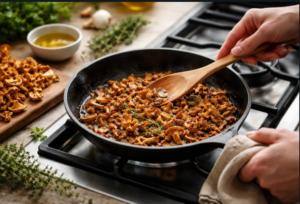
1. Pre-Searing: Briefly sear the Fistulina hepatica slices in a hot pan for 1 minute per side. This initiates the Maillard reaction and removes excess surface moisture before baking.
2. Aromatizing the Vessel: Rub a shallow ceramic gratin dish with the cut garlic clove. This provides a subtle, background sulfur-note that complements the blue cheese.
3. Layering: Arrange the seared mushroom steaks in the dish. Season lightly with pepper (avoid extra salt, as the cheese is highly saline). Pour the cream over the mushrooms.
4. The Topping: Distribute the crumbled Bleu d'Auvergne evenly over the mushrooms. Mix the sourdough crumbs with the crushed walnuts and thyme, then sprinkle over the cheese.
5. The Gratin: Place under a hot broiler (grill) for 8–10 minutes. The cheese should bubble and melt into the cream, while the breadcrumbs turn a deep golden brown.
6. Service: Let the dish rest for 2 minutes before serving to allow the lipids to stabilize. Serve with a side of steamed potatoes or a crisp endive salad to balance the richness.
Shop Integration
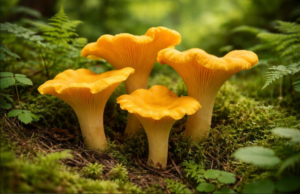
The intense, creamy profile of this gratin is an ideal showcase for our boutique forest selection. You can increase the earthy complexity by layering sautéed Boletus edulis (Boletus edulis) alongside the Beefsteak Fungus. For a more floral, nutty top-note, incorporate our Marasmius oreades (Marasmius oreades) into the breadcrumb crust. If you prefer a more peppery finish, garnish with fresh Cantharellus cibarius (Cantharellus cibarius). For a truly royal variant, add whole rehydrated Morchella (Morchella conica) into the cream—their honeycomb structure will trap the liquified blue cheese beautifully.
The Umami Profile
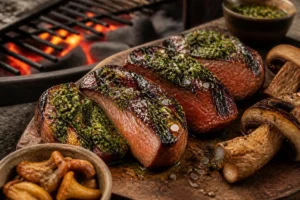
This dish demonstrates Proteolytic Umami Synergism. The free amino acids in the Beefsteak Fungus bond with the glutamates and inosinates concentrated in the aged blue cheese. The addition of cream provides lipids that slow the transit of these flavor molecules across the tongue, resulting in a prolonged, rich savory sensation (kokumi) that mimics the intensity of a blue-cheese topped wagyu steak.
Sommelier’s Choice
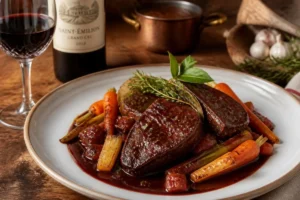
Saint-Joseph (Syrah): A Northern Rhône red with notes of black pepper, smoked meat, and dark fruit. Its tannin structure is firm enough to handle the blue cheese, while its spicy profile complements the forest aromatics of the Fistulina hepatica.
THE ETYMOLOGICAL CHRONICLE
French:Fistuline hépatique – Emphasizing the "hepatic" nature of the mushroom, a term deeply rooted in the culinary history of the French Massif.
Italian:Lingua di bue – Highlighting the meaty texture that makes it a perfect surrogate for steak-based gratins.
Spanish:Hígado de buey – "Ox liver," referring to the mineral richness and dark red juice of the fresh specimen.
German:Ochsenzunge – "Ox tongue," used in German mycological lore to describe the mushroom's substantial "bite" and culinary strength.
To provide the best experiences, we use technologies like cookies to store and/or access device information. Consenting to these technologies will allow us to process data such as browsing behavior or unique IDs on this site. Not consenting or withdrawing consent, may adversely affect certain features and functions.
Functional
Always active
The technical storage or access is strictly necessary for the legitimate purpose of enabling the use of a specific service explicitly requested by the subscriber or user, or for the sole purpose of carrying out the transmission of a communication over an electronic communications network.
Preferences
The technical storage or access is necessary for the legitimate purpose of storing preferences that are not requested by the subscriber or user.
Statistics
The technical storage or access that is used exclusively for statistical purposes.The technical storage or access that is used exclusively for anonymous statistical purposes. Without a subpoena, voluntary compliance on the part of your Internet Service Provider, or additional records from a third party, information stored or retrieved for this purpose alone cannot usually be used to identify you.
Marketing
The technical storage or access is required to create user profiles to send advertising, or to track the user on a website or across several websites for similar marketing purposes.