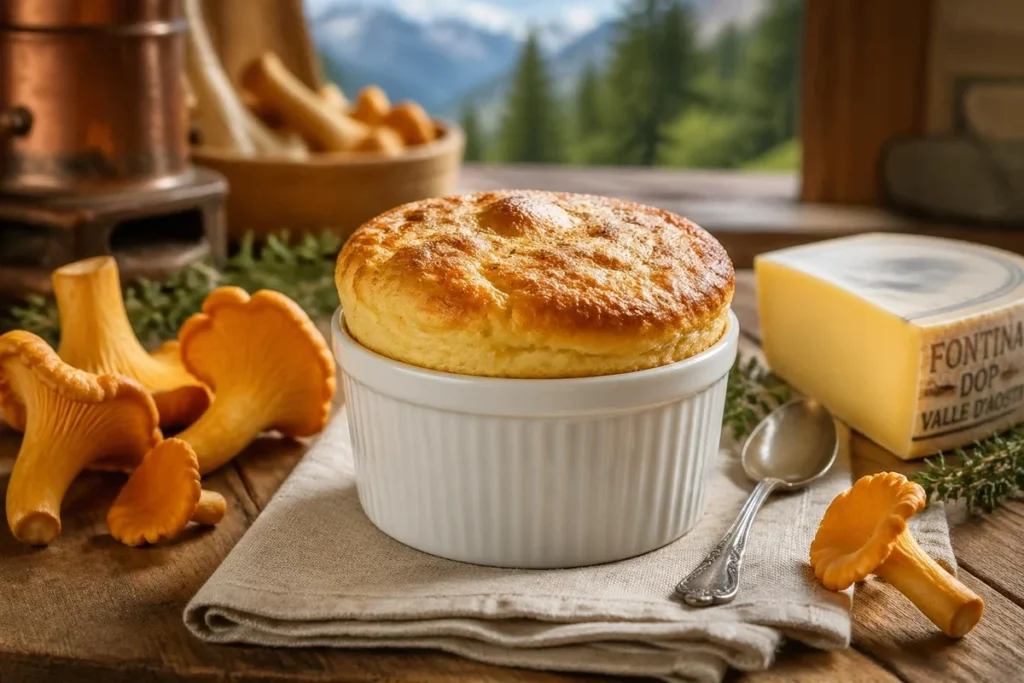
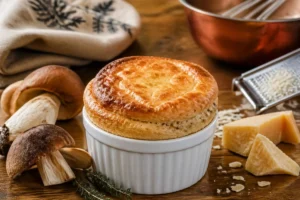
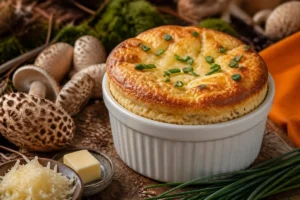
A gravitational defiance of Alpine gastronomy, utilizing the structural proteins of the Golden Chanterelle and the melting precision of Fontina DOP to create an aerated mycological masterpiece.
Chanterelle & Fontina d’Aosta Soufflé
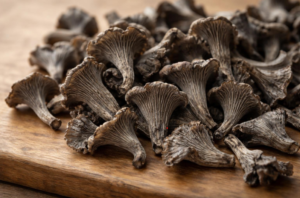
For our eleventh technical formulation, we reach the zenith of culinary physics: the soufflé. The Cantharellus cibarius (Golden Chanterelle) provides a unique challenge in aerated structures due to its water-releasing properties. This formulation utilizes a concentrated "Duxelles-sec" to ensure the soufflé rises without structural collapse. By pairing our premium Cantharellus cibarius with the pungent, high-fat Fontina d'Aosta, we create a dish that captures the essence of the Italian Alps in a cloud-like matrix. At pure-umami.cc, we view this as the ultimate test of temperature control and mycological integration.
The Culinary Physics of This Dish
The engineering of a soufflé relies on Gas Expansion and Protein Coagulation. As the egg-white foam (leavening agent) is heated, the air bubbles expand, while the heat denatures the egg proteins to form a solid structure. The molecular hurdle is the moisture within the Cantharellus cibarius; if the mushrooms are not sufficiently dehydrated before being folded into the base, the steam will cause the soufflé to "weep" and collapse. We solve this by using a fine mushroom reduction, while the Fontina's specific melting point (approx. 60°C) ensures a smooth incorporation into the Béchamel base without breaking the emulsion.
Terroir Narrative
This dish is a tribute to the Aosta Valley (Valle d'Aosta), where the high-altitude pastures produce the legendary Fontina. The terroir is reflected in the contrast between the funky, grassy notes of the cheese and the bright, peppery apricot profile of the chanterelles found in the surrounding pine forests. This is the same rugged landscape that yields our celebrated Boletus edulis and Amanita caesarea, here refined into a delicate, skyward-reaching delicacy.
Quick Info Bar
Prep Time
Cook Time
Complexity
Region
30 mins
18 mins
Grand Officier
Aosta Valley, Italy
Master Recipe (1:10 Rule)
Standardized ratios for structural stability:
250g Fresh Cantharellus cibarius (Cantharellus cibarius) – processed into a dry paste
150g Fontina d'Aosta DOP (grated)
40g Unsalted Butter
40g All-purpose Flour
250ml Whole Milk (hot)
4 Egg Yolks (stabilizer)
5 Egg Whites (leavening agent)
Nutmeg, Sea Salt, and White Pepper
The Technique
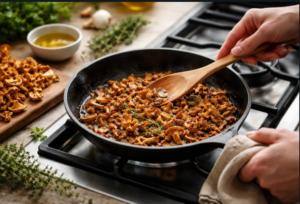
The Mushroom Essence: Sauté the finely minced chanterelles until all liquid is evaporated. The resulting paste (Duxelles) must be "dry" to the touch to prevent soufflé failure.
The Béchamel Base: Create a roux with butter and flour, then slowly whisk in the hot milk until a thick cream forms. Stir in the Fontina and mushroom paste until the cheese is fully melted and the mixture is smooth.
The Liaison: Allow the base to cool slightly, then whisk in the egg yolks one by one. This provides the protein structure needed for the rise.
The Aeration: Whip the egg whites to "firm peaks." Fold 1/3 of the whites into the base vigorously to lighten it, then fold the remaining 2/3 extremely gently to preserve the air bubbles.
The Ascent: Pour into buttered and parmesan-coated ramekins. Bake at 200°C for 15-18 minutes. Do not open the oven door during the process.
Shop Integration
The vibrant color of our Cantharellus cibarius ensures the soufflé has a beautiful golden hue. For those seeking a deeper, more savory punch, substituting 30% of the chanterelles with our Craterellus cinereus (Grey Chanterelle) adds an incredible depth of flavor. If you want to introduce a nut-like finish, a few Marasmius oreades can be minced into the duxelles. For a royal presentation, serve the soufflé with a side of sautéed Morchella conica or a single, perfect Amanita caesarea (Caesar's Mushroom) to emphasize the forest heritage of the dish.
The Umami Profile
This dish features "Aqueous Umami." The airy texture allows the savory compounds of the Cantharellus cibarius and the aged Fontina to be delivered to the palate via hot steam, which intensifies the aromatic perception of the apricot esters. The result is a savory, long-lasting finish that feels light as air yet tastes like the deep forest.
Sommelier’s Choice
A white **Petite Arvine** from the Aosta Valley. Its high acidity, salty minerality, and notes of grapefruit provide a brilliant contrast to the rich, melted Fontina and the earthy chanterelle base.
The Etymological Chronicle
The word Soufflé is French, the past participle of souffler, meaning "to blow" or "to puff." In Italian, such a dish is often called a Sformato (though a sformato is typically denser). In German, it is known as a Pfifferlings-Auflauf, and in Spanish, Soufflé de Rebozuelos. Regardless of the regional nomenclature, the Chanterelle remains the undisputed star of this gravity-defying protocol.
Pure Umami | Mycological Research & Culinary Arts | 2026
To provide the best experiences, we use technologies like cookies to store and/or access device information. Consenting to these technologies will allow us to process data such as browsing behavior or unique IDs on this site. Not consenting or withdrawing consent, may adversely affect certain features and functions.
Functional
Always active
The technical storage or access is strictly necessary for the legitimate purpose of enabling the use of a specific service explicitly requested by the subscriber or user, or for the sole purpose of carrying out the transmission of a communication over an electronic communications network.
Preferences
The technical storage or access is necessary for the legitimate purpose of storing preferences that are not requested by the subscriber or user.
Statistics
The technical storage or access that is used exclusively for statistical purposes.The technical storage or access that is used exclusively for anonymous statistical purposes. Without a subpoena, voluntary compliance on the part of your Internet Service Provider, or additional records from a third party, information stored or retrieved for this purpose alone cannot usually be used to identify you.
Marketing
The technical storage or access is required to create user profiles to send advertising, or to track the user on a website or across several websites for similar marketing purposes.