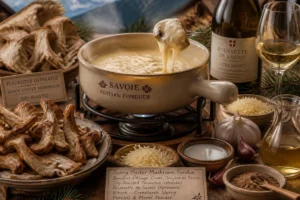
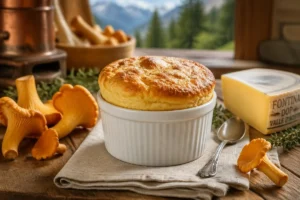
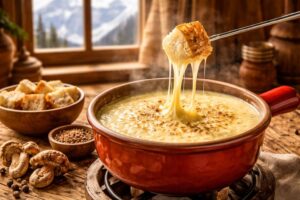
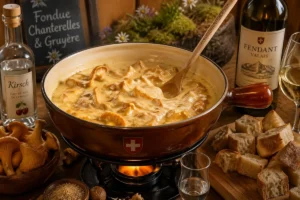
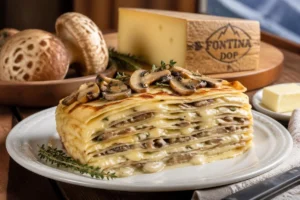
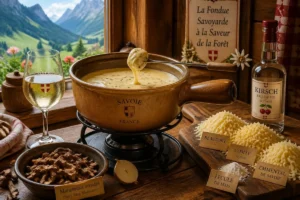
Indulge in the rich heritage of Northern Italy with this Amanita caesarea recipe, featuring a silky Fontina d'Aosta fondue. A masterclass in Piedmontese alpine flavors.
Piedmontese Fontina Fonduta with Caesar Mushroom
Terroir Narrative
In the high-altitude forests of Piedmont, where the fog of the Langhe meets the sharp Alpine air, Amanita caesarea finds its most decadent partner: Fontina d'Aosta. This dish is a celebration of the "Transalpine" culinary bridge, merging the rustic strength of mountain cheese with the imperial elegance of the Caesar mushroom. Historically served in the hunting lodges of the House of Savoy, this preparation emphasizes the transition from the golden heat of summer to the rich, earthy depth of early autumn.
The Culinary Physics of This Dish
The success of this recipe relies on Proteinic Emulsification. Fontina cheese contains complex casein structures that, when melted slowly with egg yolks and cream, form a stable, velvety colloid known as Fonduta. The Amanita caesarea is lightly seared to trigger the Maillard Reaction on its surface, creating aromatic lactones that perfectly mirror the nutty, buttery profile of the fermented dairy. The addition of a dry Alpine white wine provides the necessary tartaric acid to prevent the cheese proteins from clumping, ensuring a seamless texture.
Fonduta Base: In a double boiler (Bain-marie), combine the shredded Fontina with the cream. Heat slowly, stirring constantly with a wooden spoon, until the cheese is fully melted and smooth.
Tempering: Remove from heat and whisk in the egg yolks one by one. Return to low heat for 2 minutes to thicken, ensuring the temperature does not exceed 80°C to avoid curdling. Add nutmeg.
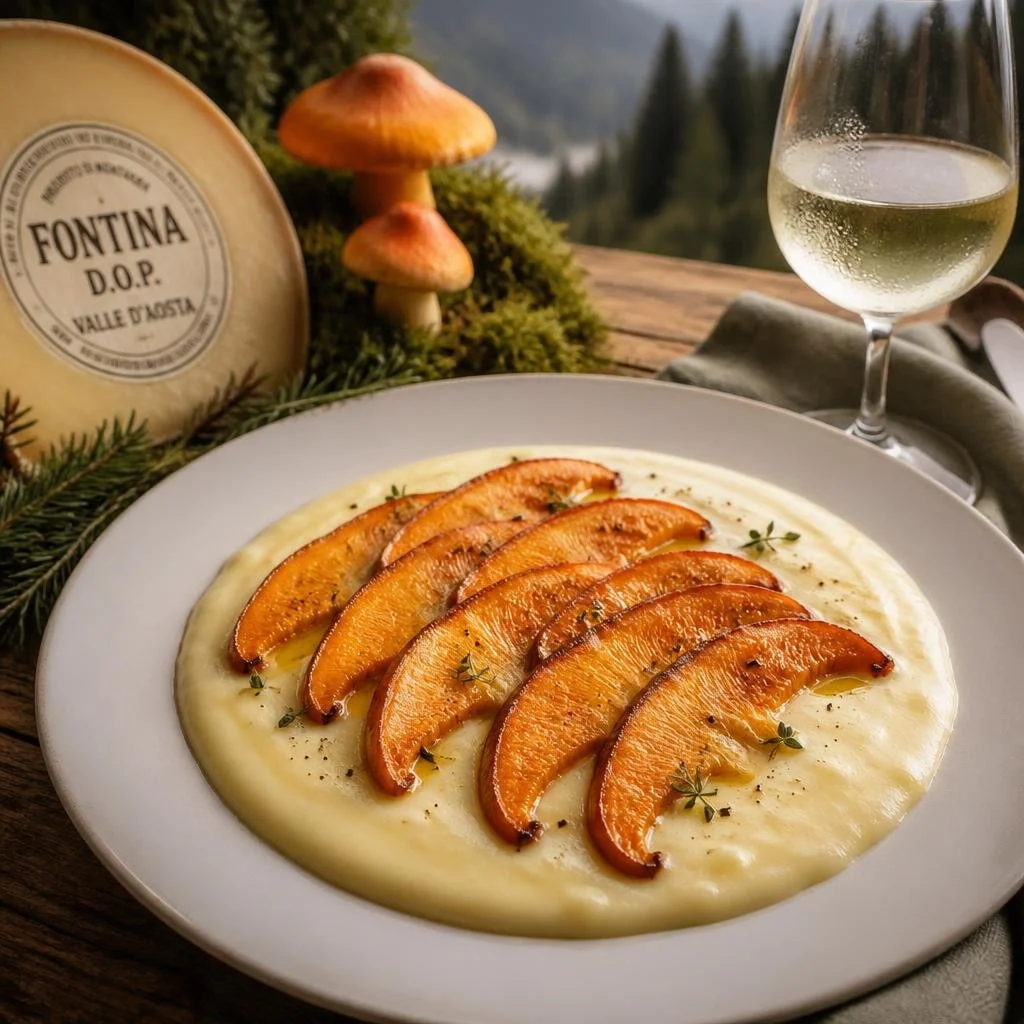
Mushroom Searing: Heat butter in a stainless steel skillet until foaming. Add the Caesar mushroom slices in a single layer. Sear for 3 minutes per side until the edges turn golden-brown.
Integration: Deglaze the skillet with a splash of wine (optional) and toss the mushrooms to coat in the residual butter.
Plating: Pour a generous pool of the warm Fontina fonduta onto a pre-heated plate. Arrange the seared mushrooms on top, allowing the orange caps to contrast with the ivory cream.
"In the Piedmontese tradition, the mushroom provides the soul, but the cheese provides the embrace." — Northern Italian Gastronomy Archive
Shop Integration
Professional results require professional precision. Ensure your emulsions are perfect with our artisanal copper Bain-marie sets, available at the [Pure Umami Store].
The Umami Secret
The synergy between the glutamates in the Amanita caesarea and the free amino acids in the aged Fontina cheese creates a "flavor explosion." This specific pairing activates the taste buds' peripheral response, significantly prolonging the umami finish on the palate.
Sommelier’s Choice
The richness of the fondue demands a wine with significant structure. A Gavi di Gavi (Cortese grape) offers the perfect acidity, while a light-bodied Nebbiolo provides the tannins needed to balance the fat content of the dish.
The Etymological Chronicle: The German “Kaiserling”
While the Amanita caesarea is deeply rooted in Mediterranean culture, it holds a legendary status in the German mycological lexicon as the Kaiserling. Derived from the word Kaiser (Emperor), this name serves as a direct linguistic echo of the mushroom's Roman origins. In the 18th and 19th centuries, German botanists documented the Kaiserling as a "noble guest" in the warmer southern slopes of the Black Forest and the Alpine foothills. Unlike many other fungi, the Kaiserling was never viewed as food for the common folk; it was strictly an Edelpilz (noble mushroom), reserved for the tables of the aristocracy. The German suffix "-ling" denotes a sense of belonging or a small, precious entity, effectively crowning the mushroom as the "Little Emperor" of the forest floor—a title that perfectly matches its golden-orange "regalia."
To provide the best experiences, we use technologies like cookies to store and/or access device information. Consenting to these technologies will allow us to process data such as browsing behavior or unique IDs on this site. Not consenting or withdrawing consent, may adversely affect certain features and functions.
Functional
Always active
The technical storage or access is strictly necessary for the legitimate purpose of enabling the use of a specific service explicitly requested by the subscriber or user, or for the sole purpose of carrying out the transmission of a communication over an electronic communications network.
Preferences
The technical storage or access is necessary for the legitimate purpose of storing preferences that are not requested by the subscriber or user.
Statistics
The technical storage or access that is used exclusively for statistical purposes.The technical storage or access that is used exclusively for anonymous statistical purposes. Without a subpoena, voluntary compliance on the part of your Internet Service Provider, or additional records from a third party, information stored or retrieved for this purpose alone cannot usually be used to identify you.
Marketing
The technical storage or access is required to create user profiles to send advertising, or to track the user on a website or across several websites for similar marketing purposes.