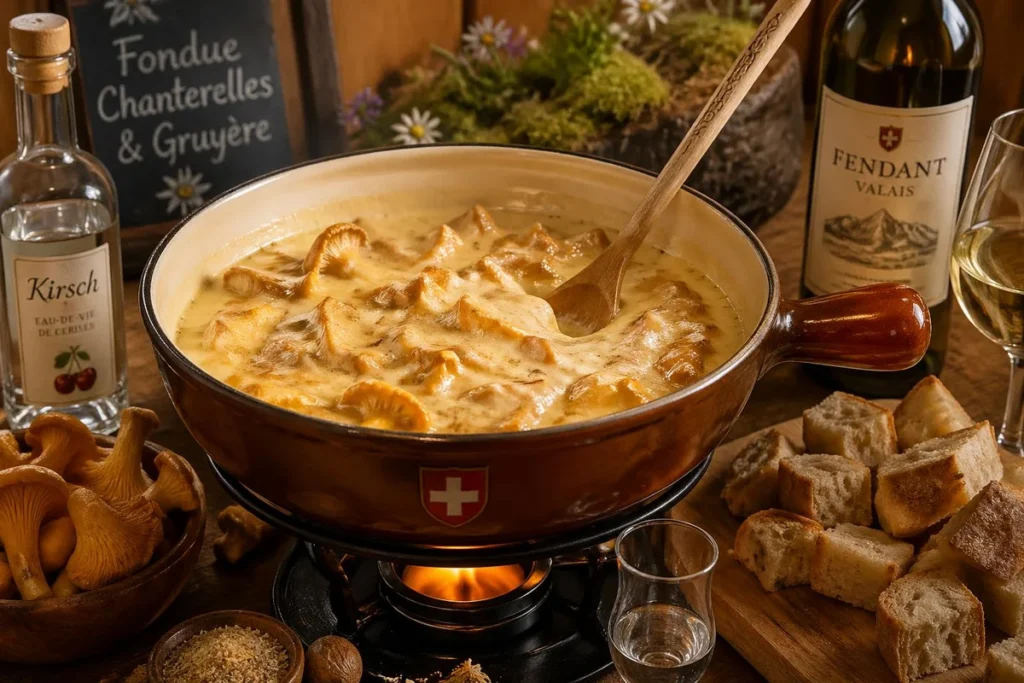
A rigorous Swiss-Alpine formulation utilizing the protein-stabilizing properties of the Golden Chanterelle to create a high-viscosity cheese emulsion infused with cherry-distillate volatiles.
Chanterelle & Aged Gruyère Fondue with Kirsch
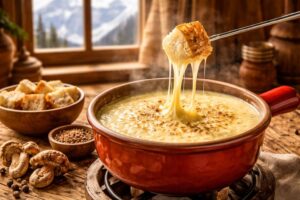
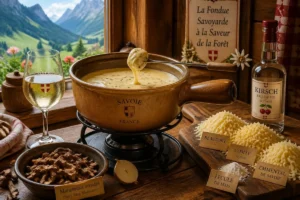
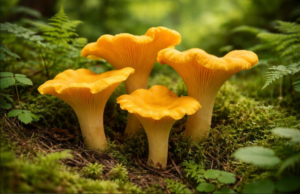
For our twenty-fifth technical formulation, we reach the sub-alpine peaks of the Fribourg region. The Cantharellus cibarius (Golden Chanterelle) possesses a rare structural affinity for melted alpine cheeses; its dense stipe acts as a "flavor-anchor" within the fluid cheese matrix. By utilizing a 12-month Cave-Aged Gruyère and a precision-measured dose of Kirsch (cherry brandy), we create a molecular bridge between the mushroom's apricot-like ketones and the distillates of the cherry stone. This is the pure-umami.cc interpretation of the ultimate mountain luxury, utilizing our premium Cantharellus cibarius to stabilize and elevate a classic emulsion.
The Culinary Physics of This Dish
The engineering of a fondue relies on Lipid-Water Emulsification via Tartaric Acid. Cheese is a complex matrix of casein proteins, fats, and water. When heated, the proteins tend to clump (clot); we prevent this by using dry white wine, which provides tartaric acid to sequester the calcium in the cheese, allowing the proteins to stay separate and smooth. Molecularly, the sautéed Cantharellus cibarius are introduced at the final stage. The mushrooms have already undergone a "dry-sear" to remove internal moisture, ensuring that their addition does not break the cheese emulsion. The Kirsch acts as a solvent, unlocking the deepest fat-soluble aromatics of both the Gruyère and the chanterelles.
Terroir Narrative
This formulation is a tribute to the Swiss Pre-Alps, where the cattle graze on high-altitude flora that includes wild herbs and mosses—the same ground that nurtures our chanterelles. The terroir is reflected in the use of "AOP" Gruyère and the sharp, clean bite of the cherry distillate. This is the same mineral-rich landscape that supports our Morchella conica and the rugged Craterellus cinereus, here brought together in a communal vessel that represents the pinnacle of Alpine social dining.
Quick Info Bar
Prep Time
Cook Time
Complexity
Region
20 mins
15 mins
Grand Officier
Fribourg, Switzerland
Master Recipe (1:10 Rule)
Technical proportions for a 100% stable cheese-fungal emulsion:
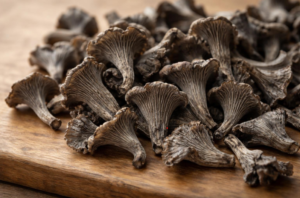
400g Fresh Cantharellus cibarius (Cantharellus cibarius) – sautéed until firm
300g Cave-Aged Gruyère AOP (coarsely grated)
300g Vacherin Fribourgeois (for creaminess)
300ml Dry White Wine (Neuchâtel or Fendant)
30ml Kirsch (cherry brandy)
1 clove Garlic (to rub the caquelon)
10g Cornstarch (to stabilize the proteins)
Nutmeg and White Pepper
The Technique
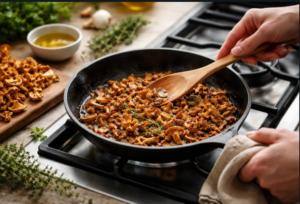
The Fungal Searing: Sauté the chanterelles in a very hot, dry pan until they release their water and begin to brown. This "dry-sear" is vital to prevent the fondue from becoming watery. Set aside.
The Vessel Priming: Rub the inside of the fondue pot (caquelon) with the cut garlic clove. This provides a subtle aromatic baseline without overpowering the mushrooms.
The Liquid Base: Bring the wine to a slow simmer. Do not let it boil vigorously, as this can evaporate the acids needed for emulsification.
The Cheese Integration: Toss the grated cheese with cornstarch. Gradually add the cheese to the wine, stirring in a "figure-eight" motion until completely melted and smooth.
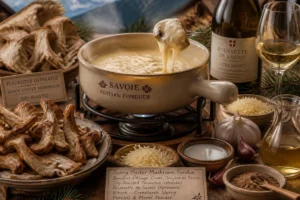
The Final Infusion: Stir in the Kirsch, nutmeg, and pepper. Finally, fold in the sautéed Cantharellus cibarius. Keep the fondue over a low flame (rechaud) to maintain the emulsion. Serve with crusty sourdough cubes.
Shop Integration
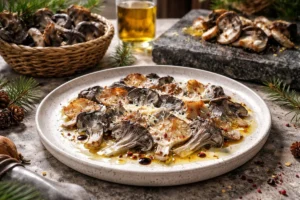
The vibrancy of our Cantharellus cibarius provides a stunning golden contrast within the pale ivory of the cheese. For a more peppery, forest-heavy experience, we recommend a 20% addition of Craterellus cinereus (Grey Chanterelle). If you seek a nutty finish, our Marasmius oreades added during the searing phase provides a spectacular aromatic lift. For an elite presentation, serve with a side of seared Boletus edulis (Porcini) or a few Morchella conica (Morel) caps for dipping.
The Umami Profile
This dish features "Lactic-Synergistic Umami." The long-aged proteins in the Gruyère are rich in free amino acids, which magnify the savory perception of the Cantharellus cibarius. The high lipid content of the fondue acts as a flavor delivery system, coating the tongue and allowing the mushroom's guanylates to persist for an exceptionally long duration. The Kirsch provides a sharp, fruit-driven peak that resets the palate between bites.
Sommelier’s Choice
A crisp, acidic **Fendant** (Chasselas) from the Valais. The wine's mineral-driven profile and high acidity are the traditional and technical match for the rich, melted cheese and the earthy Cantharellus cibarius.
The Etymological Chronicle
The term Fondue is French, from the verb fondre, meaning "to melt." In Italian, this would be a Fonduta. In German, it is simply Käsefondue, and in Spanish, Fondue de Queso y Rebozuelos. Across the Alpine world, the Chanterelle remains the gold standard for mycological cheese infusions.
Pure Umami | Mycological Research & Culinary Arts | 2026
To provide the best experiences, we use technologies like cookies to store and/or access device information. Consenting to these technologies will allow us to process data such as browsing behavior or unique IDs on this site. Not consenting or withdrawing consent, may adversely affect certain features and functions.
Functional
Always active
The technical storage or access is strictly necessary for the legitimate purpose of enabling the use of a specific service explicitly requested by the subscriber or user, or for the sole purpose of carrying out the transmission of a communication over an electronic communications network.
Preferences
The technical storage or access is necessary for the legitimate purpose of storing preferences that are not requested by the subscriber or user.
Statistics
The technical storage or access that is used exclusively for statistical purposes.The technical storage or access that is used exclusively for anonymous statistical purposes. Without a subpoena, voluntary compliance on the part of your Internet Service Provider, or additional records from a third party, information stored or retrieved for this purpose alone cannot usually be used to identify you.
Marketing
The technical storage or access is required to create user profiles to send advertising, or to track the user on a website or across several websites for similar marketing purposes.