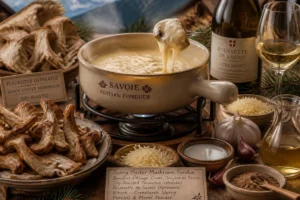
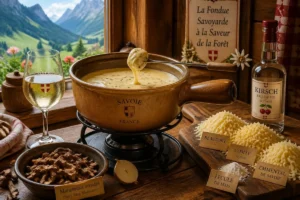
A technical elevation of the Alpine communal classic, utilizing the dense, non-porous structure of Calocybe gambosa as a functional vehicle for complex molten cheese emulsions.
Savoyard Fondue with Sautéed Calocybe Dippers
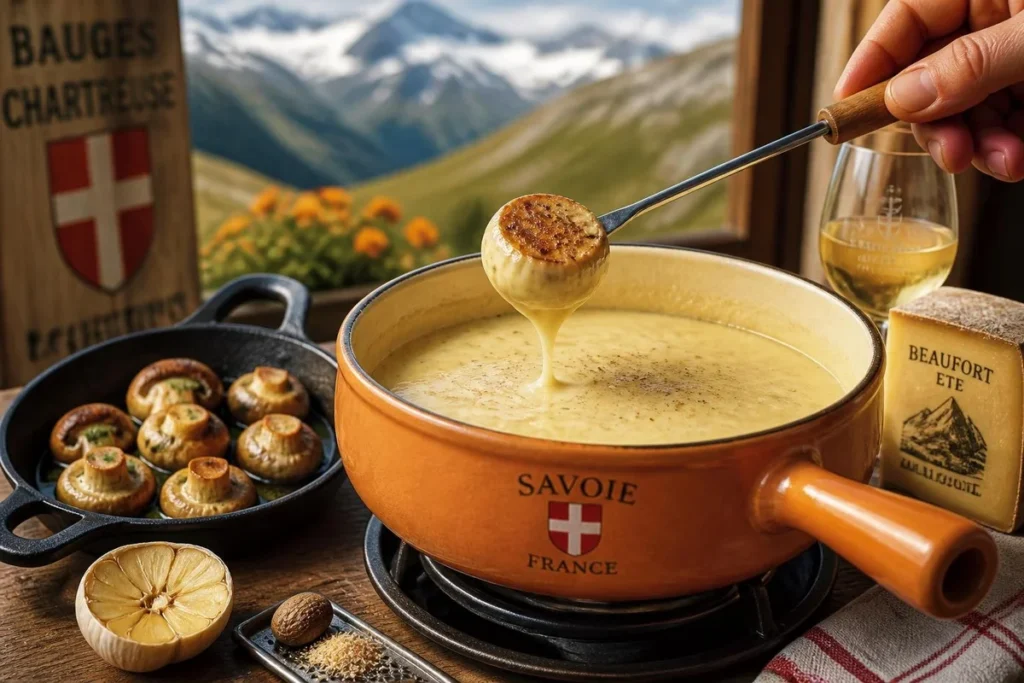
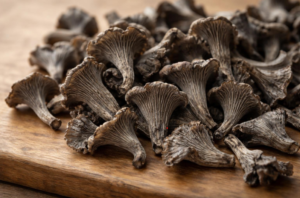
In the high-altitude pastures of the French Alps, the Calocybe gambosa—locally identified as the Mousseron de la Saint-Georges—appears as the snow recedes from the limestone plateaus. This preparation reclaims the Fondue Savoyarde as a seasonal mycological event. Unlike traditional bread, which can become overly saturated and lose its form, the Calocybe gambosa possesses a dense, fibrous architecture that allows it to be pierced, seared, and submerged into a boiling cheese emulsion while retaining a firm, meaty resistance. This creates a sophisticated interplay between the mushroom's spring-fresh, farinaceous aroma and the deep, fermented complexity of aged Alpine cow's milk cheeses.
The Culinary Physics of This Dish
The success of this dish relies on hydrophobic surface tension and viscosity management. The Calocybe gambosa has a naturally low water content and a "matte" cap surface. When seared in clarified butter, the mushroom develops a micro-crust that acts as a flavor-adhesive for the molten cheese. From a molecular standpoint, the farinaceous volatiles of the mushroom (trans-2-nonenal) are highly fat-soluble. As the mushroom is dipped into the fondue—a complex oil-in-water emulsion stabilized by wine acid and cheese proteins—the lipids in the cheese act as a carrier, pulling the mushroom's "fresh bread" aromatics directly into the rich, savory matrix of the melted Beaufort and Comté.
Terroir Narrative
The Savoie region is a land of verticality and ancient grazing rights. This recipe reflects the "Cuisine d'Alpage"—the high-mountain kitchen where the survivalist tradition of melting cheese meets the celebratory foraging of the first spring fungi. Traditionally, fondue was a winter staple, but the arrival of the Saint George's mushroom in May transforms it into a spring ritual. By using the foraged Gambosa as a primary dipper, we honor the limestone terroir of the Alps, where the same mineral-rich grass that feeds the cattle also provides the alkaline environment required for these mushrooms to fruit in their characteristic fairy rings.
Prep Time
Cook Time
Complexity
Calories
Region
25 Min
15 Min
Grand Officier
620 kcal
Savoie, FR
Master Recipe
600g Saint George's Mushrooms (Calocybe gambosa), whole medium-sized caps.
200g Beaufort AOC, grated.
200g Comté (Aged 18 months), grated.
200g Emmental de Savoie, grated.
300ml Dry White Alpine Wine (Apremont or Roussette).
1 clove Garlic, halved.
1 tsp Cornstarch (dissolved in a splash of Kirsch).
40g Clarified Butter (for searing).
Pinch of Freshly grated Nutmeg.
The Technique
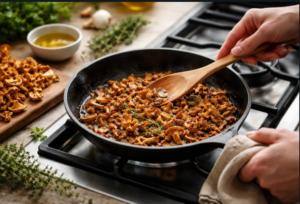
1. The "Dipper" Preparation: In a wide cast-iron skillet, heat the clarified butter until shimmering. Add the whole Calocybe gambosa caps. Sear them quickly on high heat for 3 minutes until the edges are golden. This step is critical for structural stabilization—it removes surface moisture and ensures the mushrooms won't fall off the fondue fork.
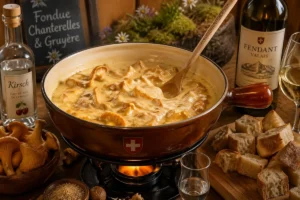
2. Rubbing the Caquelon: Rub the interior of a heavy ceramic fondue pot (caquelon) with the cut garlic clove. This provides a subtle aromatic baseline without overpowering the delicate "mealy" scent of the May mushrooms.
3. Building the Emulsion: Heat the white wine in the pot until simmering. Gradually add the grated cheeses in a figure-eight motion. Once melted, stir in the cornstarch/Kirsch mixture to bind the lipids and proteins. Add a touch of nutmeg to enhance the earthiness.
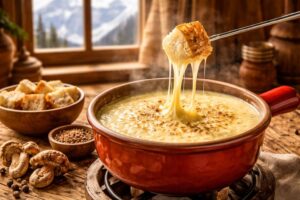
4. The Service: Keep the fondue at a low, consistent simmer over a tabletop burner. Spear the seared mushrooms through the stem and into the cap. Dip and swirl into the cheese, allowing the emulsion to coat the gills and spines of the mushroom for maximum flavor retention.
Shop Integration
The pursuit of mycological perfection requires a deep understanding of seasonal availability. While the Saint George's Mushroom provides the architectural foundation for this spring fondue, our shop is the gateway to year-round culinary research. Elevate your alpine dishes with our Porcini (Boletus edulis) for robust winter bakes, or the delicate Scotch Bonnet (Marasmius oreades) for lighter infusions. For more regal preparations, consider the Caesar's Mushroom (Amanita caesarea), or experiment with the subtle textures of our Yellow Foot (Craterellus cinereus) and Chanterelle (Cantharellus cibarius). For the ultimate spring luxury, our Morels (Morchella conica) provide a sophisticated smoky contrast to the creamy Calocybe gambosa.
The Umami Profile
This dish presents a high-intensity umami synergy. The lactic acids and fermented proteins of the Alpine cheeses provide a massive glutamate base. The Calocybe gambosa contributes guanylates, which act as a biological multiplier, making the savory notes feel richer and more persistent. The "mealy" aroma of the mushroom provides a psychological umami—mimicking the satisfaction of bread while offering the nutritional profile of high-quality wild protein.
Sommelier’s Choice
A wine with high acidity and mineral tension is required to cut through the molten cheese. A Vin de Savoie Apremont (made from the Jacquère grape) is the quintessential pairing. Its crisp, green-apple acidity and flinty finish provide a necessary counterweight to the fat, while its light floral notes harmonize with the spring-fresh profile of the Saint George's mushroom.
The Etymological Chronicle
French: Mousseron de la Saint-Georges.
Italian: Prugnolo.
German: Maipilz.
Spanish: Setas de San Jorge.
Pure Umami | Mycological Research & Culinary Arts | 2026
To provide the best experiences, we use technologies like cookies to store and/or access device information. Consenting to these technologies will allow us to process data such as browsing behavior or unique IDs on this site. Not consenting or withdrawing consent, may adversely affect certain features and functions.
Functional
Always active
The technical storage or access is strictly necessary for the legitimate purpose of enabling the use of a specific service explicitly requested by the subscriber or user, or for the sole purpose of carrying out the transmission of a communication over an electronic communications network.
Preferences
The technical storage or access is necessary for the legitimate purpose of storing preferences that are not requested by the subscriber or user.
Statistics
The technical storage or access that is used exclusively for statistical purposes.The technical storage or access that is used exclusively for anonymous statistical purposes. Without a subpoena, voluntary compliance on the part of your Internet Service Provider, or additional records from a third party, information stored or retrieved for this purpose alone cannot usually be used to identify you.
Marketing
The technical storage or access is required to create user profiles to send advertising, or to track the user on a website or across several websites for similar marketing purposes.