A technical study in Lipid-Acid Balancing and Fructose-Phenolic Pairing, utilizing the high-fat rendering of duck skin to emulsify an acidic malic reduction, while integrating the smoky, oxidative volatiles of the Grey Chanterelle.
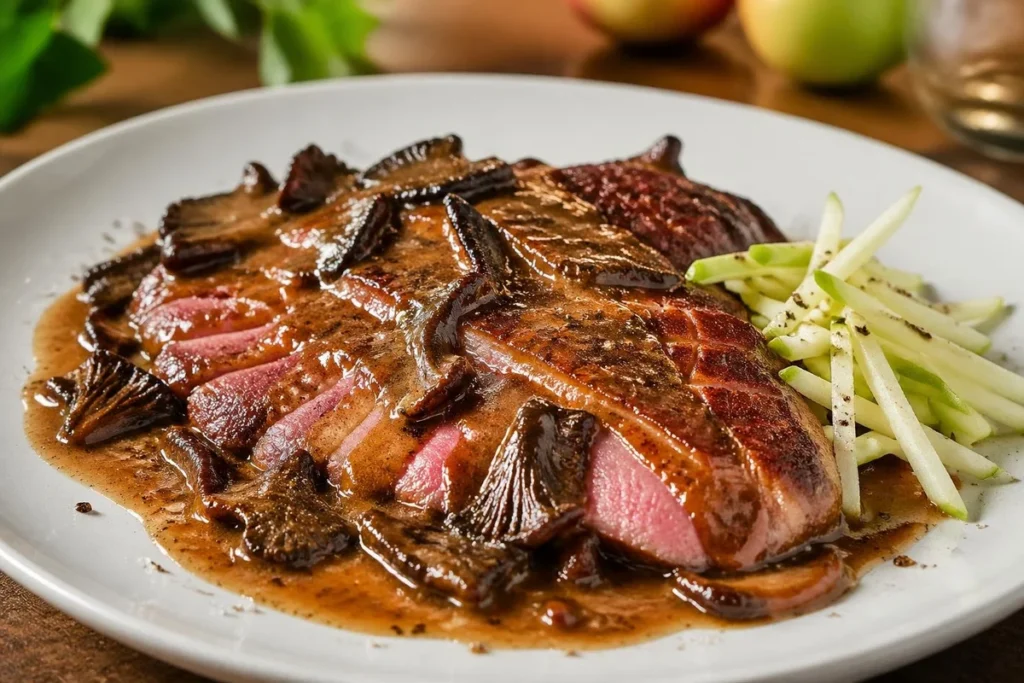
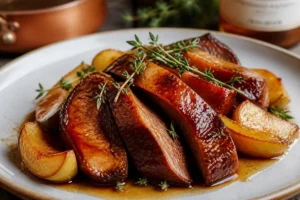
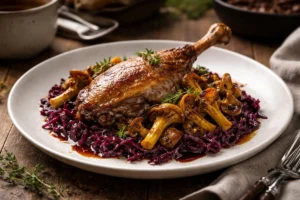
Normandy Duck Breast with Apple Cider and Grey Chanterelles
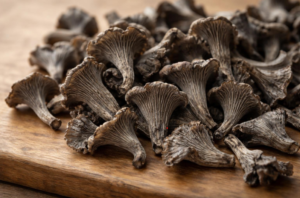
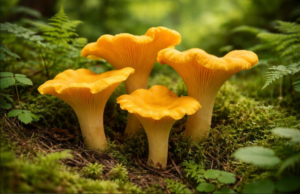
For our 124th technical formulation, we analyze Saccharide-Acid Reduction and Mycelial-Lipid Saturation. Craterellus cinereus (Grey Chanterelle), locally known as Craterellus cinereus, offers a sophisticated leathery depth that acts as a structural bridge between the gamey intensity of duck and the bright acidity of fermented apples. At pure-umami.cc, we utilize the Cold-Pan Rendering method. By slowly liquifying the duck's subcutaneous fat and using it as the primary cooking medium for the mushrooms, we facilitate a Lipid-Phase Infusion where the mushroom's smoky esters are trapped within the rich, animal-derived fats.
The Culinary Physics of This Dish
The engineering of this Magret relies on Surface Dehydration and Ethanol-Phase Volatilization. Molecularly, the duck skin is a complex matrix of collagen and fats. By scoring the skin and starting in a cold pan, we maximize Lipid Extraction without seizing the muscle fibers. The Craterellus cinereus is sautéed in this duck fat; its high-surface-area gills facilitate Rapid Thermal Transduction, resulting in a crisp-tender texture. The deglazing phase with dry Normandy cider introduces Malic and Lactic Acids. As the cider reduces, it undergoes Saccharide Concentration, creating a high-viscosity glaze that binds the fungal guanylates to the duck proteins, ensuring a multi-layered umami experience with a clean, acidic finish.
Terroir Narrative
This formulation is a tribute to the Bocage landscapes of Calvados and Orne in Normandy, where the scent of ripe apples meets the damp soil of ancient oak forests. We bridge the northern Atlantic orchards with our Balkan deciduous highlands. The terroir is expressed through the marriage of the forest's "wild" Craterellus cinereus and the centuries-old pomological heritage of the Norman larder. This follows the same technical rigor we apply to our Boletus edulis (Porcini) and Amanita caesarea (Caesar's mushroom), treating the duck as a study in fat management and aromatic contrast.
Quick Info Bar
Prep Time
Cook Time
Complexity
Calories
Region
25 mins
20 mins
Grand Officier
580 kcal
Normandy, France
Master Recipe (1:10 Rule)
2 Duck Breasts (Magret de Canard) – skin scored in a Diamond Pattern
350g Fresh Craterellus cinereus (Craterellus cinereus) – whole or torn
200ml Dry Normandy Apple Cider (Brut)
1 Shallot (finely minced)
30ml Calvados (Apple Brandy) – for Ethanol-Phase Extraction
50ml Heavy Cream (Normandy Crème Fraîche preferred)
1 Green Apple (Granny Smith) – cut into matchsticks for Acidic Texture
Fleur de Sel and White Pepper
The Technique
The Lipid Extraction: Place duck breasts skin-side down in a cold skillet over medium-low heat. Cook for 10-12 minutes, draining excess fat periodically, until the skin is mahogany and crisp. Flip and cook for 2-3 minutes for Medium-Rare Internal Temp (54°C). Rest for 10 minutes.
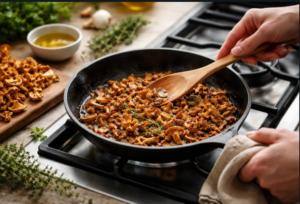
The Fungal Sauté: In 2 tbsp of the rendered duck fat, sauté the Craterellus cinereus and shallots. The mushrooms will undergo Lipid Saturation, absorbing the savory duck essences.
The Flambé Phase: Pour in the Calvados and carefully ignite. The high heat of the flame facilitates Rapid Phenolic Concentration and burns off the harsh alcohol, leaving behind concentrated apple esters.
The Sauce Reduction: Add the cider and reduce by half. Stir in the cream and simmer until the sauce reaches Nappe Consistency. Season with salt and white pepper.
Service: Slice the duck breast. Top with the mushroom-cider sauce and garnish with raw apple matchsticks. The raw apple provides Malic Brightness that resets the palate between rich bites.
Shop Integration
The Craterellus cinereus provides the smoky, sophisticated backbone of this Norman classic, but its umami depth can be layered. We recommend adding a few shavings of our dried Boletus edulis (Porcini) to the cider reduction for a meatier aromatic profile. If you seek a brighter peppery contrast, garnish the plate with sautéed Cantharellus cibarius (Chanterelle). For a luxury upgrade, finish the sauce with a drizzle of Morchella conica (Morel) oil. If available, a side of raw Amanita caesarea (Caesar's mushroom) with a touch of lemon provides a necessary mineral "reset" against the rich duck fat. For a smoky baseline, our Marasmius oreades (Fairy Ring) can be sautéed with the shallots to build a more complex savory foundation.
The Umami Profile
This dish features **Lipid-Acid Synergistic Umami**. The Craterellus cinereus provides 5′-guanylates, while the duck meat and fermented cream introduce a massive density of free glutamates. The Smoky Phenols of the mushroom harmonize with the toasted notes of the rendered duck skin, resulting in a savory experience that is exceptionally persistent, rich, and "orchard-deep."
Sommelier’s Choice
A glass of **Normandy Apple Cider (AOP Pays d'Auge)** or a light **Pinot Noir (Burgundy)**. The sparkling acidity and tannins of the cider are the technical requirement to cut through the duck fat and match the earthy intensity of the Grey Chanterelle.
The Etymological Chronicle
The term Magret is **French**, specifically from the Gascon magre (lean). In **Italian**, this would be Petto d'Anatra alla Normanna con Cantarelli Grigi. In **German**, it is Entenbrust auf Normannische Art mit Grauen Pfifferlingen. In **Spanish**, it is Pato a la Normanda con Trompetas de la Muerte. Regardless of the language, the **Grey Chanterelle** Duck Normandy remains the definitive standard for technical fruit-poultry mycological engineering.
Pure Umami | Mycological Research & Culinary Arts | 2026
To provide the best experiences, we use technologies like cookies to store and/or access device information. Consenting to these technologies will allow us to process data such as browsing behavior or unique IDs on this site. Not consenting or withdrawing consent, may adversely affect certain features and functions.
Functional
Always active
The technical storage or access is strictly necessary for the legitimate purpose of enabling the use of a specific service explicitly requested by the subscriber or user, or for the sole purpose of carrying out the transmission of a communication over an electronic communications network.
Preferences
The technical storage or access is necessary for the legitimate purpose of storing preferences that are not requested by the subscriber or user.
Statistics
The technical storage or access that is used exclusively for statistical purposes.The technical storage or access that is used exclusively for anonymous statistical purposes. Without a subpoena, voluntary compliance on the part of your Internet Service Provider, or additional records from a third party, information stored or retrieved for this purpose alone cannot usually be used to identify you.
Marketing
The technical storage or access is required to create user profiles to send advertising, or to track the user on a website or across several websites for similar marketing purposes.