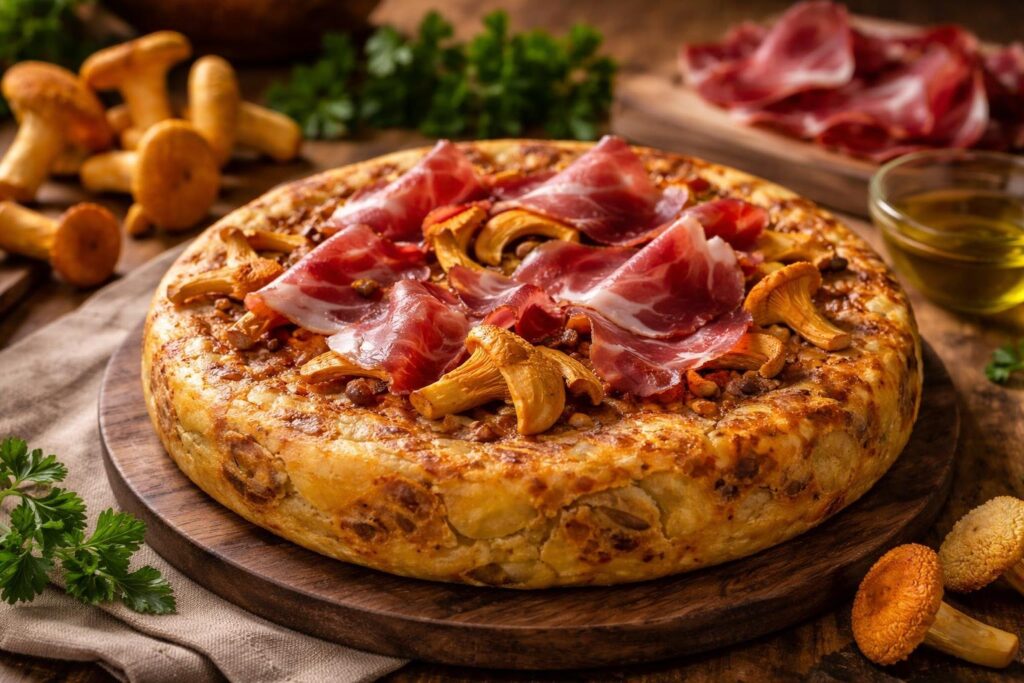
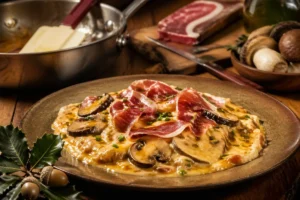
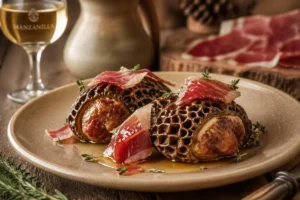
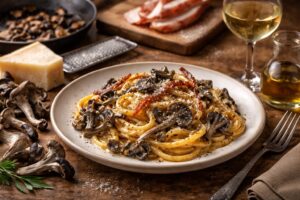
Spanish Tortilla with Chanterelles and Iberico Ham
A Rustic Masterpiece of Iberian Tradition and Forest Umami
⏱️ 45 min🍴 Intermediate🔥 410 kcal🌱 Wild-Harvested
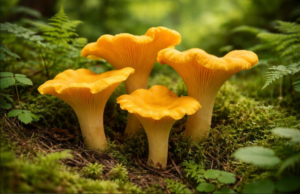
In the sun-drenched taverns of Madrid and Seville, the Tortilla Española is more than just an omelet; it is a cultural cornerstone, a symbol of rustic simplicity and culinary pride. However, when we introduce the Cantharellus cibarius—the Golden Chanterelle—and the world-renowned Iberico Ham, we elevate this humble dish to a culinary masterpiece that rivals the finest fine-dining experiences. This recipe is an homage to the "Dehesa"—the unique Spanish landscape where oak forests meet rolling hills. It is here that the wild-harvested chanterelles emerge from the soil in perfect Mycorrhizal symbiosis with the same trees that provide acorns for the Iberico pigs. This shared origin creates a flavor profile that is inextricably linked by the very essence of the European wilderness.
The beauty of this tortilla lies in the marriage of textures. The soft, olive oil-poached potatoes provide a creamy foundation for the "toothy" and meaty Golden Chanterelles. The Iberico ham, with its melting fat and intense saltiness, acts as a natural seasoning that amplifies the mushroom's delicate apricot and peppery notes. Preparing this dish requires a shift in mindset—it is an exercise in "slow cooking," where the heat is controlled to ensure the eggs remain succulent and the mushrooms retain their forest aroma. This version of the Spanish Tortilla is designed for the modern forager and the epicurean traveler alike, offering a taste of the Mediterranean summer fused with the umami-rich depth of the ancient woodlands.
CHEF’S SPECIAL OFFER
Recreate the flavors of Spain with our premium wild Chanterelles. Hand-picked and sun-dried for maximum intensity.
BUY 2, GET 1 FREE!
Fast shipping across Europe. Perfect for tapas nights and gourmet breakfasts.
The Cantharellus cibarius is a mushroom that possesses a dual personality. On one hand, it offers a floral, almost feminine aroma of stone fruits; on the other, it carries a robust, peppery finish that can stand up to the strongest ingredients. This versatility is exactly why it is the perfect partner for Iberico Ham. In the wild, chanterelles are indicators of a healthy, thriving ecosystem. They act as the "internet of the forest," connecting trees through an underground mycelial network. This wild-harvested origin means they are packed with minerals and nutrients that cannot be found in industrially farmed mushrooms. Their vibrant yellow color is nature's signifier of high antioxidant and Vitamin D levels, synthesized directly from the dappled forest light.
Foraging for chanterelles in the Mediterranean and Balkan regions requires an understanding of the relationship between moisture and warmth. They appear in the wake of the summer storms, hiding in the leaf litter beneath Holm oaks and cork trees. Because they are Mycorrhizal, every mushroom you harvest is a gift from a specific tree, a localized concentration of the forest's energy. This "terroir" is what gives our tortilla its unique edge. The Iberico ham brings its own sensory profile—notes of acorn, salt, and cured fat—which helps to "unlock" the fat-soluble flavor molecules in the chanterelles. Together, they create a sensory profile that is deep, lingering, and profoundly umami-rich. Handling these ingredients is a sensory experience in itself, from the velvety touch of the mushroom cap to the intense, nutty aroma of the curing ham.
The Master Recipe: Iberian Forest Tortilla
This recipe uses the traditional "Confit" method for the potatoes, ensuring they are tender and infused with the flavor of premium olive oil.
400g Fresh or 40g Dried Chanterelles (Cantharellus cibarius)
500g Yukon Gold Potatoes, peeled and thinly sliced
6 Large Organic Eggs (High-quality yolk is essential)
80g Iberico Ham (Jamón Ibérico), hand-torn or thinly sliced
1 Medium White Onion, finely sliced
300ml Extra Virgin Olive Oil (for poaching)
Fresh Flat-leaf Parsley, chopped
Sea Salt and Cracked Black Pepper
Step 1: The Potato and Onion Confit
In a deep, non-stick skillet, heat the olive oil over medium-low heat. Add the sliced potatoes and onions. The oil should cover them completely. Poach them gently—do not fry them. You want the potatoes to become soft and tender, almost like butter, which takes about 15-20 minutes. Once soft, drain the potatoes and onions through a sieve, reserving the oil for future use (it is now flavored with potato essence).
Step 2: The Mushroom and Ham Sauté
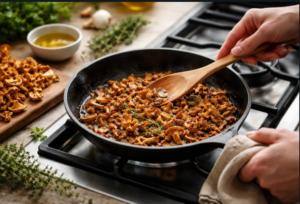
In a separate pan, use a tablespoon of the reserved oil to sauté the chanterelles. Use the dry-pan method first to release moisture, then add the oil and the Iberico ham. Sauté for 3-4 minutes. The fat from the ham will render out and glaze the mushrooms, infusing them with a smoky, salty depth that is the hallmark of Spanish gourmet cuisine.
Step 3: The Fusion and Flip
In a large bowl, whisk the eggs gently. Add the warm potatoes, onions, mushrooms, ham, and parsley. Let the mixture sit for 5 minutes—this allows the starches from the potatoes to bind with the eggs. Heat a clean skillet with a drop of oil, pour in the mixture, and cook on low heat for 8-10 minutes. Using a flat plate, perform the "flip" and cook the other side for 3-4 minutes. The center should remain slightly "jugosa" (juicy).
Pro Technique: The “Resting” Secret
The most common mistake with a Spanish Tortilla is serving it immediately. For the chanterelle and ham flavors to truly meld, the tortilla must rest for at least **15 minutes** before slicing. During this time, the residual heat finishes the egg and allows the umami-rich oils from the ham to penetrate the mushrooms. In Spain, many believe the tortilla is even better when eaten at room temperature, as the cold fat from the Iberico ham offers a different, more creamy mouthfeel.
The Umami Secret: Glutamates & Inosinates
This dish is a biological explosion of flavor. The eggs and mushrooms are high in glutamates, while the cured Iberico ham is a concentrated source of inosinates. When these two molecules meet, they create a synergistic effect that magnifies the perception of salt and savoriness. This means you need less added salt to achieve a powerful, "meaty" flavor profile, making the wild chanterelle the ultimate healthy flavor-booster in traditional Mediterranean recipes.
The Art of the Pairing
This tortilla is best enjoyed as a centerpiece for a long, social brunch or as a "racion" (large tapa). Sommelier's Selection: A chilled Manzanilla Sherry or a crisp Cava. The effervescence and salinity of these Spanish wines cut through the richness of the olive oil and the Iberico fat, highlighting the fruity apricot notes of the chanterelles.
Ancestral Nutrition
By consuming wild chanterelles and grass-fed Iberico ham, you are following a path of Ancestral Nutrition that prioritizes high-density minerals and healthy fats. Iberico ham is rich in Oleic Acid (the same heart-healthy fat found in olive oil), while wild chanterelles provide Copper, Potassium, and Vitamin D. This dish is a complete nutritional package that supports brain health and immune function, proving that traditional, wild-sourced food is often the most sophisticated medicine.
The Chanterelle Lexicon: Global Names for Cantharellus cibarius
The Golden Chanterelle is one of the most commercially important wild mushrooms worldwide. Its names often reflect its apricot aroma and bright yellow hue:
To provide the best experiences, we use technologies like cookies to store and/or access device information. Consenting to these technologies will allow us to process data such as browsing behavior or unique IDs on this site. Not consenting or withdrawing consent, may adversely affect certain features and functions.
Functional
Always active
The technical storage or access is strictly necessary for the legitimate purpose of enabling the use of a specific service explicitly requested by the subscriber or user, or for the sole purpose of carrying out the transmission of a communication over an electronic communications network.
Preferences
The technical storage or access is necessary for the legitimate purpose of storing preferences that are not requested by the subscriber or user.
Statistics
The technical storage or access that is used exclusively for statistical purposes.The technical storage or access that is used exclusively for anonymous statistical purposes. Without a subpoena, voluntary compliance on the part of your Internet Service Provider, or additional records from a third party, information stored or retrieved for this purpose alone cannot usually be used to identify you.
Marketing
The technical storage or access is required to create user profiles to send advertising, or to track the user on a website or across several websites for similar marketing purposes.