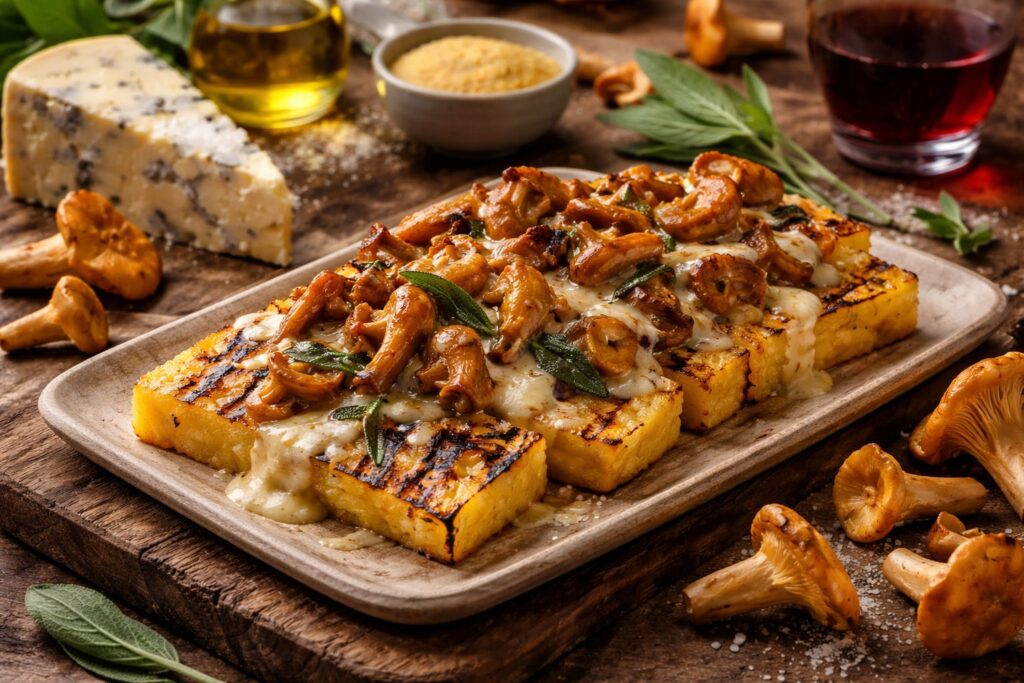
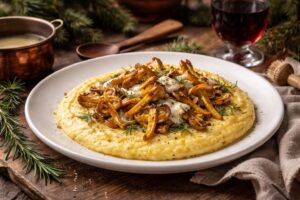
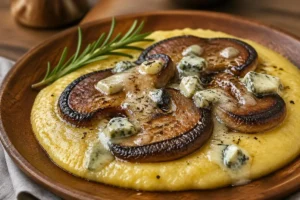
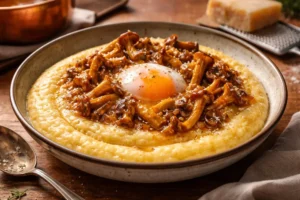
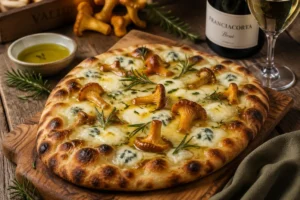
Grilled Polenta with Wild Chanterelles and Gorgonzola Dolce
A Rustic Journey to the Valleys of Northern Italy
⏱️ 50 min🍴 Intermediate🔥 390 kcal🌱 Wild-Harvested
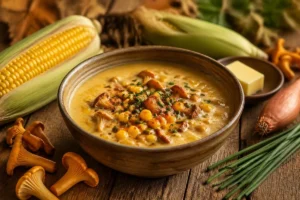
In the mist-covered foothills of the Italian Alps, particularly in the regions of Lombardy and Piedmont, polenta is not merely an accompaniment—it is the very canvas of the culinary landscape. This recipe for Grilled Polenta with Wild Chanterelles is a tribute to the "Cucina Povera" that evolved into a culinary masterpiece of the modern age. The dish tells a story of the autumn harvest, where the golden fields of corn meet the ancient, shaded forests where the Cantharellus cibarius thrives. By grilling the polenta to achieve a smoky, charred exterior and topping it with the luxurious creaminess of Gorgonzola Dolce, we create a sensory experience that defines the soulful depth of Italian mountain cooking.
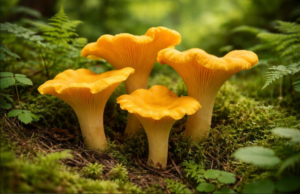
The Golden Chanterelle, often referred to as "Finferlo" in Italian markets, is the star of this composition. Its natural peppery finish and apricot-scented aroma provide a necessary brightness that cuts through the intense, buttery richness of the Gorgonzola. This is a dish designed for slow afternoons and long evenings, reflecting a culture that values the wild-harvested treasures of the land. In Italy, the transition from fresh summer ingredients to the earthy, concentrated flavors of the fall is celebrated through dishes like this, where every bite is a reminder of the Mycorrhizal symbiosis that sustains the forest and, by extension, the traditional Italian table. It is an honest, powerful connection to the European wilderness, refined through centuries of culinary heritage.
CHEF’S SPECIAL OFFER
Elevate your Italian recipes with our premium wild-harvested mushrooms. Sun-dried to lock in that authentic forest umami.
BUY 2, GET 1 FREE!
Fast shipping across the EU and UK. Direct from the heart of the wild.
The Cantharellus cibarius is a mushroom that possesses a unique "textural intelligence." While other fungi may become soggy or disappear when paired with heavy cheeses, the chanterelle maintains its firm, meaty integrity. Its sensory profile is a fascinating paradox—offering a floral sweetness reminiscent of sun-ripened fruit, while simultaneously delivering a sharp, earthy spice. In the wild, these mushrooms are indicators of ancient, undisturbed soil. They are Mycorrhizal, meaning they live in a delicate nutrient-exchange with the roots of trees like the Silver Fir and European Beech. This wild-harvested origin is what gives them their deep umami-rich profile, which is significantly more intense than anything grown in a sterile commercial environment. Their vibrant yellow color is nature's own marker for high levels of **Vitamin D** and **antioxidants**.
Foraging for chanterelles in the Italian highlands requires a keen understanding of the terrain. They love the mossy, sloping grounds where the water drains but the humidity remains high. To harvest them correctly, one must gently twist and pull, ensuring the mycelium remains intact for future seasons. This sustainable practice is why the European Golden Chanterelle remains a consistent presence in gourmet cuisine. The pairing with Gorgonzola Dolce is a sensory masterstroke; the "dolce" variety of this blue cheese is younger and creamier than its "piccante" cousin, allowing it to melt into the hot, grilled polenta without overwhelming the delicate apricot notes of the mushrooms. Together, they create a sensory profile that is thick, savory, and punctuated by the bright, peppery finish of the wild fungi. It is a true symphony of the forest floor.
The Master Recipe: Grilled Alpine Polenta
This recipe focuses on the contrast between the crispy, charred polenta and the silky, sautéed mushrooms.
500g Fresh Chanterelles (Cantharellus cibarius)
250g Polenta Bramata (Coarse yellow cornmeal)
1 liter Water or Vegetable Stock
150g Gorgonzola Dolce (Creamy blue cheese)
50g Grass-fed Butter
2 tbsp Extra Virgin Olive Oil
1 clove Garlic, crushed
Fresh Sage Leaves
Sea Salt and Freshly Ground Black Pepper
Step 1: The Polenta Foundation
Bring the water or stock to a boil, add a generous pinch of salt, and slowly whisk in the polenta. Lower the heat and cook, stirring frequently, for about 40 minutes until thick and pulling away from the sides. Stir in half the butter. Pour the polenta into a greased rectangular tray, smoothing it out to a 2cm thickness. Let it cool completely until firm (ideally prepare this several hours in advance or the day before).
Step 2: The Forest Sauté
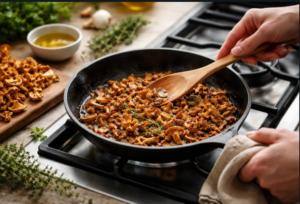
Clean the chanterelles with a soft brush. In a wide pan, sauté the mushrooms in the remaining butter and olive oil with the crushed garlic and sage. Use high heat initially to sear the mushrooms, then lower it to let them soften and absorb the herbal aromas. The sage provides a piney, earthy note that perfectly bridges the gap between the blue cheese and the wild mushrooms.
Step 3: The Grilling and Assembly
Slice the firm polenta into triangles or squares. Brush lightly with olive oil and grill on a hot griddle pan or outdoor BBQ until deep char marks appear and the exterior is crispy. To serve, place the hot polenta on a plate, top with a generous slice of Gorgonzola Dolce, and finish with a large spoonful of the sautéed chanterelles. The heat from the polenta and mushrooms will cause the cheese to melt into a decadent sauce.
Pro Technique: The Sage-Butter Infusion
To truly elevate this dish, use the Sage-Butter Infusion. Before adding the mushrooms to the pan, fry the whole sage leaves in the butter until they are crispy. Remove the leaves and set them aside. The butter is now infused with the essential oils of the sage, which will penetrate the chanterelles as they cook. Use the crispy leaves as a final garnish—they provide a concentrated burst of flavor and a satisfying crunch that mirrors the crispy edges of the grilled polenta.
The Umami Secret: Maillard & Blue Mold
The umami in this dish is multi-layered. The grilling of the polenta creates a Maillard reaction on the corn's surface, while the Gorgonzola contains high levels of free amino acids created by the blue mold (*Penicillium roqueforti*). When these are combined with the glutamates in the chanterelles, they create a savory explosion. This is why this vegetarian dish feels as satisfying and "meaty" as a slow-cooked ragu—it hits every savory receptor on the human tongue simultaneously.
The Art of the Pairing
This is a rich, mountain-style dish that requires a wine with enough acidity to cut through the fat of the cheese. Sommelier's Selection: A Barbera d'Asti or a Nebbiolo from Piedmont. The red fruit acidity and fine tannins of these wines perfectly balance the creaminess of the Gorgonzola and the earthiness of the wild-harvested mushrooms.
Ancestral Nutrition
This dish is a powerhouse of Ancestral Nutrition, providing a balance of complex carbohydrates, healthy fats, and essential minerals. Chanterelles are exceptionally high in Vitamin B-complex and Copper, while the fermented Gorgonzola provides beneficial bacteria and highly bioavailable calcium. It is a meal that honors the biological wisdom of traditional diets, providing sustained energy and supporting overall metabolic health through the purity of wild-harvested ingredients.
The Chanterelle Lexicon: Global Names for Cantharellus cibarius
The Golden Chanterelle is one of the most commercially important wild mushrooms worldwide. Its names often reflect its apricot aroma and bright yellow hue:
To provide the best experiences, we use technologies like cookies to store and/or access device information. Consenting to these technologies will allow us to process data such as browsing behavior or unique IDs on this site. Not consenting or withdrawing consent, may adversely affect certain features and functions.
Functional
Always active
The technical storage or access is strictly necessary for the legitimate purpose of enabling the use of a specific service explicitly requested by the subscriber or user, or for the sole purpose of carrying out the transmission of a communication over an electronic communications network.
Preferences
The technical storage or access is necessary for the legitimate purpose of storing preferences that are not requested by the subscriber or user.
Statistics
The technical storage or access that is used exclusively for statistical purposes.The technical storage or access that is used exclusively for anonymous statistical purposes. Without a subpoena, voluntary compliance on the part of your Internet Service Provider, or additional records from a third party, information stored or retrieved for this purpose alone cannot usually be used to identify you.
Marketing
The technical storage or access is required to create user profiles to send advertising, or to track the user on a website or across several websites for similar marketing purposes.