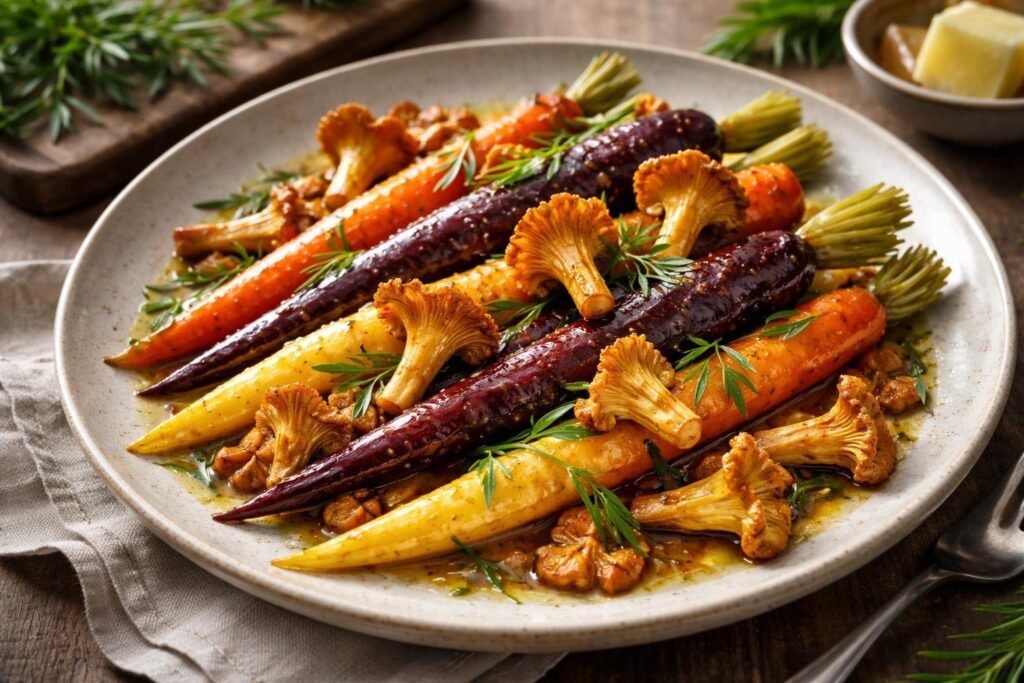
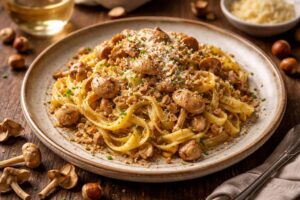
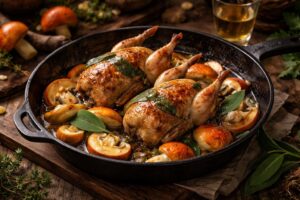
Glazed Heirloom Carrots with Chanterelles and Fresh Tarragon
A Vibrant Harmony of Earthly Sweetness and Forest Gold
⏱️ 35 min🍴 Easy🔥 210 kcal🌱 Wild-Harvested
In the world of high-end vegetarian cuisine, the challenge is often to find ingredients that carry enough structural and flavor complexity to stand alone without the presence of meat. This recipe, featuring **Glazed Heirloom Carrots and Chanterelles**, is a definitive answer to that challenge. It brings together two of nature's most visually and aromatically striking gifts. Heirloom carrots, with their deep purples, vibrant oranges, and pale yellows, offer a spectrum of sweetness that can only be matched by the "Gold of the Forest"—the Cantharellus cibarius. This dish is a celebration of the garden and the wild forest coming together in a silent, umami-rich embrace. It is a testament to the fact that when ingredients are wild-harvested and grown in heritage soils, they require very little intervention to reach the level of a culinary masterpiece.
The inspiration for this pairing comes from the traditional farmstead kitchens of Central Europe, where what was pulled from the ground in the morning was often paired with what was foraged from the nearby woods in the afternoon. The Golden Chanterelle, with its unmistakable scent of sun-ripened apricots, acts as the perfect aromatic bridge for the earthy, honey-like notes of the glazed carrots. By introducing fresh tarragon—a herb known for its sophisticated anise-like bite—we elevate the dish from simple rustic fare to a complex gourmet experience. This recipe is designed for the modern epicurean who seeks a deeper connection to the source of their food, valuing the Mycorrhizal symbiosis of the forest just as much as the organic heirloom seeds of the garden.
CHEF’S SPECIAL OFFER
Elevate your vegetable dishes with the world's finest wild mushrooms. Hand-picked, sun-dried, and packed with forest essence.
BUY 2, GET 1 FREE!
Standard EU shipping. Experience the true taste of wild-harvested quality.
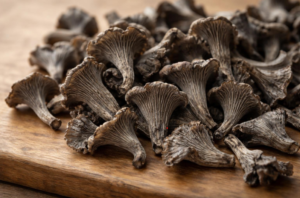
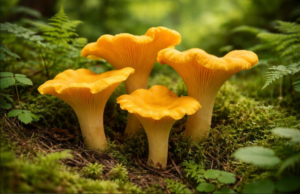
The Cantharellus cibarius is a mushroom that demands attention. Its sensory profile is a complex matrix of floral esters and peppery compounds. When fresh, it feels velvety to the touch, and its gills—which are not true gills but rather folds in the flesh—are a masterclass in biological architecture. This density is crucial for this recipe; while common mushrooms might disappear into a vegetable glaze, the chanterelle maintains its "toothy" bite, providing a much-needed textural contrast to the soft, butter-glazed carrots. In the wild, these mushrooms are often found in European Beech and Spruce forests, where they form a subterranean network that balances the ecosystem. This wild-harvested origin ensures that the mushrooms are free from the sterile blandness of commercial varieties, carrying instead a faint mineral tang that speaks of the ancient rocks and rich leaf litter of their home.
Foraging for chanterelles to pair with root vegetables is an act of seasonal timing. The best specimens for glazing are those found in the late summer, when the forest floor is warm and the mushrooms have had time to develop their full aromatic potential. These mushrooms are bio-accumulators, meaning they concentrate the nutrients of the forest, including high levels of Vitamin D and Selenium. This nutritional density is matched by their flavor intensity. When you combine them with heirloom carrots—which are themselves rich in beta-carotene and natural sugars—you are creating a nutrient-dense powerhouse. The chanterelle's natural peppery finish cuts through the sugar of the glaze, creating a balanced umami loop that keeps the palate engaged. It is a sophisticated interplay of forest foraging and heritage farming.
The Master Recipe: Forest-Glazed Heirloom Carrots
The secret to this dish is the "Double Glazing" technique—once for the carrots to soften them, and once for the mushrooms to coat them in the carrot's honeyed juices.
500g Heirloom Carrots (Multi-colored, small to medium size)
300g Fresh or 30g Dried Chanterelles (Cantharellus cibarius)
60g Unsalted Grass-fed Butter
1 tbsp Organic Wildflower Honey
100ml Vegetable Broth (or the mushroom soaking liquid)
1 tbsp Fresh Tarragon, finely chopped
1 tsp Apple Cider Vinegar (to balance the sweetness)
Flaky Sea Salt and Cracked Black Pepper
Step 1: The Carrot Softening
Peel the heirloom carrots, leaving an inch of the green tops for a rustic look. In a wide pan, melt half the butter with the honey. Add the carrots and the vegetable broth. Cover and simmer over medium heat for 8-10 minutes until the carrots are "al dente"—tender but still holding their shape. The broth and honey will begin to form a light, shimmering syrup.
Step 2: The Chanterelle Integration
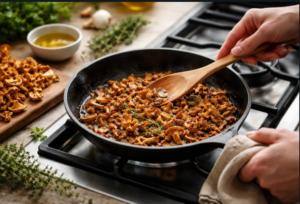
Remove the lid and increase the heat. Push the carrots to one side and add the remaining butter and the chanterelles. Let the mushrooms sear in the honey-butter mixture for 4-5 minutes. As the mushrooms release their juices, they will mingle with the carrot glaze, creating a complex umami-rich sauce that coats both ingredients in a golden sheen.
Step 3: The Herbal Finish
Once the liquid has reduced to a thick glaze that clings to the vegetables, add the **apple cider vinegar**. This small touch of acidity is vital to brighten the dish. Turn off the heat and toss in the **fresh tarragon**. The heat of the pan will release the anise-scented oils of the tarragon, perfectly finishing the apricot notes of the mushrooms. Season with flaky sea salt and serve immediately.
Pro Technique: The Pan-Glaze Emulsion
To achieve a professional, glossy finish, use the Pan-Glaze Emulsion technique. When the carrots and chanterelles are almost finished, add a tablespoon of cold water or broth and swirl the pan vigorously. This cold liquid, combined with the hot butter and honey, creates a temporary emulsion that produces a thick, mirror-like glaze that won't break or feel greasy on the plate.
The Umami Secret: Maillard & Sugars
The "meaty" satisfaction of this vegetarian dish comes from the Maillard reaction occurring on the surface of the chanterelles, combined with the caramelized natural sugars of the heirloom carrots. When the nucleotides in the mushrooms meet the concentrated sweetness of the glaze, they trigger a "flavor amplification" that makes the vegetables taste far more savory than they would individually. This is the science behind why mushrooms are the ultimate "bridge" ingredient in plant-based gourmet cooking.
The Art of the Pairing
This dish is exceptionally versatile. It works as a side for roasted poultry or as a main course when served over creamy polenta or quinoa. Sommelier's Selection: A Viognier or a Chenin Blanc. These wines often have stone-fruit notes (like apricot and peach) that perfectly echo the natural aroma of the Golden Chanterelles.
Ancestral Nutrition
By choosing heirloom carrots and wild-harvested chanterelles, you are consuming a meal rich in Phytonutrients. Heirloom varieties often contain significantly higher levels of antioxidants than modern hybrids. Paired with the Vitamin D, Copper, and Potassium from the chanterelles, this dish provides a bioavailable boost to the immune and nervous systems. This is Ancestral Nutrition that honors the biological needs of the body through the diversity of the wild and the heritage garden.
The Chanterelle Lexicon: Global Names for Cantharellus cibarius
The Golden Chanterelle is one of the most commercially important wild mushrooms worldwide. Its names often reflect its apricot aroma and bright yellow hue:
To provide the best experiences, we use technologies like cookies to store and/or access device information. Consenting to these technologies will allow us to process data such as browsing behavior or unique IDs on this site. Not consenting or withdrawing consent, may adversely affect certain features and functions.
Functional
Always active
The technical storage or access is strictly necessary for the legitimate purpose of enabling the use of a specific service explicitly requested by the subscriber or user, or for the sole purpose of carrying out the transmission of a communication over an electronic communications network.
Preferences
The technical storage or access is necessary for the legitimate purpose of storing preferences that are not requested by the subscriber or user.
Statistics
The technical storage or access that is used exclusively for statistical purposes.The technical storage or access that is used exclusively for anonymous statistical purposes. Without a subpoena, voluntary compliance on the part of your Internet Service Provider, or additional records from a third party, information stored or retrieved for this purpose alone cannot usually be used to identify you.
Marketing
The technical storage or access is required to create user profiles to send advertising, or to track the user on a website or across several websites for similar marketing purposes.