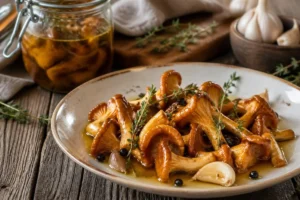
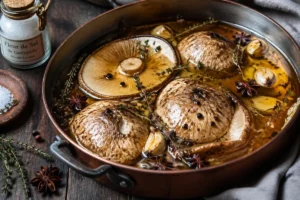
In the heart of the French countryside, the term "Confit" is whispered with a reverence usually reserved for fine wine. Derived from the French verb confire (to preserve), this ancient culinary technique was born out of necessity long before the advent of refrigeration. While most people associate confit with duck, the application of this method to the Cantharellus cibarius—the Golden Chanterelle—is nothing short of a gastronomic revelation. By slow-cooking these wild-harvested treasures in a bath of aromatic oil at low temperatures, we transform their fibrous structure into something resembling silk. This process does more than just cook the mushroom; it seals in the umami-rich essence of the forest floor, allowing you to enjoy the fleeting taste of summer well into the colder months.
This recipe is a tribute to the patient cook. In our modern, high-speed world, the act of "confiting" is a radical statement of quality over speed. The European Golden Chanterelle is particularly suited for this method because of its natural resilience and low water content compared to cultivated species. As the mushrooms gently poach in thyme-infused olive oil, the volatile aromatic compounds—those distinctive notes of apricot and white pepper—become trapped within the fat. This creates a dual-purpose luxury: a jar of tender, butter-soft mushrooms and a vibrant, mushroom-scented oil that is pure liquid gold. It is a culinary masterpiece of preservation that bridges the gap between the wild, untamed woods and the sophisticated gourmet pantry.
CHEF’S SPECIAL OFFER
Stock your pantry with the finest wild-harvested mushrooms. Perfect for confit, stews, and gourmet gifting.
BUY 2, GET 1 FREE!
EU-wide shipping. Hand-picked quality from the heart of the Balkans.
A fresh Chanterelle is a sensory marvel, but a confited chanterelle is an evolution. The slow poaching process amplifies the mushroom's natural sweetness, muting the sharp peppery notes and highlighting the floral, stone-fruit aromas that make Cantharellus cibarius so famous. When you bite into a confit mushroom, the texture is luxurious—almost fat-like—melting on the tongue while retaining enough structural integrity to feel substantial. This is the result of Mycorrhizal symbiosis; the complex sugars and minerals the mushroom gathered from its host tree (usually spruce or oak) are concentrated as the oil gently draws out any remaining moisture. In the wild, these mushrooms are found in the damp, mossy clearings of European Boreal forests, where they act as the "scouts" of the fungal kingdom, appearing in vibrant clusters that are impossible to miss once you know their secret locations.
Foraging for confit requires a specific mindset. You are looking for mid-to-large specimens that have fully opened their "trumpets." These mushrooms have had the time to develop a higher density of guanylates and glutamates, which are the chemical pillars of umami. Because they are wild-harvested, they carry a distinct mineral profile that is a fingerprint of the soil's composition. This "terroir" is preserved perfectly by the oil, which acts as a protective sarcophagus for the mushroom's delicate chemical profile. Unlike pickling, which introduces acidity, confit preserves the mushroom in its most natural, savory state. It is a process that respects the wild-harvested origin of the product, ensuring that the European wilderness remains the star of the show. Every jar is a time capsule of the forest's summer bounty.
The Master Recipe: Chanterelle Confit
The secret here is the temperature. The oil should never bubble vigorously; it should only "smile" with tiny, occasional air bubbles.
800g Fresh Chanterelles (Cantharellus cibarius)
600ml Extra Virgin Olive Oil (High quality, but neutral profile)
1 head of Garlic, cloves separated and peeled
6-8 sprigs of Fresh Thyme
2 Bay Leaves (Dried or fresh)
1 tsp Whole Black Peppercorns
1 tsp Sea Salt (Non-iodized)
Optional: A few strips of lemon zest
Step 1: The Pre-Singe Dry Prep
Clean your mushrooms thoroughly. If they are very wet, let them air-dry for 2 hours. Place them in a wide saucepan over medium heat for 5 minutes without any oil. This "dry sweat" expels the surface water, ensuring that when the oil is added, it can penetrate the mushroom's pores without being blocked by steam. This step is critical for a safe, long-lasting confit.
Step 2: The Aromatic Bath
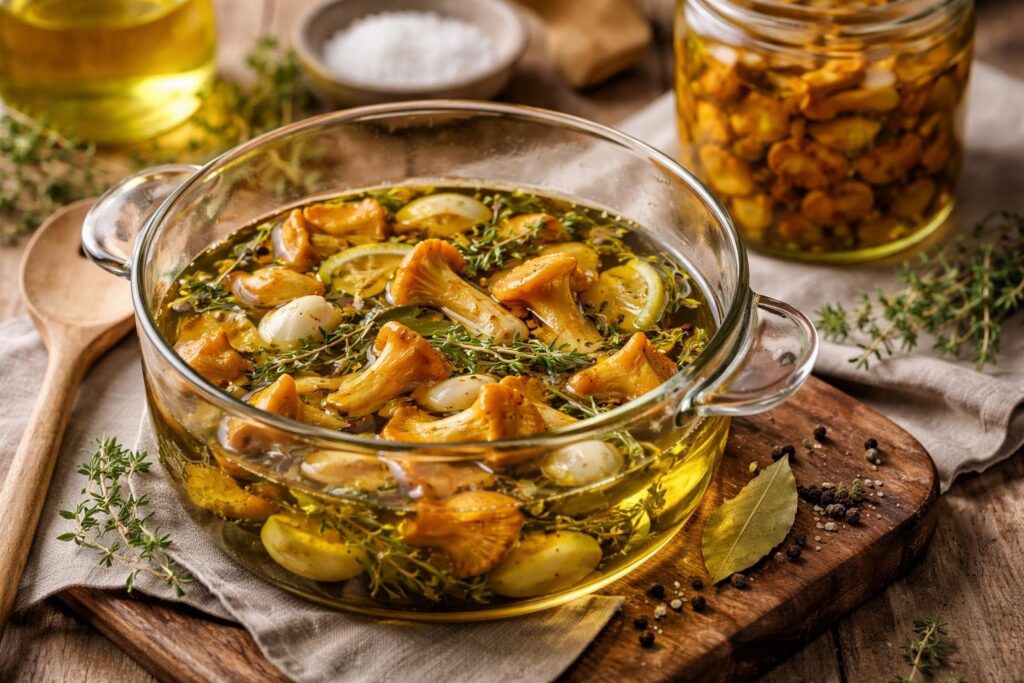
Pour the olive oil over the mushrooms until they are completely submerged. Add the garlic cloves, fresh thyme, bay leaves, peppercorns, and lemon zest. Lower the heat to the absolute minimum. If you have a kitchen thermometer, aim for an oil temperature between **80°C and 85°C**. Never exceed 90°C, as the mushrooms will fry rather than poach, losing their silkiness.
Step 3: The Slow Transformation
Let the chanterelles poach for approximately 60 to 75 minutes. The mushrooms will become translucent and slightly darker in color. The garlic cloves should be soft enough to spread like butter. Once finished, stir in the sea salt and let the entire pot cool to room temperature before transferring to sterilized glass jars.
Pro Technique: The Fat-Seal Storage
To maximize shelf life, ensure that the mushrooms are completely submerged under at least **2cm of oil** in the jar. This oil layer acts as a biological barrier against oxygen, preventing oxidation and spoilage. In a refrigerator, this confit will stay perfect for 3 to 4 weeks. For an even deeper flavor, use the "Aged Confit" method: let the jar sit for 3 days before the first use, allowing the garlic and thyme to fully migrate into the mushroom tissues.
The Umami Secret: Lipid-Flavor Bonding
The science of confit lies in Lipid-Flavor Bonding. Many of the flavor molecules in wild chanterelles are fat-soluble (lipophilic). By cooking them slowly in oil, you are essentially extracting these umami-rich compounds and suspending them in a medium that our taste buds are evolutionarily designed to crave. The fat coats the tongue, creating a longer "finish" and allowing the guanylates in the mushrooms to interact more intensely with our savory receptors.
The Art of the Pairing
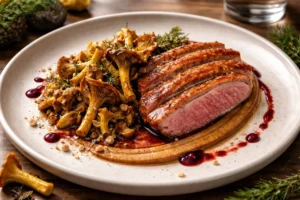
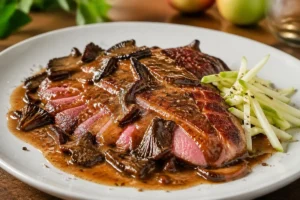
Usage: Spoon the mushrooms over grilled steaks, toss them into fresh pasta, or serve them on top of a creamy polenta. Sommelier's Selection: A nutty Amontillado Sherry or a full-bodied Chardonnay with light oak will complement the rich, oily texture of the confit perfectly.
Ancestral Nutrition
This method is a powerhouse of Ancestral Nutrition. The combination of heart-healthy monounsaturated fats from olive oil and the high Vitamin D content of wild-harvested chanterelles makes this a nutrient-dense addition to any meal. The garlic provides allicin for immune support, while the mushrooms offer Selenium, an essential mineral for cellular protection and metabolic health.
The Chanterelle Lexicon: Global Names for Cantharellus cibarius
The Golden Chanterelle is one of the most commercially important wild mushrooms worldwide. Its names often reflect its apricot aroma and bright yellow hue:
To provide the best experiences, we use technologies like cookies to store and/or access device information. Consenting to these technologies will allow us to process data such as browsing behavior or unique IDs on this site. Not consenting or withdrawing consent, may adversely affect certain features and functions.
Functional
Always active
The technical storage or access is strictly necessary for the legitimate purpose of enabling the use of a specific service explicitly requested by the subscriber or user, or for the sole purpose of carrying out the transmission of a communication over an electronic communications network.
Preferences
The technical storage or access is necessary for the legitimate purpose of storing preferences that are not requested by the subscriber or user.
Statistics
The technical storage or access that is used exclusively for statistical purposes.The technical storage or access that is used exclusively for anonymous statistical purposes. Without a subpoena, voluntary compliance on the part of your Internet Service Provider, or additional records from a third party, information stored or retrieved for this purpose alone cannot usually be used to identify you.
Marketing
The technical storage or access is required to create user profiles to send advertising, or to track the user on a website or across several websites for similar marketing purposes.