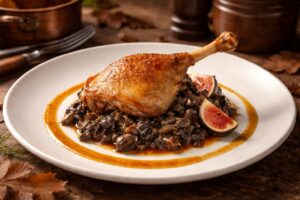
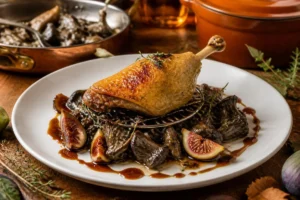
A high-concept exploration of the Balkan Continental terroir, where the smoky, peppery Cantharellus cinereus meets the gamey richness of duck and the wild acidity of fermented rosehips.
Smoked Duck & Gray Chanterelles
The Balkan Thicket: Foraged Embers and the Wild Rosehip Bloom
The Historical Prelude: The Hunter’s Winter Larder
In the foothills of the Sredna Gora and the Balkan Range, the combination of waterfowl and forest fungi is a tradition born from the overlapping seasons of the hunt and the harvest. Historically, Bulgarian villagers would preserve autumn ducks in their own fat (confit) alongside "Ashy" mushrooms—the Siv Pachi Krak (Gray Chanterelle).
The Gray Chanterelle was specifically chosen for duck because of its resilient molecular structure. While other mushrooms turn to silk in the presence of heavy animal fats, the Gray Chanterelle maintains a peppery "bite" that cuts through the cloying richness of the duck skin. To provide the necessary acidic balance, mountain dwellers used Shipka (Rosehip), either fermented or reduced into a thick, tart paste.
By the late 20th century, this rustic combination was elevated in the "National Revival" restaurants of Veliko Tarnovo. The dish was transformed into a display of technical finesse: the duck breast is seared to a medium-rare pink, the mushrooms are "fried" in the rendered duck gold, and the rosehip is refined into a glossy jus. Today, it represents the Bulgarian New Wave—a cuisine that respects ancestral foraging while utilizing modern French-influenced technical precision.
Narrative Intro: Duck and Gray Chanterelles share a common aromatic language: "Smoke." Our philosophy for this dish is "Lipid-Infusion." We use the rendered fat from the duck skin as the primary cooking medium for the mushrooms, ensuring that the smoky forest minerals of the Gray Chanterelle are perfectly suspended in the savory game fats. It is a dish that tastes like a campfire in a frozen forest.
Sensory & Foraging Profile: The Oak-Scrub and Clay Terroir
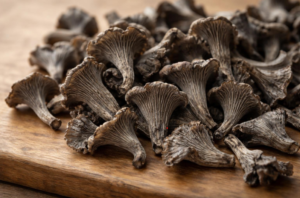
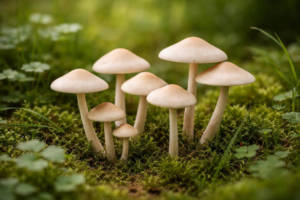
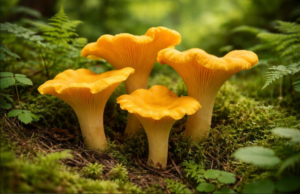
The Cantharellus cinereus of Central Bulgaria thrives in the loamy, clay-heavy soils beneath mixed oak and hornbeam. This produces a mushroom with a deeply ashen hue and a flavor profile that evokes cold hearth-smoke, black tea, and dried stone fruits. Their hollow stems make them incredibly efficient at "drinking" the sauces they are cooked in.
Ethical Harvesting & The "Thracian Sweep": In the Bulgarian tradition, we harvest Gray Chanterelles using **bone-handled knives** to prevent any metallic tang from affecting the delicate peppery oils. We harvest only after the first "Hard Frost" has hit the forest floor; this temperature shock triggers the mushroom to produce higher levels of amino acids, making them taste significantly more "meaty." We strictly avoid clearing the leaf litter completely, ensuring the mycelium remains insulated against the harsh Balkan winter.
Essential Equipment: The Balkan Station
Cold Cast-Iron Skillet: The essential tool for starting a duck breast from cold to maximize fat rendering without burning the skin.
Fine Mesh Chinois: For straining the Rosehip reduction to a mirror-like "Balkan Velvet" finish.
Silicon-Tipped Tongs: For moving the mushrooms without bruising their delicate trumpet edges.
Culinary Atomizer: For misting the final plate with a hint of **Rakia (Plum Brandy)** to amplify the smoky notes.
Master Recipe: Duck & Gray Chanterelles
Stage 1: The Duck Rendering (The Cold Start)
Score the skin of 2 Moulard Duck Breasts in a crosshatch pattern. Place them skin-side down in a cold skillet. Turn heat to medium-low. Let the fat render slowly for 12–15 minutes until the skin is mahogany-brown and paper-thin. Remove excess fat, leaving 2 tablespoons in the pan.
Stage 2: The Forest Sauté
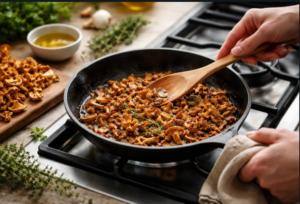
Increase the heat to medium-high. Add 300g of fresh Gray Chanterelles to the duck fat. Sauté until they release their liquid and it evaporates back into a sticky glaze. Add 1 minced shallot and a sprig of fresh thyme.
Stage 3: The Rosehip Reduction (Shipkovo Jus)
In a separate small pot, combine 100ml of Rosehip Marmalade (No-Added-Sugar), 50ml of Mavrud Red Wine, and 50ml of duck or beef stock. Reduce until it reaches a coating consistency. Add a pinch of sea salt to balance the tartness.
Stage 4: The Reverse-Sear Finish
Flip the duck breasts and cook on the flesh side for only 2–3 minutes. The goal is an internal temperature of exactly **54°C**. Let the meat rest for 10 minutes; this allows the juices to redistribute and the smoke-aroma to settle.
Stage 5: The Assembly
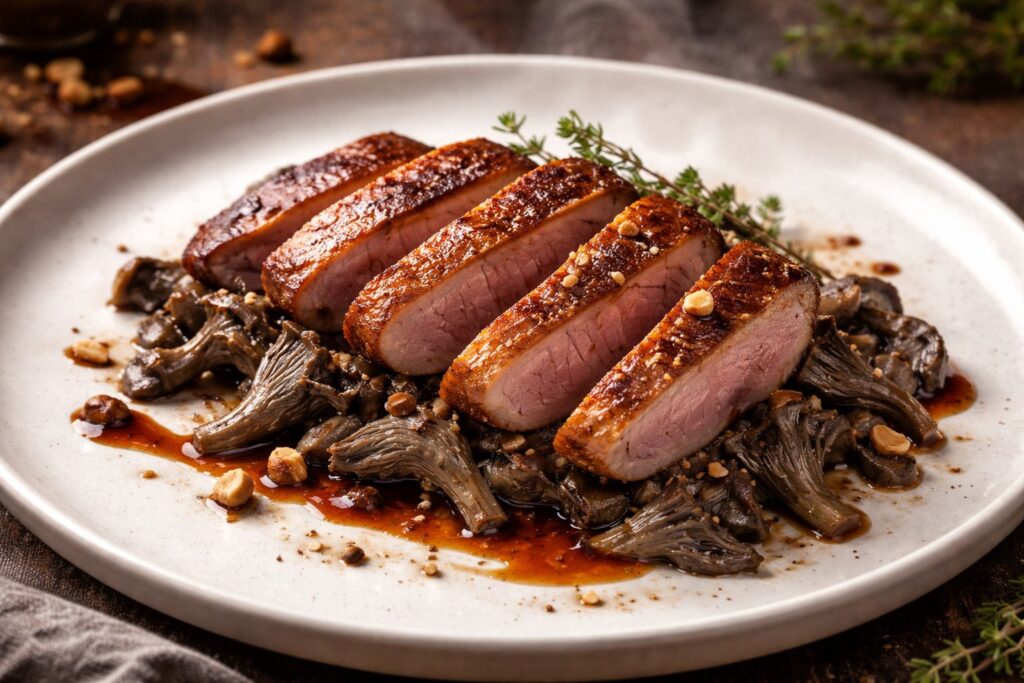
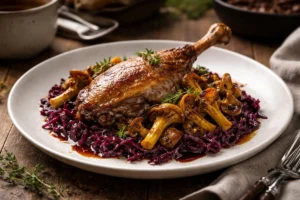
Slice the duck breast thinly against the grain. Lay the slices over a bed of the "duck-fat-fried" Gray Chanterelles. Drizzle the Rosehip reduction in a fine line across the meat. Garnish with a few crushed toasted hazelnuts for texture.
Substitutions & Variations: The Luxury Palette
The Fruit: If rosehips are unavailable, use Fermented Blackberries or a tart Lingonberry preserve.
The Spirit: Deglaze the mushrooms with 50ml of **Aged Bulgarian Rakia** for an intense, orchard-fruit aroma.
The Texture: Add a few leaves of Fried Sage to the mushrooms to provide a herbal "crunch" that echoes the duck skin.
Pro Technique: The “Resting-Juice” Glaze
Do not discard the red juices that pool on the plate while the duck is resting! Whisk these directly into your Rosehip reduction at the very last second. This provides a shot of pure hemoglobin umami that binds the sweet fruit notes to the mineral-rich Gray Chanterelles.
The Umami Secret: Anthocyanin and Guanylate Coupling
The Rosehips are rich in Anthocyanins (natural pigments), which act as a carrier for the Guanylates in the Gray Chanterelle. When these interact with the **Iron** in the duck meat, they form a flavor bridge that the palate perceives as "deeply savory." The acidity of the rosehip also lowers the pH on the surface of the tongue, increasing the sensitivity of your taste buds to the mushroom's smoky minerals.
The Art of Pairing: The Sommelier’s Selection
Sommelier's Choice: A Rubin (Bulgarian Syrah-Nebbiolo cross). Its dark berry notes and spicy, tobacco-leaf finish are the perfect match for the smoked duck and the ashen chanterelles.
Non-Alcoholic Alternative: A Cold-Brewed Black Tea with Rosehip and Dried Plum. The tannins in the tea mimic the structure of a red wine.
Micro-FAQ
Q: Why start the duck in a cold pan? A: Starting in a hot pan "seizes" the fat, trapping it under the skin. A cold start allows the fat to melt (render) slowly, resulting in a skin that is as thin and crisp as a potato chip.
Q: Can I use dried Gray Chanterelles? A: Yes, but rehydrate them in a mixture of 50% water and 50% red wine to maintain their sophisticated color and flavor profile.
Q: Is the Rosehip reduction supposed to be very tart? A: Yes. The tartness is the "cleanser" that allows you to eat the rich duck fat and earthy mushrooms without the palate becoming "heavy."
The Ashen Lexicon: Global Names for Cantharellus cinereus
The Ashen Chanterelle is a sophisticated relative of the golden chanterelle, prized for its deep, fruity aroma. Its regional names often describe its elegant grey-to-black coloration and trumpet-like hollow stem:
To provide the best experiences, we use technologies like cookies to store and/or access device information. Consenting to these technologies will allow us to process data such as browsing behavior or unique IDs on this site. Not consenting or withdrawing consent, may adversely affect certain features and functions.
Functional
Always active
The technical storage or access is strictly necessary for the legitimate purpose of enabling the use of a specific service explicitly requested by the subscriber or user, or for the sole purpose of carrying out the transmission of a communication over an electronic communications network.
Preferences
The technical storage or access is necessary for the legitimate purpose of storing preferences that are not requested by the subscriber or user.
Statistics
The technical storage or access that is used exclusively for statistical purposes.The technical storage or access that is used exclusively for anonymous statistical purposes. Without a subpoena, voluntary compliance on the part of your Internet Service Provider, or additional records from a third party, information stored or retrieved for this purpose alone cannot usually be used to identify you.
Marketing
The technical storage or access is required to create user profiles to send advertising, or to track the user on a website or across several websites for similar marketing purposes.