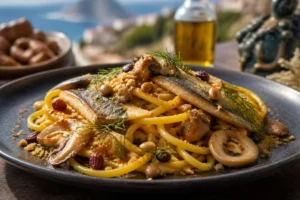
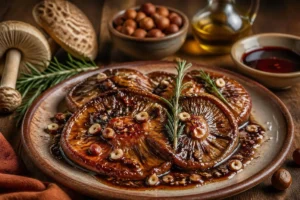
A technical study in Agrodolce Acidic Balancing and Fibrous Encapsulation, utilizing the flexible, seared cap of the Parasol mushroom to house a high-contrast matrix of Mediterranean lipids, sugars, and proteins.
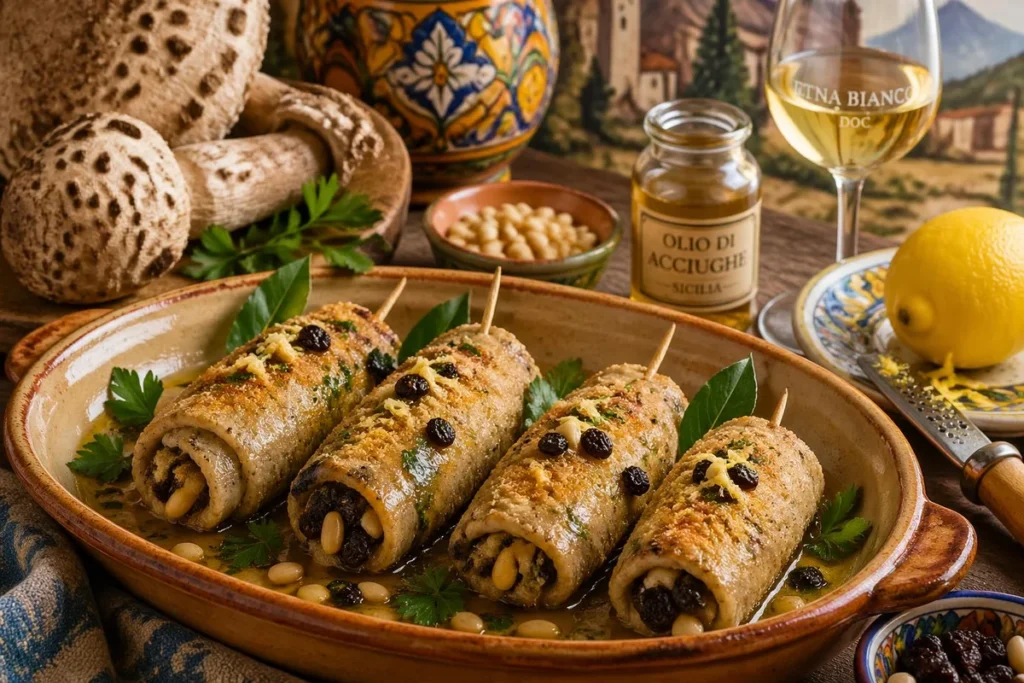
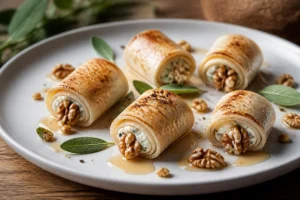
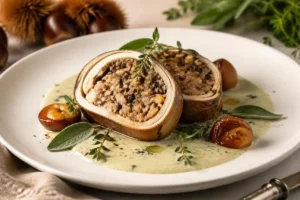
Sicilian Involtini di Parasolo with Pine Nuts & Currants
For our ninety-first technical formulation, we analyze Multi-Phase Flavor Contrasts. Macrolepiota procera (Parasol Mushroom), referred to as Macrolepiota procera, possesses a large, pliable cap that can be treated as a biological "wrap." At pure-umami.cc, we utilize the Sicilian Involtini technique. By stuffing seared Parasol strips with a mixture of breadcrumbs, pine nuts, and currants, we create a structural roll that balances the earthy, nutty baseline of the mushroom with the "Agrodolce" (sour-sweet) tension characteristic of the island's Arab-Norman culinary heritage.
The Culinary Physics of This Dish
The engineering of this dish relies on Lipid-Saccharide Interplay and Thermal Pliability. Molecularly, the **Macrolepiota procera** cap contains chitinous fibers that soften when exposed to initial heat, allowing it to be rolled without fracturing. The currants provide Fructose and Tartaric Acid, while the toasted pine nuts introduce Pinolenic Acid (a unique lipid). When baked, these elements undergo a Flavor Diffusion process: the sweetness of the fruit and the salinity of the anchovies (often added to the base) migrate into the mushroom's porous gills, creating a high-resolution flavor profile that triggers the sweet, salty, and umami receptors simultaneously.
Terroir Narrative
This formulation is a tribute to Sicily (Sicilia), particularly the coastal regions where North African influences meet Mediterranean abundance. We bridge the sun-drenched volcanic soils of Etna with the Balkan highland meadows. The terroir is expressed through the marriage of the forest's "wild" Macrolepiota procera and the sharp, citrusy notes of Sicilian lemons and raisins. This follows the same technical rigor we apply to our Boletus edulis (Porcini) and Amanita caesarea (Caesar's mushroom), treating the mushroom as a flexible canvas for historical flavor narratives.
Quick Info Bar
Bake Temp
Filling Base
Complexity
Region
190°C
Breadcrumb/Nut
Grand Officier
Sicily, IT
Master Recipe (1:10 Rule)
4 Large Macrolepiota procera caps (Macrolepiota procera) – cut into wide rectangular strips
100g Toasted Breadcrumbs (Panko or traditional)
30g Pine Nuts (toasted) + 30g Currants (soaked in warm water)
1 Lemon (zest and juice)
2 Anchovy fillets (melted into the oil)
30g Grated Caciocavallo or Pecorino
Fresh Parsley and Bay Leaves
Extra Virgin Olive Oil
The Technique
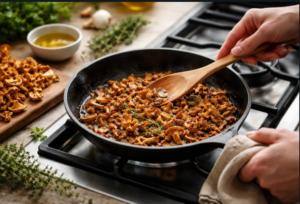
The Structural Softening: Briefly sear the **Macrolepiota procera** strips in a hot pan with a little oil for 30 seconds per side. This makes the fibers flexible for rolling. This is the Thermal Pliability Phase.
The Filling Synthesis: Toast breadcrumbs with anchovies and olive oil until golden. Mix with pine nuts, currants, lemon zest, cheese, and parsley. The mixture should be "sandy" but hold together when pressed.
The Mechanical Rolling: Place a spoonful of filling at one end of a mushroom strip and roll it tightly. Secure with a toothpick, placing a bay leaf between each roll for aromatic infusion.
The Agrodolce Bake: Arrange in a baking dish. Drizzle with a mixture of olive oil, lemon juice, and a pinch of sugar. Bake at 190°C for 12-15 minutes until the breadcrumbs are crisp and the mushroom is succulent.
Service: Serve warm or at room temperature, as is traditional in Sicily, to allow the complex agrodolce flavors to settle and harmonize.
Shop Integration
The Macrolepiota procera provides the perfect structural "wrap," but its umami depth can be reinforced. We recommend adding a fine dust of our dried Boletus edulis (Porcini) to the breadcrumb filling for a "meatier" earth tone. If you seek a brighter peppery contrast, garnish with sautéed Cantharellus cibarius (Chanterelle). For a luxury upgrade, finish the involtini with a few drops of Morchella conica (Morel) oil. If available, a side of raw Amanita caesarea (Caesar's mushroom) with a citrus-mint dressing will provide a necessary mineral "reset" for the palate. For a visual contrast, our Craterellus cinereus (Grey Chanterelle) can be minced and added to the filling for a smoky complexity.
The Umami Profile
This dish features **Agrodolce-Amplitudal Umami**. The Macrolepiota procera provides the guanylates, while the anchovies and cheese introduce a high concentration of glutamates. The sugar (from currants) and acid (from lemon/vinegar) act as "Flavor Magnifiers," expanding the reach of the savory signals across the tongue. The result is a savory experience that is exceptionally vibrant, moving between sweet, sour, and deep forest-earthiness.
Sommelier’s Choice
A glass of **Etna Bianco (Carricante)** or a dry **Marsala**. The volcanic minerality and high acidity of the Etna Bianco are the technical requirement to cut through the rich breadcrumbs and match the agrodolce intensity of the Parasol involtini.
The Etymological Chronicle
The term Involtini is **Italian**, from involtare (to wrap). In **French**, this would be Roulades de Coulemelle à la Sicilienne. In **German**, it is Sizilianische Parasolpilz-Röllchen. In **Spanish**, it is Involtini de Galamperna. Regardless of the language, the **Parasol mushroom** involtini remains the definitive standard for technical agrodolce mycological engineering.
Pure Umami | Mycological Research & Culinary Arts | 2026
To provide the best experiences, we use technologies like cookies to store and/or access device information. Consenting to these technologies will allow us to process data such as browsing behavior or unique IDs on this site. Not consenting or withdrawing consent, may adversely affect certain features and functions.
Functional
Always active
The technical storage or access is strictly necessary for the legitimate purpose of enabling the use of a specific service explicitly requested by the subscriber or user, or for the sole purpose of carrying out the transmission of a communication over an electronic communications network.
Preferences
The technical storage or access is necessary for the legitimate purpose of storing preferences that are not requested by the subscriber or user.
Statistics
The technical storage or access that is used exclusively for statistical purposes.The technical storage or access that is used exclusively for anonymous statistical purposes. Without a subpoena, voluntary compliance on the part of your Internet Service Provider, or additional records from a third party, information stored or retrieved for this purpose alone cannot usually be used to identify you.
Marketing
The technical storage or access is required to create user profiles to send advertising, or to track the user on a website or across several websites for similar marketing purposes.