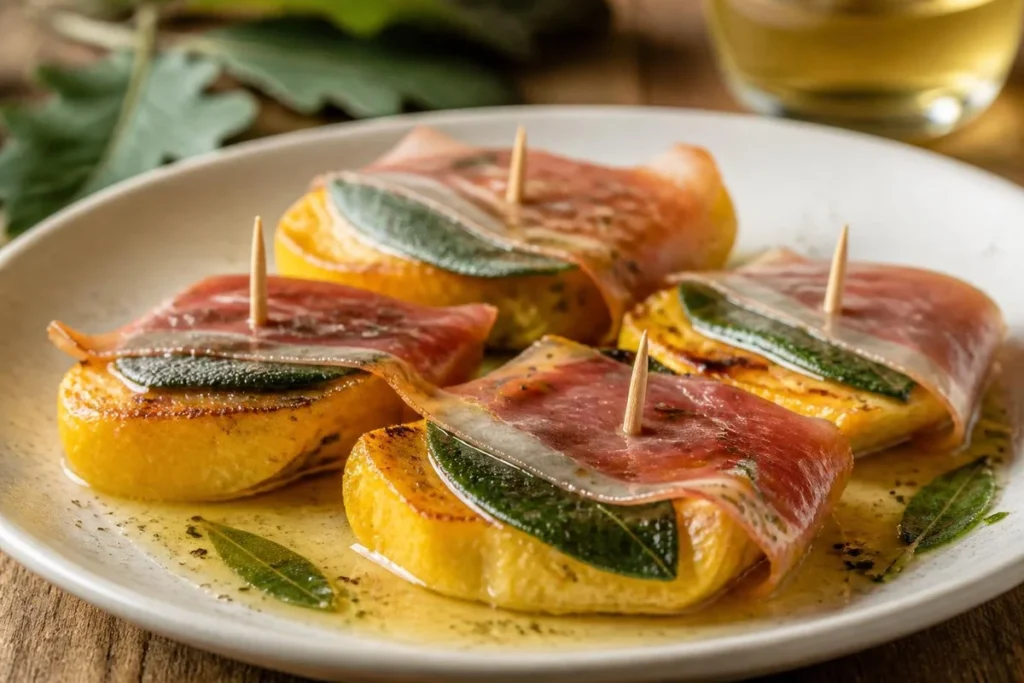
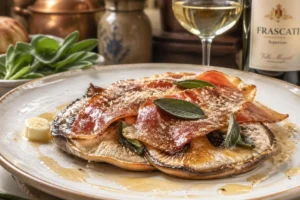
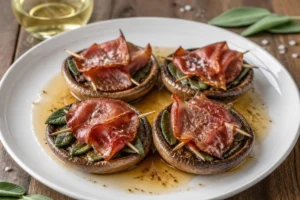
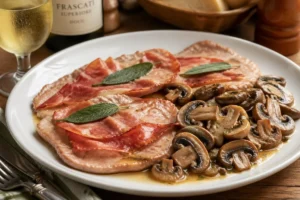
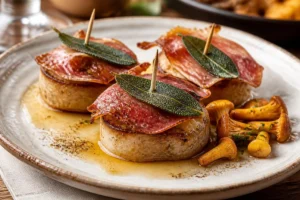
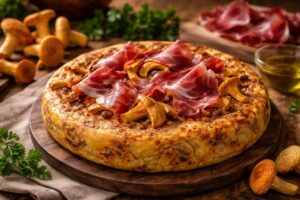
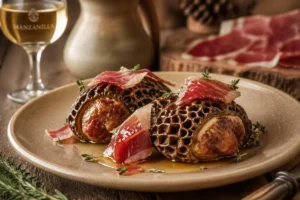
Experience a mycological interpretation of a Roman classic with this (Laetiporus sulphureus) preparation, featuring the traditional architecture of sage and prosciutto, refined through professional Sauter techniques to achieve a perfect textural harmony.
Roman Saltimbocca Chicken of the Woods
In the bustling osterias of Rome, "Saltimbocca"—literally meaning "jumps in the mouth"—is a testament to the power of simple, high-impact ingredients. This preparation elevates Laetiporus sulphureus—the "Chicken of the Woods"—by applying the classic Roman architectural layering of sage and cured ham. By utilizing the mushroom's remarkably meat-like density, we create a dish that honors the Cucina Romana while offering a sophisticated, forest-forward alternative to the traditional veal scallopini.
The Culinary Physics of This Dish
This recipe focuses on Composite Layering and Cross-Species Umami Transfer. The Laetiporus serves as a dense, fibrous base that undergoes a structural change when compressed with Prosciutto di Parma. As the mushroom is seared, the rendered lipids from the ham, rich in cured aromatics, are driven into the fungal pores. Simultaneously, the sage leaf undergoes rapid dehydration, releasing its essential oils (cineole and thujone) directly into the surface of the mushroom, creating a singular, unified flavor profile through conductive heat transfer.
Terroir Narrative: The Roman Countryside
The Roman *Campagna* is a land of ancient volcanic soil and vast estates where oak and chestnut groves have stood for millennia. Foragers in the Latium region frequently discover Laetiporus on these historical hosts. Integrating this wild find with the iconic flavors of Rome—salty ham, earthy sage, and crisp white wine—reflects a culinary philosophy that is both rustic and deeply intentional. It is a dish that speaks of the Roman summer, where the heat of the city meets the cool, foraged bounty of the surrounding hills.
Quick Info Bar
Attribute
Specification
Prep Time
35 Minutes
Cook Time
15 Minutes
Complexity
Grand Officier
Calories
285 kcal
Region
Lazio (Rome), Italy
Master Recipe (1:10 Rule)
The 1:10 ratio of dry white wine to mushroom weight ensures a light, acidic finish that balances the salty richness of the ham.
500gLaetiporus sulphureus (sliced into uniform 1cm thick "scallops")
100g Prosciutto di Parma (sliced paper-thin)
12-15 Fresh Sage leaves
50g Unsalted Butter
50ml Dry White Wine (Frascati Superiore or Trebbiano)
30g All-purpose flour (for light dusting)
5g Sea Salt and freshly cracked White Pepper
The Technique
We begin with the Assembly. Place a sage leaf on each Laetiporus scallop, then wrap or overlay with a slice of prosciutto, securing it with a toothpick. Lightly dust the mushroom side with flour to ensure a crisp texture. Next is the Sauter Phase—heat half the butter and sear the scallops ham-side down first for 2 minutes to crisp the prosciutto, then flip to cook the mushroom for 4 minutes.
The final step is the Sfumatura and Emulsion. Deglaze the pan with the Frascati wine, scraping up the golden bits. Whisk in the remaining cold butter to create a thin, glossy pan sauce. This Roman technique ensures the Saltimbocca remains moist while providing a sharp, acidic counterpoint to the concentrated umami of the cured ham and foraged mushroom.
Shop Integration
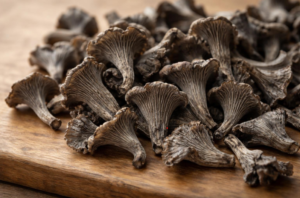
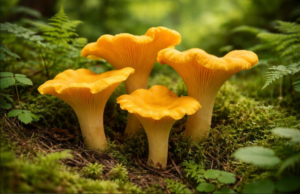
While the Roman Saltimbocca style highlights the versatility of Laetiporus, our shop offers a curated selection of the finest European fungi. Enhance your culinary creations with the robust Porcini (Boletus edulis) or the delicate, peppery Chanterelles (Cantharellus cibarius). We also feature the regal Caesar's Mushroom (Amanita caesarea), the aromatic Fairy Ring Mushroom (Marasmius oreades), and the unique Grey Chanterelle (Craterellus cinereus). For those seeking the ultimate in foraged luxury, our seasonal Morels (Morchella conica) are a peerless addition.
The Umami Profile
The umami intensity in this dish is achieved through Nucleotide Synergy. The natural glutamates in Laetiporus sulphureus are boosted by the inosinates in the cured prosciutto and the savory, camphor-like notes of the sage. This combination creates a "flavor bridge" that mimics the complexity of traditional meat dishes while providing the unique, earthy finish characteristic of high-quality wild mushrooms.
Sommelier’s Choice
To match the saltiness and herb-driven profile of the dish, we recommend a Frascati Superiore DOCG. This Roman white wine, with its crisp acidity and notes of citrus and bitter almond, provides a perfect regional pairing that cleanses the palate and highlights the delicate interplay between the sage and the seared mushroom.
THE ETYMOLOGICAL CHRONICLE
Italian: In Rome, the name Saltimbocca literally means "jumps in the mouth," reflecting the dish's intense and immediate flavor profile.
French: French mycologists often refer to this mushroom as Létipore soufré, noting its sulfur-yellow color and status as a choice edible.
German: Known as Schwefelporling in Central Europe, the name describes its bright "sulfur" pigmentation and shelf-like growth habit.
Spanish: In Spain, it is recognized as Políporo azufrado, where it is frequently prized for its meat-like texture in Mediterranean-style sautés.
Pure Umami | Mycological Research & Culinary Arts | 2026
To provide the best experiences, we use technologies like cookies to store and/or access device information. Consenting to these technologies will allow us to process data such as browsing behavior or unique IDs on this site. Not consenting or withdrawing consent, may adversely affect certain features and functions.
Functional
Always active
The technical storage or access is strictly necessary for the legitimate purpose of enabling the use of a specific service explicitly requested by the subscriber or user, or for the sole purpose of carrying out the transmission of a communication over an electronic communications network.
Preferences
The technical storage or access is necessary for the legitimate purpose of storing preferences that are not requested by the subscriber or user.
Statistics
The technical storage or access that is used exclusively for statistical purposes.The technical storage or access that is used exclusively for anonymous statistical purposes. Without a subpoena, voluntary compliance on the part of your Internet Service Provider, or additional records from a third party, information stored or retrieved for this purpose alone cannot usually be used to identify you.
Marketing
The technical storage or access is required to create user profiles to send advertising, or to track the user on a website or across several websites for similar marketing purposes.