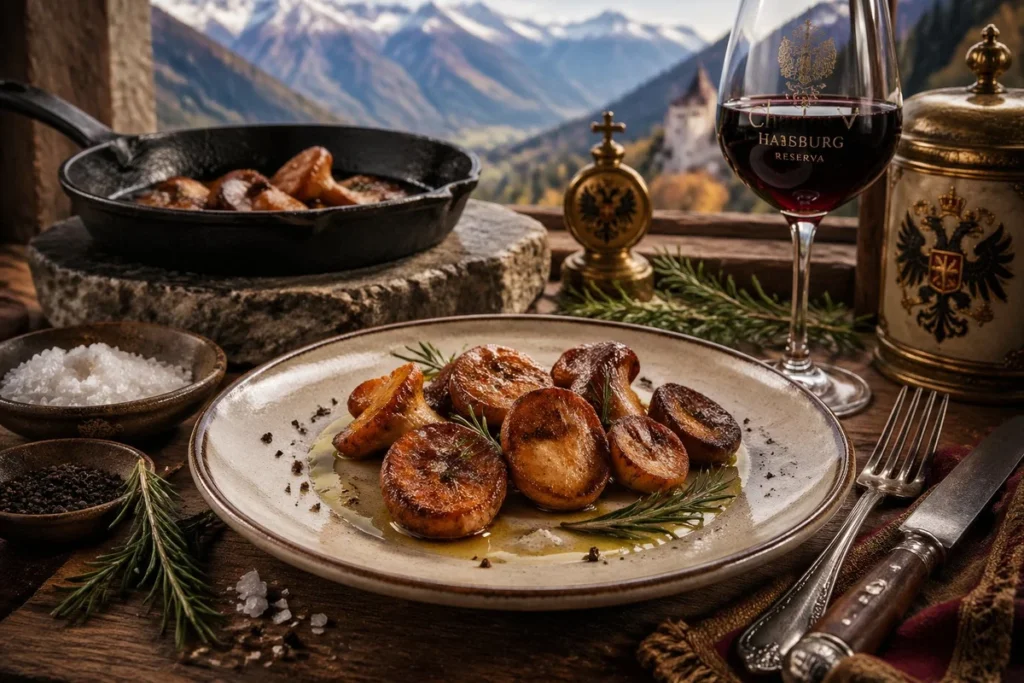
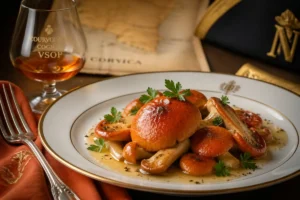
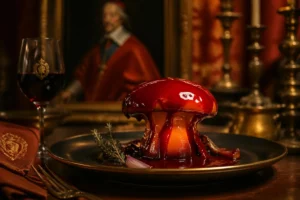
Experience elite Habsburg heritage with this Michelin-standard Charles V roasted Amanita caesarea for incredible mastery and alpine prestige.
Sensational Alpine Heritage Charles V Habsburg Roasted Amanita for Incredible Mastery
Why This Recipe Works
The technical power of this imperial roast lies in the Dry-Heat Thermal Maillardization process. Unlike other species, the Caesar mushroom (Amanita caesarea) possesses an exceptionally low chitin content and a high concentration of free amino acids. Controlled high-temperature roasting achieves Intra-cellular Moisture Evaporation, which concentrates natural sugars and glutamates at the mushroom's core. Here we apply Convection Umami Locking—using a highly heated surface creates an instant caramelized barrier that seals in volatile aromatic esters. This method allows the mushroom to develop complex notes of roasted hazelnut and toasted bread without losing its buttery elasticity. The professional value of the recipe is expressed in achieving a Michelin-standard texture that is simultaneously crispy on the outside and succulent on the inside, demonstrating incredible mastery in protein denaturation management.
The Historical Prelude
Charles V Habsburg, Holy Roman Emperor and King of Spain, ruled an empire upon which "the sun never set." His constant travels between Madrid, Brussels, Vienna, and his Italian possessions forced him to frequently cross the Alps—a territory where Amanita caesarea was considered the highest culinary tribute. For the Habsburgs, the Caesar mushroom was not just food, but a symbol of legitimacy, linking their power to that of the ancient Roman Caesars.
Legends tell that during a crossing of the Brenner Pass, the Emperor was met by local mycologists with baskets full of golden Amanitas. His personal chefs developed the method of roasting over highly heated Alpine stones to preserve the Sensational Alpine Heritage spirit of the dish. This was food for the road—powerful, prestigious, and worthy of a man carrying the weight of all Europe on his shoulders. In the Habsburg imperial court, "Roasted Caesar Mushroom" was served during hunting banquets, symbolizing the triumph of civilization over the wild. The dish reflects the rugged yet refined character of an era where Sensational Woodland Authenticity was the highest luxury for the elite. Today, this recipe allows us to touch the table of one of the most influential men in history, offering a taste of imperial greatness and Alpine perfection.
Time
Difficulty
Calories
Type
15 Minutes
Intermediate
190 kcal
Imperial Roast
Master Recipe (1:10 Rule)
500g fresh Amanita caesarea (or 50g dried/rehydrated Caesar mushroom)
40ml Extra Virgin Olive Oil (cold-pressed, high phenolic index)
2 sprigs of fresh rosemary (for mountain aroma)
10g Cultured butter (for the final glaze)
Fleur de Sel de Guérande
Coarsely ground black pepper (Malabar)
Master’s Hidden Steps
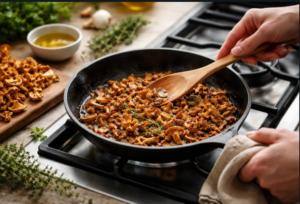
The Thermal Shock Induction: Heat a cast-iron pan or griddle until it begins to smoke slightly. Place large slices of Amanita caesarea directly onto the dry surface for 30 seconds. This "thermal shock" is an Umami Concentration Strategy that activates flavor enzymes.
The Lipid-Herb Infusion: Add the olive oil and rosemary only after the initial searing. Allow the herb's oils to infuse into the fat as it envelops the mushrooms, creating an Aromatic Shielding.
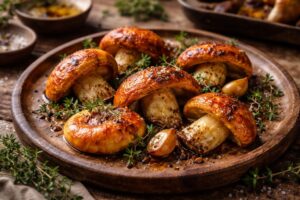
The Resting Equilibrium: Remove the mushrooms when they have acquired an amber color. Add the small cube of butter over them off the heat and let them rest for 2 minutes. This allows internal juices to redistribute, achieving incredible mastery in texture.
The Umami Secret:Amanita caesarea is rich in L-Glutamate, which undergoes a concentration process through evaporation during direct roasting. This creates a flavor intensity that mimics aged meat but with the ethereal elegance of the most prestigious Alpine mushrooms.
For a dish worthy of Charles V, the sommelier's choice must reflect the breadth of his empire. A Tempranillo (Reserva) from Rioja will offer the necessary tannins and oak notes to complement the smoked nuances of the roasted Caesar mushroom. Alternatively, a powerful Grüner Veltliner from Austria will add a peppery freshness that highlights the Sensational Alpine Heritage profile of this imperial dish.
Imperial Lexicon: Multi-Language Names for Amanita caesarea
The Caesar's Mushroom has a linguistic heritage as rich as its flavor. From the Roman "Boletus" to modern dialects, here is the most comprehensive regional guide for global identification:
To provide the best experiences, we use technologies like cookies to store and/or access device information. Consenting to these technologies will allow us to process data such as browsing behavior or unique IDs on this site. Not consenting or withdrawing consent, may adversely affect certain features and functions.
Functional
Always active
The technical storage or access is strictly necessary for the legitimate purpose of enabling the use of a specific service explicitly requested by the subscriber or user, or for the sole purpose of carrying out the transmission of a communication over an electronic communications network.
Preferences
The technical storage or access is necessary for the legitimate purpose of storing preferences that are not requested by the subscriber or user.
Statistics
The technical storage or access that is used exclusively for statistical purposes.The technical storage or access that is used exclusively for anonymous statistical purposes. Without a subpoena, voluntary compliance on the part of your Internet Service Provider, or additional records from a third party, information stored or retrieved for this purpose alone cannot usually be used to identify you.
Marketing
The technical storage or access is required to create user profiles to send advertising, or to track the user on a website or across several websites for similar marketing purposes.