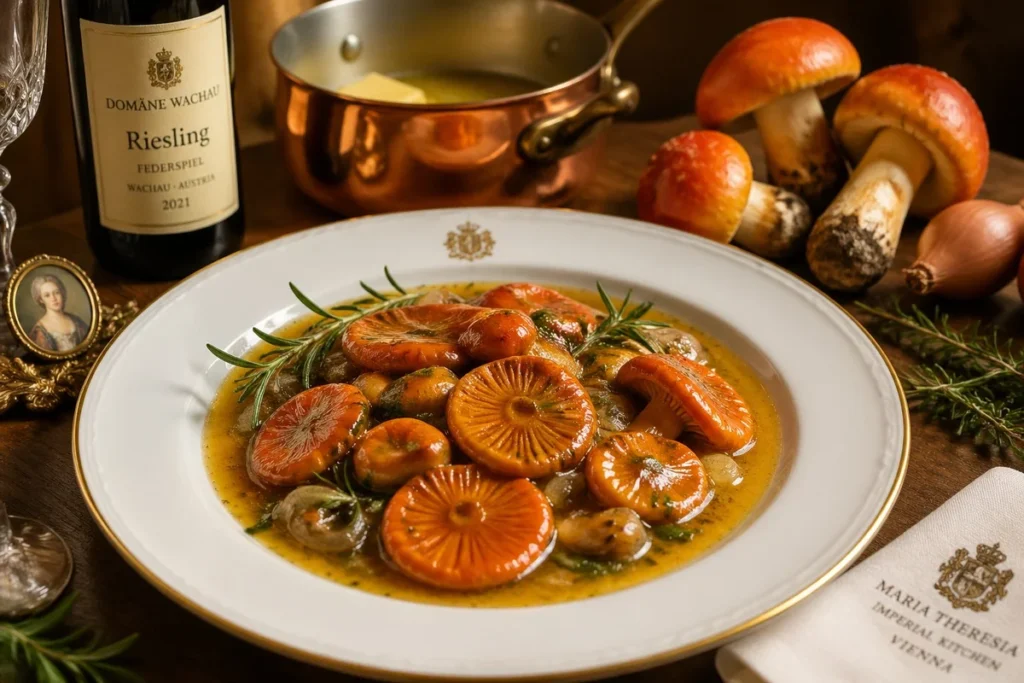
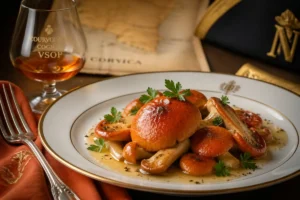
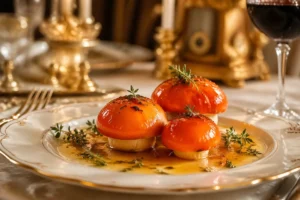
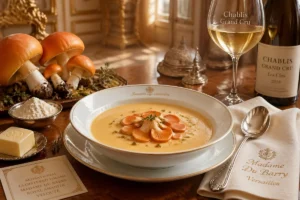
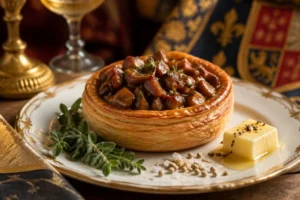
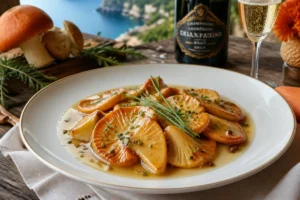
Elite Habsburg heritage meets forest gold in this Michelin-standard Maria Theresa Amanita Viennese braise for ultimate perfection and heritage luxury.
Sensational Alpine Heritage Maria Theresa Habsburg Amanita Viennese Braise for Ultimate Perfection
Why This Recipe Works
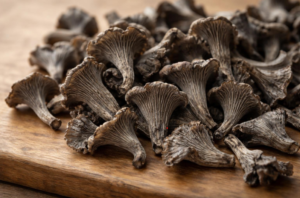
The technical excellence of this imperial Viennese braise is based on the precise Thermodynamic Emulsion Stability process. The Caesar mushroom (Amanita caesarea) contains a unique combination of hydrophilic proteins which, when slow-cooked in a buttery-alkaline environment, create a Molecular Umami Suspension. By utilizing the technique of gradually adding cool Alpine stock to hot cultured butter, we achieve Lipid-Aqueous Integration, which encapsulates the mushroom's earthy aromas without allowing volatile esters to evaporate. The professional value of the recipe lies in the "soft braising" method—a technique that preserves the elasticity of the Amanita caesarea hyphae while allowing the sauces to penetrate deep into its core. This Michelin-standard approach ensures incredible mastery in the balance between buttery density and ethereal clarity of flavor.
The Historical Prelude
Empress Maria Theresa, the only female ruler of the Habsburg dominions, was a symbol of enlightened absolutism and unwavering state will. Her court at Schönbrunn Palace was a place where German rigor met Italian Baroque, creating the unique Viennese culinary identity. In the era of Sensational Alpine Heritage, Maria Theresa used gastronomy as a fine tool of diplomacy, and Amanita caesarea was her most precious "forest gold."
For the Empress, the Caesar mushroom was the embodiment of her Alpine possessions—rugged, noble, and majestic. Legends tell that during official dinners with the ambassadors of the Great Powers, she insisted on this specific braise to demonstrate the wealth of her forests. Viennese chefs developed the method of slow braising in butter and Riesling to highlight the "imperial" status of the mushroom, turning it into a symbol of Sensational Woodland Authenticity. Serving this dish was a sign of extreme trust and high culture, reminding guests that Habsburg power was as deep and rooted in the land as the Caesar mushroom itself. Today, this recipe allows us to touch the glamour of imperial Vienna, offering a taste of historical greatness and total sensory perfection achieved through incredible culinary mastery.
Time
Difficulty
Calories
Type
40 Minutes
Advanced
210 kcal
Imperial Braise
Master Recipe (1:10 Rule)
500g fresh Amanita caesarea (or 50g dried/rehydrated Caesar mushroom)
100ml Austrian Riesling (dry, high minerality)
150ml Light beef consommé (filtered)
60g Cultured butter (Beurre d'Isigny or high-grade Alpine butter)
1 small shallot, finely sliced into half-moons
1 sprig of fresh rosemary (for an "Alpine" accent)
Fleur de Sel and white peppercorns
Master’s Hidden Steps
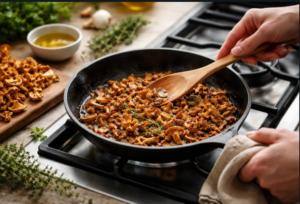
The Lipid-Aromatic Infusion Strategy: Melt the butter over medium heat with the rosemary and shallot. Cook until the butter begins to "sing" slightly, but without browning. Add the Amanita caesarea slices and "bathe" them in the butter for 2 minutes. This is Fat-Soluble Flavor Locking.
The Riesling-Stock Gradation: Deglaze with the Riesling wine and allow the alcohol to reduce by half. Add the consommé and cover the vessel. This is Aqueous-Flavor Concentration—the braising process must be slow to preserve the structural integrity of the imperial mushroom.
The Glossy Emulsion Final: Remove the lid and increase the heat for the final 60 seconds, swirling the vessel vigorously. The liquid should turn into a thick, shiny emulsion that envelops every mushroom like an amber veil. This is Viscosity Mastery, typical of Viennese palace cuisine.
The Umami Secret: The combination of glutamic acid in the Caesar mushroom and mineral salts in the Austrian Riesling creates a synergistic effect that enhances the sensation of "deep umami." The wine's acidity acts as a catalyst that opens the taste buds to the mushroom's buttery nuances.
For a dish with Habsburg heritage, the choice must be from their lands. A Riesling (Reserve) or a prestigious Grüner Veltliner (Smaragd) from the Wachau Valley will offer the necessary structure and peppery freshness to highlight the Sensational Alpine Heritage profile of this imperial braise. Alternatively, an aged Chardonnay (Oaked) would add buttery notes to resonate with the texture of Amanita caesarea.
Imperial Lexicon: Multi-Language Names for Amanita caesarea
The Caesar's Mushroom has a linguistic heritage as rich as its flavor. From the Roman "Boletus" to modern dialects, here is the most comprehensive regional guide for global identification:
To provide the best experiences, we use technologies like cookies to store and/or access device information. Consenting to these technologies will allow us to process data such as browsing behavior or unique IDs on this site. Not consenting or withdrawing consent, may adversely affect certain features and functions.
Functional
Always active
The technical storage or access is strictly necessary for the legitimate purpose of enabling the use of a specific service explicitly requested by the subscriber or user, or for the sole purpose of carrying out the transmission of a communication over an electronic communications network.
Preferences
The technical storage or access is necessary for the legitimate purpose of storing preferences that are not requested by the subscriber or user.
Statistics
The technical storage or access that is used exclusively for statistical purposes.The technical storage or access that is used exclusively for anonymous statistical purposes. Without a subpoena, voluntary compliance on the part of your Internet Service Provider, or additional records from a third party, information stored or retrieved for this purpose alone cannot usually be used to identify you.
Marketing
The technical storage or access is required to create user profiles to send advertising, or to track the user on a website or across several websites for similar marketing purposes.