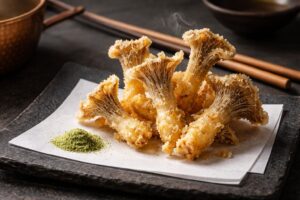
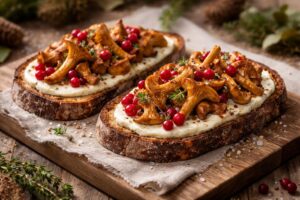
Master the legendary Chanterelle Mushroom Fricassee with our professional guide. Discover the secret of the Golden Forest used in the Michelin kitchens of the French Alps.
Chanterelle Mushroom Fricassee: Escoffier’s Golden Forest Recipe
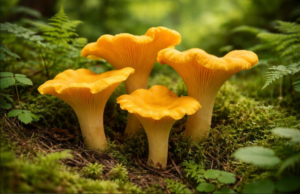
The Chanterelle mushroom fricassee is a study in the balance of acidity and fat. Unlike the earthy depth of Porcini, Chanterelles (Cantharellus cibarius) possess a delicate, apricot-like fruitiness and a peppery finish that can easily be overwhelmed by heavy seasoning. This recipe works by using a "Lipid-Aromatic Bridge"—pairing the mushrooms with high-fat cultured butter to trap their volatile esters before they evaporate under heat.
By strictly adhering to the 1:10 dry-weight ratio, we ensure that the sauce maintains its "Imperial" intensity even when using rehydrated specimens. The addition of a dry, acidic white wine acts as a solvent, cutting through the richness of the cream and highlighting the mushroom's natural pepperiness. This is the definitive way to experience the "Golden Forest" on a plate, providing a silken texture that has made the Chanterelle a staple of French haute cuisine for centuries. If you are looking for the finest source, our dried golden chanterelles are the ideal foundation for this professional reduction.
The Historical Prelude
The Golden Chanterelle has graced the tables of European nobility since the 16th century, but it was Auguste Escoffier who elevated the Fricassée de Chanterelles to a position of high art. Historically, in the French Alps and the Black Forest, these mushrooms were known as "The Gold of the Poor" until the chefs of Louis XIV discovered their unique ability to maintain a firm, elastic texture even after prolonged braising.
In the grand hotels of the Belle Époque, the Chanterelle was served as a sophisticated entremet—a transitional course designed to refresh the palate with its subtle fruitiness. The technical challenge has always been the "Water-Release Phase." Escoffier's secret was a high-heat "Flash-Sauté" that sealed the exterior of the mushroom, followed by a slow emulsion in cream. This dish represents the Atlantic Fringe culinary philosophy: respect the ingredient, master the temperature, and never compromise on the quality of the butter.
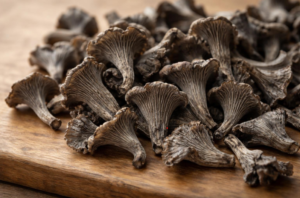
Select 500g fresh Chanterelles (or 50g dried/rehydrated). If using dried chanterelles, rehydrate in warm water for 2 hours. Pat bone-dry before cooking.
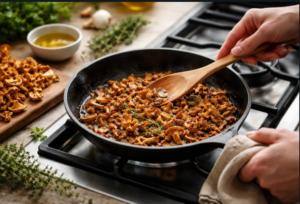
In a wide stainless steel pan, melt 40g of Beurre Noisette (browned butter).
Add the mushrooms in a single layer. Sauté on high heat for 3-4 minutes until the edges turn slightly golden.
Stage 2: The Spirit of the Forest
Add 1 finely minced shallot and a sprig of fresh Wild Thyme.
Deglaze the pan with 50ml of Noilly Prat or a dry French vermouth. The botanical notes of the vermouth act as a structural mirror to the Chanterelle's terroir.
Allow the liquid to reduce by 80%, concentrating the mushroom's peppery nucleotides.
Stage 3: The Imperial Finish
Reduce heat to medium-low. Incorporate 150ml of heavy Double Cream.
Simmer gently until the sauce achieves a silken, "Gold-Infused" glow and coats the mushrooms perfectly.
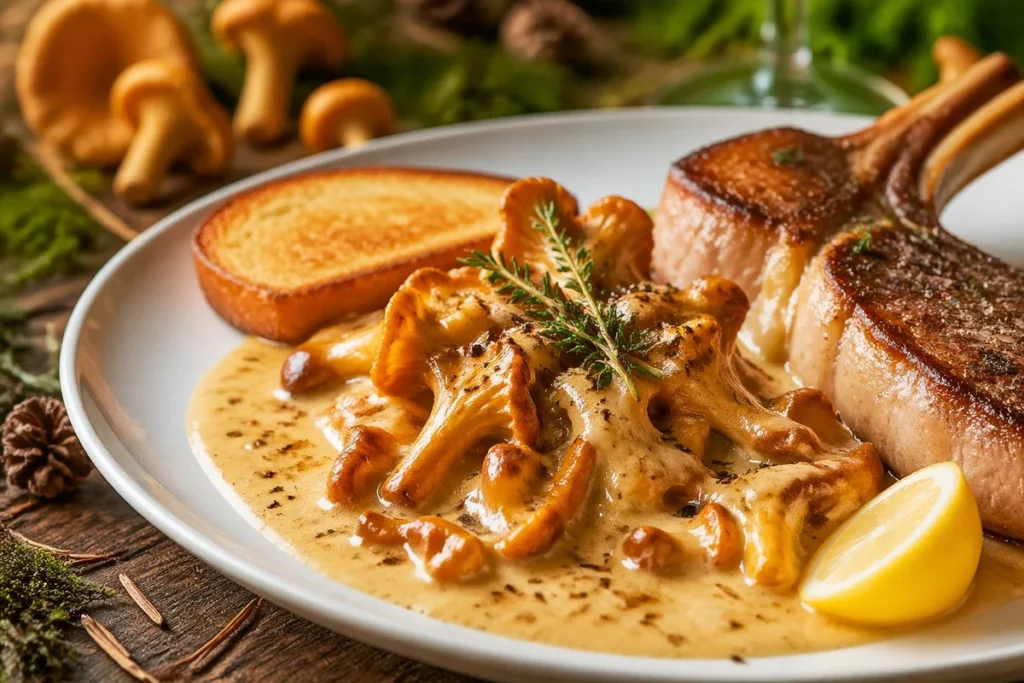
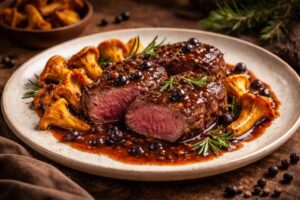
Finish with a squeeze of fresh lemon juice and a dusting of white pepper. Serve alongside a roasted veal chop or on a toasted brioche.
The Umami Secret: The Terpene-Cream Synergy
The "Incredible Umami" of the Chanterelle is achieved through Lipid-Terpene Bonding. Unlike Porcini, which rely on heavy glutamates, Chanterelles contain unique terpenoid compounds that provide their signature apricot aroma. By utilizing the 1:10 rule, you ensure these delicate aromatics are concentrated enough to bond with the cream's fat molecules. The acidity of the white wine or lemon acts as a "Frequency Tuner," making the savory notes vibrate more intensely on the tongue.
Sensory & Foraging Profile
Latin Nomenclature:Cantharellus cibarius.
Terroir: The most prestigious Chanterelles are harvested from the mossy, acidic soils of the Black Forest and the Dolomites. They prefer the shade of old-growth beech and spruce trees.
Leave No Trace Protocol: In accordance with Western European Forest Ethics, never pull a Chanterelle from the earth. Use a sharp knife to cut the stem 1cm above the ground. This protects the delicate mycelium and ensures a harvest for next year. Use a brush to clean; never submerge fresh chanterelles in water, as their gills will act as a sponge and ruin the fricassee's texture.
The Art of Pairing
Sommelier's Choice: A Riesling Grand Cru from Alsace or a Chablis. The high acidity and mineral finish of these wines are essential to cut through the buttery fricassee.
Non-Alcoholic: A chilled Apple and Ginger infusion to mirror the mushroom's fruitiness and spice.
Micro-FAQ
Q: Why do my chanterelles sometimes turn bitter? A: Bitterness often comes from over-cooking at too low a temperature or using old specimens. High heat and fresh butter are the cure.
Q: Can I use the 1:10 rule for any Chanterelle species? A: Yes, the 1:10 ratio is the professional standard for all Cantharellus species to maintain gourmet umami density.
Q: Why use vermouth instead of white wine? A: Vermouth is infused with botanicals that complement the wild, herbal notes of foraged mushrooms more effectively than standard wine.
To provide the best experiences, we use technologies like cookies to store and/or access device information. Consenting to these technologies will allow us to process data such as browsing behavior or unique IDs on this site. Not consenting or withdrawing consent, may adversely affect certain features and functions.
Functional
Always active
The technical storage or access is strictly necessary for the legitimate purpose of enabling the use of a specific service explicitly requested by the subscriber or user, or for the sole purpose of carrying out the transmission of a communication over an electronic communications network.
Preferences
The technical storage or access is necessary for the legitimate purpose of storing preferences that are not requested by the subscriber or user.
Statistics
The technical storage or access that is used exclusively for statistical purposes.The technical storage or access that is used exclusively for anonymous statistical purposes. Without a subpoena, voluntary compliance on the part of your Internet Service Provider, or additional records from a third party, information stored or retrieved for this purpose alone cannot usually be used to identify you.
Marketing
The technical storage or access is required to create user profiles to send advertising, or to track the user on a website or across several websites for similar marketing purposes.