Description: Discover a wild-harvested gourmet recipe. This King Bolete risotto is a culinary masterpiece, umami-rich and crafted for the refined palate.
The Boletus edulis, known globally as the Porcini or King Bolete, is more than a mere fungus; it is a piece of living forest mythology. For centuries, across the damp, moss-laden forests of the Balkans and the Italian Alps, the appearance of the "King" has signaled a time of culinary reverence. Legend speaks of forest spirits guarding these golden-capped treasures, which only reveal themselves to those who walk the woods with quiet respect. In the historical courts of Europe, the King Bolete was a symbol of status, often reserved for royal banquets where its meaty texture and heady, nutty aroma could be showcased.
To cook with Boletus edulis is to engage in a dialogue with the ancient wilderness. This recipe is designed to honor that history, blending the rustic tradition of the forest floor with the sophisticated techniques of modern gastronomy. We aren't just making dinner; we are reviving a centuries-old connection between the deep earth and the human palate. Every slice of the mushroom carries the essence of damp pine needles, morning mist, and the rich, dark loam of the European highlands.
Sensory & Foraging Profiles: The Mycorrhizal Magic
The biological superiority of wild-harvestedBoletus edulis over cultivated varieties lies in its Mycorrhizal symbiosis. Unlike common button mushrooms that grow on compost, the King Bolete forms a complex, symbiotic relationship with the roots of trees, primarily spruce and oak. This biological "handshake" allows the mushroom to exchange water and minerals for carbohydrates. This process creates a nutritional and flavor density that is impossible to replicate in a lab.
Aroma & Texture: Upon slicing, a fresh King Bolete emits a scent reminiscent of toasted hazelnuts and damp sourdough. Its texture is famously "meaty"—firm, dense, and succulent, holding its shape even under high heat.
Microbiology: The wild Boletus is a powerhouse of complex sugars and amino acids. Because it must survive the competitive environment of the forest, it develops a higher concentration of protective antioxidants and flavor compounds, resulting in that signature deep-forest "funk" that gourmets crave.
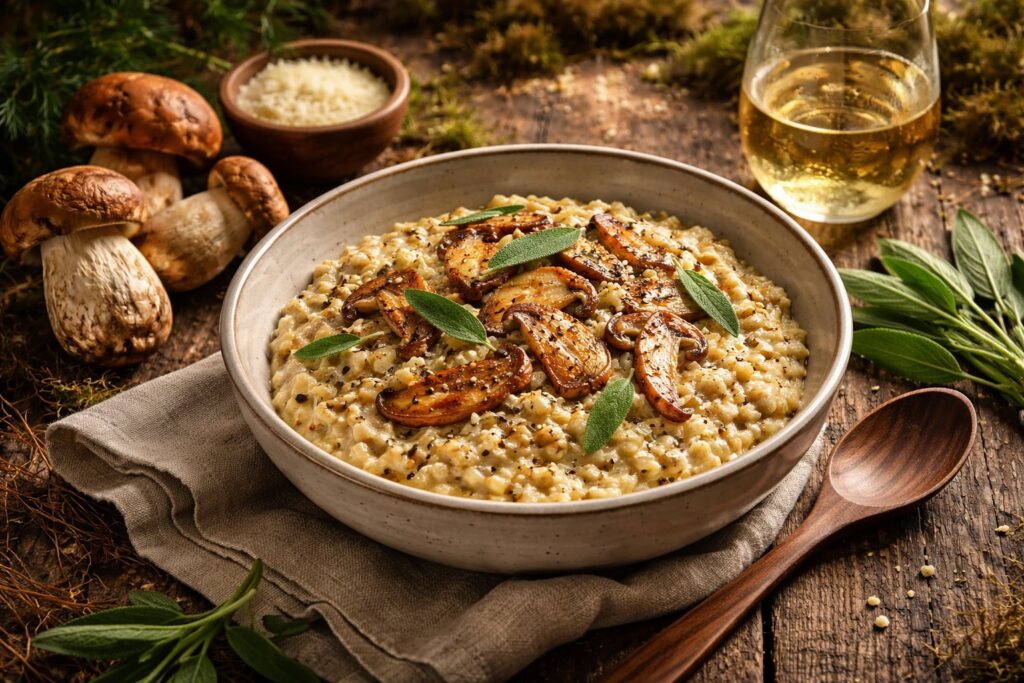
The Master Recipe: Golden Sage Porcini Risotto
Ingredients
500g Wild-Harvested Boletus edulis (sliced into 5mm thick longitudinal sections)
320g Acquerello or Carnaroli Rice
1.5L Homemade Vegetable or Mushroom Stock (kept at a low simmer)
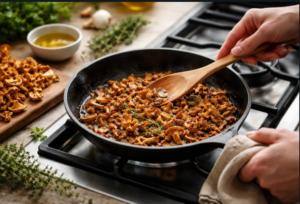
The Sear: In a heavy-bottomed pan, heat half the olive oil until shimmering. Lay the Boletus edulis slices in a single layer. Sear without moving for 3 minutes until a deep golden crust forms. Flip, add the smashed garlic and 4 sage leaves, and cook for another 2 minutes. Remove and set aside.
The Soffritto: In a large wide pot, add the remaining oil and shallots. Sauté on low heat until translucent.
Toasting the Grain: Increase heat to medium. Add the rice. Toast for 2 minutes, stirring constantly until the edges of the grains are translucent.
The Deglaze: Pour in the white wine. Stir until the liquid is almost completely absorbed.
The Slow Infusion: Add the simmering stock one ladle at a time. Wait for the liquid to be absorbed before adding the next ladle. The friction releases the rice starch, creating the creaminess.
The Integration: When the rice is al dente (approx. 18 minutes), fold in two-thirds of your seared mushrooms and the remaining sage (finely chiffonaded).
Mantecatura: Remove from heat. Vigorously stir in the cold butter and Parmigiano-Reggiano to emulsify the fats into a velvet sauce.
Rest & Serve: Let it sit for 2 minutes. Plate immediately, topping with the remaining golden mushroom slices.
Pro Technique: The “Searing Secret”
To preserve the structural integrity of wild Boletus, never wash them in water. Use a soft brush. When searing, ensure the pan is extremely hot before the mushrooms touch the surface. If the pan is crowded or cool, the mushrooms will release their moisture and "stew" in their own juices, becoming rubbery. A high-heat sear locks in the sugars and creates a Maillard reaction that elevates the nutty notes.
The Umami Secret: Lipid-Flavor Bonding
The Boletus edulis is naturally high in Guanylate, a nucleotide that works synergistically with the Glutamates found in the Parmesan cheese. When these two meet, the perceived umami intensity is not doubled, but multiplied. By using cold butter at the end (Mantecatura), you create a lipid-flavor bond where the fats trap the volatile aroma compounds of the mushroom, ensuring the flavor lingers on the palate for minutes after the last bite.
The Art of the Pairing
A dish of this earthy magnitude requires a wine with "forest floor" characteristics. A Nebbiolo or a classic Barolo from the Piedmont region is the ultimate sommelier's selection. The wine's high tannins and acidity cut through the creamy risotto, while its notes of dried roses and truffle mirror the aromatics of the mushrooms. For a non-alcoholic pairing, a fermented Pu-erh tea offers a smoky, earthy depth that complements the woodsy profile.
Ancestral Nutrition
Wild Boletus edulis is a nutritional titan. It is one of the few non-animal sources of Vitamin D (specifically D2), synthesized from forest sunlight. It is exceptionally high in Selenium, a powerful antioxidant, and contains a complete profile of B-complex vitamins. Historically, forest communities used these mushrooms as "forest meat" during times of scarcity due to their high protein-to-calorie ratio and mineral density.
To provide the best experiences, we use technologies like cookies to store and/or access device information. Consenting to these technologies will allow us to process data such as browsing behavior or unique IDs on this site. Not consenting or withdrawing consent, may adversely affect certain features and functions.
Functional
Always active
The technical storage or access is strictly necessary for the legitimate purpose of enabling the use of a specific service explicitly requested by the subscriber or user, or for the sole purpose of carrying out the transmission of a communication over an electronic communications network.
Preferences
The technical storage or access is necessary for the legitimate purpose of storing preferences that are not requested by the subscriber or user.
Statistics
The technical storage or access that is used exclusively for statistical purposes.The technical storage or access that is used exclusively for anonymous statistical purposes. Without a subpoena, voluntary compliance on the part of your Internet Service Provider, or additional records from a third party, information stored or retrieved for this purpose alone cannot usually be used to identify you.
Marketing
The technical storage or access is required to create user profiles to send advertising, or to track the user on a website or across several websites for similar marketing purposes.