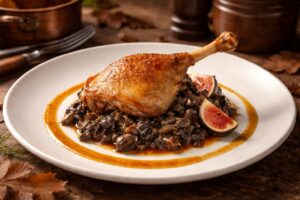
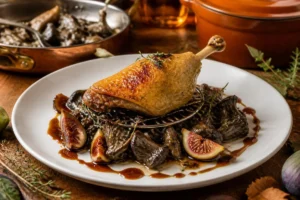
A technical study in animal-lipid extraction and fungal caramelization, focusing on the hydrophobic nature of Saffron Milk Cap aromatics and their affinity for high-quality saturated fats.
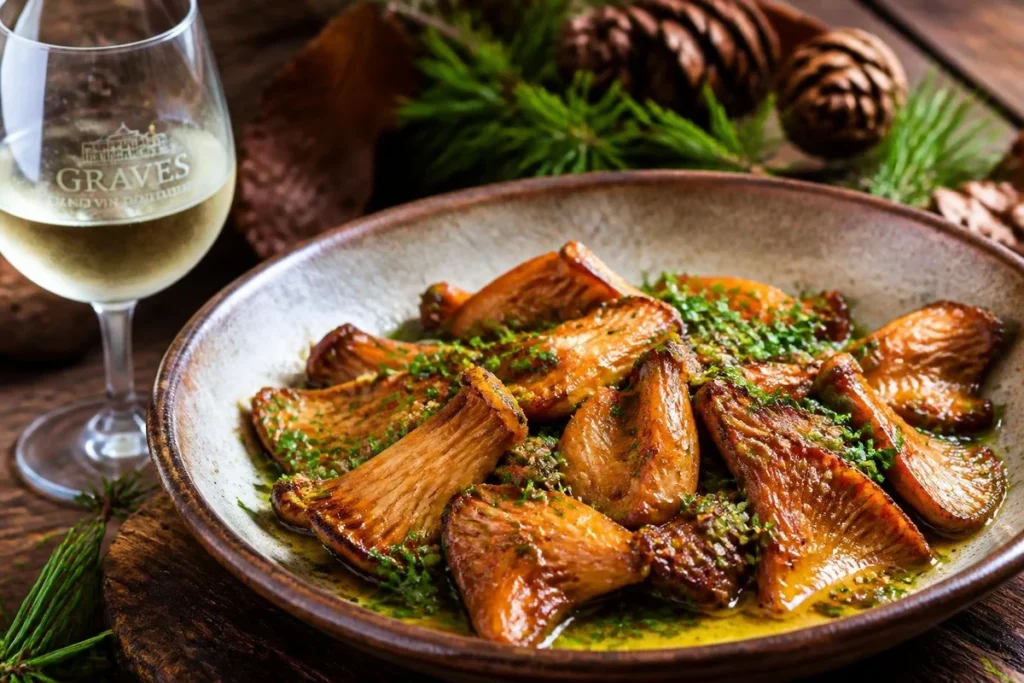
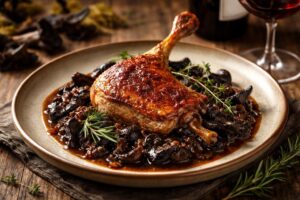
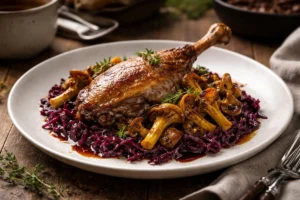
Bordeaux Saffron Milk Cap Ragout with Duck Fat and Parsley
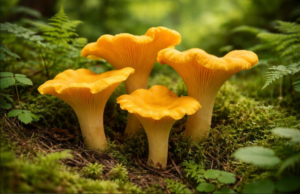
In the legendary culinary landscape of Bordeaux, the Saffron Milk Cap (Lactarius deliciosus) is often prepared in a manner that mirrors the region's love for richness and depth. This ragout utilizes Graisse de Canard (Duck Fat)—a staple of Southwestern French gastronomy—to act as the primary flavor carrier. Because the Lactarius has a relatively low moisture content compared to the Boletus edulis (Boletus edulis), it doesn't dilute the fat, allowing for a pure, concentrated infusion of forest floor and poultry aromatics.
The "Terroir Narrative" of this dish evokes the pine-filled Landes forest that borders the Bordeaux vineyards. Traditionally, foragers would bring their harvest home to be "confited" in the fat of the autumn ducks. The addition of a "Persillade" (garlic and parsley) at the final moment provides a sharp, chlorophyll-rich contrast to the heavy, unctuous lipids of the ragout.
Prep Time
20 Minutes
Cook Time
25 Minutes
Complexity
Grand Officier
Calories
320 kcal per serving
Region
Bordeaux / Landes, France
The Culinary Physics of This Dish
The core mechanism of this ragout is Hydrophobic Aromatic Sequestration. Many of the most desirable flavor compounds in Lactarius deliciosus, such as the terpenes that provide its piney scent, are fat-soluble (hydrophobic). Duck fat, which has a high smoke point and a unique fatty acid profile, effectively "strips" these compounds from the mushroom's cellular matrix and holds them in suspension. As the mushrooms undergo Caramelization, the duck fat permeates the gills, creating a self-basting effect that intensifies the Maillard reaction products on the mushroom's surface.
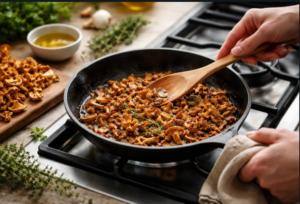
1. Fat Tempering: Melt the duck fat in a heavy copper or cast-iron skillet over medium-high heat. Wait until it begins to shimmer—this indicates the proper viscosity for fungal searing.
2. The Saffron Sear: Add the Lactarius deliciosus. It is essential to let them sit undisturbed for 3-4 minutes to develop a deep, rust-colored crust. The high heat will evaporate any residual "milk" (latex), concentrating the flavor.
3. The Aromatics: Add the shallots. Stir gently until they become translucent and begin to pick up the orange hue released by the mushrooms.
4. Deglazing: Pour in the white wine. Use a wooden spatula to scrape the fond (the caramelized bits) from the bottom of the pan. This is a Reduction phase; wait until the wine has almost completely disappeared, leaving only a glossy glaze.
5. The Persillade: Remove from heat. Immediately toss in the garlic and parsley. The residual heat is sufficient to "bloom" the garlic without making it bitter.
Shop Integration
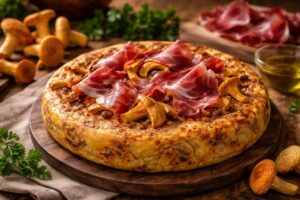
The use of high-quality animal fats to finish mushrooms is a signature technique of French heritage cooking. While the Saffron Milk Cap thrives in duck fat, our Boletus edulis (Boletus edulis) is perhaps the most famous candidate for this "Bordelaise" treatment, resulting in an incredibly unctuous texture. For a lighter, more floral experience, the Chanterelle (Chanterelle) is equally magnificent, while our Смърчкула (Morel) provides an unparalleled luxury when finished in this manner. If you seek a bold, dark contrast, the Craterellus cinereus pairs exceptionally well with the savory notes of rendered poultry fat.
The Umami Profile
This ragout creates a "Fat-Umami Bridge." Duck fat is naturally rich in free amino acids that enhance the perception of salt and savoriness. When these meet the guanylates of the seared Saffron Milk Caps, the result is a massive amplification of the umami signal. The parsley provides apigenin, a flavonoid that acts as a bitter counterpoint, preventing the richness of the fat from overwhelming the delicate forest notes of the mushroom.
Sommelier’s Choice
A mature **Left Bank Bordeaux (Cabernet Sauvignon dominant)** is the classic choice. The wine's tannins are softened by the duck fat, while its notes of cedar and tobacco resonate perfectly with the resinous, woody character of the seared Saffron Milk Caps.
The Etymological Chronicle
The linguistic history of the Saffron Milk Cap in France is deeply regional. В **French**, it is Lactaire délicieux, but in the Southwest, it is often called the Catalan or simply Sanguin. В **Italian**, the term Sanguinello is used. В **German**, it is the Edel-Reizker. В **Spanish**, the name Níscalo is the standard, though the Bordeaux influence often bleeds across the border into the Basque regions, where it is celebrated as an essential component of the autumn Plat du Jour.
Pure Umami | Mycological Research & Culinary Arts | 2026
To provide the best experiences, we use technologies like cookies to store and/or access device information. Consenting to these technologies will allow us to process data such as browsing behavior or unique IDs on this site. Not consenting or withdrawing consent, may adversely affect certain features and functions.
Functional
Always active
The technical storage or access is strictly necessary for the legitimate purpose of enabling the use of a specific service explicitly requested by the subscriber or user, or for the sole purpose of carrying out the transmission of a communication over an electronic communications network.
Preferences
The technical storage or access is necessary for the legitimate purpose of storing preferences that are not requested by the subscriber or user.
Statistics
The technical storage or access that is used exclusively for statistical purposes.The technical storage or access that is used exclusively for anonymous statistical purposes. Without a subpoena, voluntary compliance on the part of your Internet Service Provider, or additional records from a third party, information stored or retrieved for this purpose alone cannot usually be used to identify you.
Marketing
The technical storage or access is required to create user profiles to send advertising, or to track the user on a website or across several websites for similar marketing purposes.