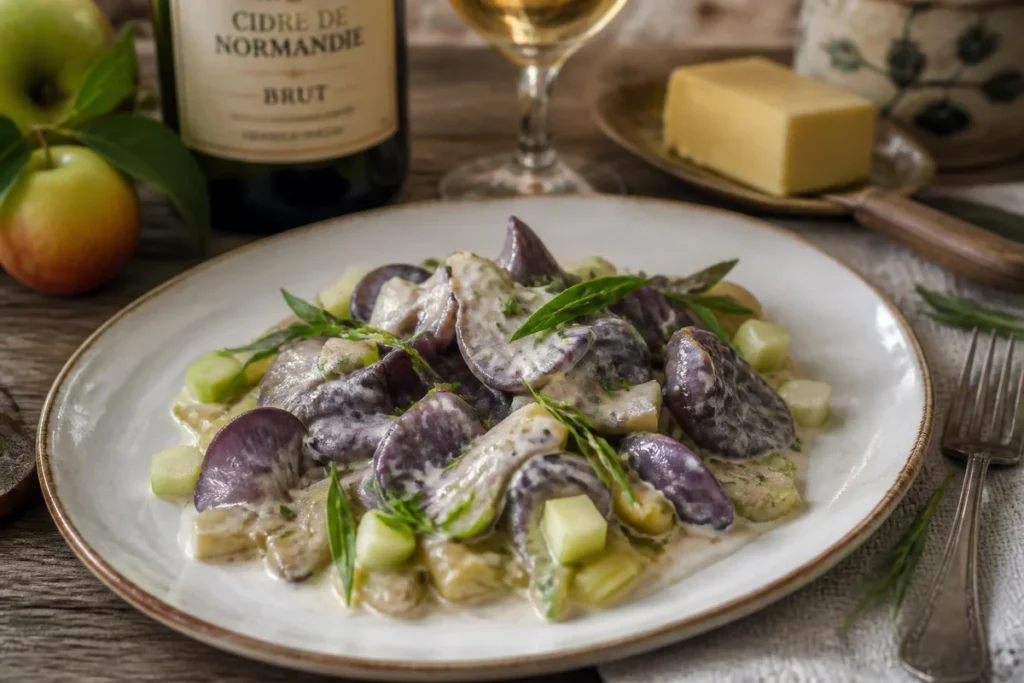
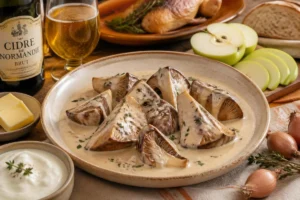
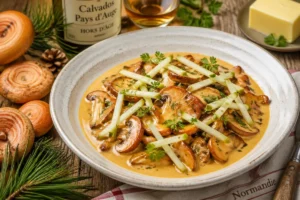
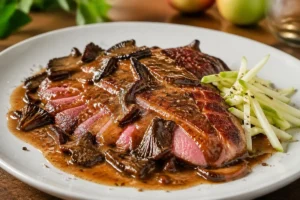
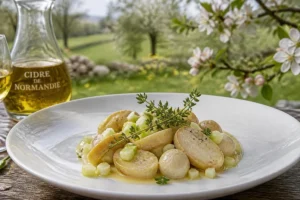
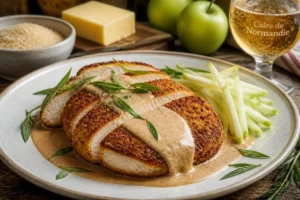
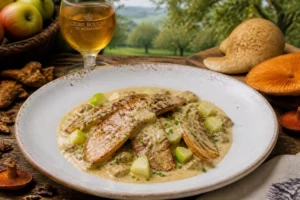
This recipe utilizes the slow-braising tradition of Normandy, where the malic acidity of fermented cider acts as a catalyst for the cellular breakdown of the Wood Blewit, resulting in a rich, silken texture.
Norman Cider Braised Wood Blewit with Crème Fraîche
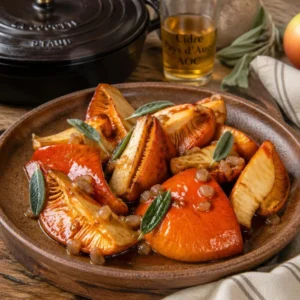
In the lush, damp orchards of Normandy, the Clitocybe nuda thrives beneath the cooling canopy of ancient apple trees. This recipe is a sensory map of the region, combining the crisp acidity of dry cider with the legendary richness of Norman dairy. Braising, a cornerstone of French provincial cooking, is the ideal method for the Wood Blewit, as it coaxes out the mushroom's inherent sweetness while tempering its powerful floral notes with the fermented depth of the orchard fruit.
Prep Time
Cook Time
Complexity
Calories
Region
35 min
45 min
Grand Officier
345 kcal
Normandy, France
Master Recipe (1:10 Ratio)
The 1:10 ratio is maintained between the aromatic base and the braising liquid to ensure a concentrated sauce reduction.
500g Fresh Clitocybe nuda (quartered)
250ml Dry Norman Cider (Brut)
100g Crème Fraîche (High fat, d'Isigny preferred)
50g Unsalted butter
1 Tart apple (e.g., Granny Smith, finely diced)
2 Leeks (white parts only, sliced)
Fresh tarragon and sea salt
The Technique
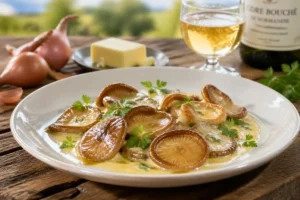
Sweat the leeks and diced apple in butter until translucent. Add the Clitocybe nuda and sauté until they begin to release their moisture. Introduce the Norman cider to achieve a Deglazing effect, lifting the caramelized sugars from the base of the pan. Cover and begin the Braising process over low heat for 30 minutes. Once the mushrooms are tender, remove the lid and increase heat slightly to encourage a Reduction of the liquid by half. Finally, whisk in the Crème Fraîche to mount the sauce, creating a velvet-textured glaze that clings to the violet caps.
Shop Integration
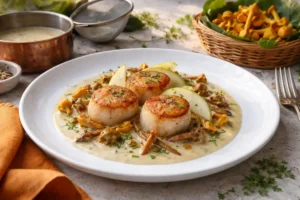
The creamy, acidic profile of a Norman braise is a magnificent companion to our forest-fresh Boletus edulis or the golden, fruity notes of Cantharellus cibarius. To build a truly decadent Norman platter, consider layering the flavors with the subtle, almond-like notes of our Marasmius oreades or the regal presence of Amanita caesarea. Our Craterellus cinereus and Morchella conica provide the perfect earthy weight to balance the brightness of the cider-infused Wood Blewit.
The Umami Profile
This dish demonstrates "synergistic umami." The glutamates in the Wood Blewit are complemented by the nucleotides produced during the cider's fermentation process. When these meet the lactic acid of the Crème Fraîche, the result is a massive expansion of the flavor profile on the mid-palate, often described as a "rounded" or "complete" savory sensation that lingers far longer than a standard sauté.
Sommelier’s Choice
While wine is traditional, the true sommelier's choice here is a Cidre de Normandie AOC. A "Demi-Sec" or "Brut" cider provides the necessary carbonation to cleanse the palate of the rich Crème Fraîche, while its inherent apple tannins provide a structural backbone that echoes the fruit used in the braising process.
The Etymological Chronicle
The Wood Blewit has long been a favorite in French farmhouse kitchens, known simply as the Pied-bleu. In the United Kingdom, "Blewit" likely stems from the "blue-white" appearance of the gills. In Italy, it is celebrated as Agarico violetto, while the German Violetter Rötelritterling remains the most scientifically descriptive name, cementing its status as one of Europe's most distinctive and linguistically diverse autumn fungi.
Pure Umami | Mycological Research & Culinary Arts | 2026
To provide the best experiences, we use technologies like cookies to store and/or access device information. Consenting to these technologies will allow us to process data such as browsing behavior or unique IDs on this site. Not consenting or withdrawing consent, may adversely affect certain features and functions.
Functional
Always active
The technical storage or access is strictly necessary for the legitimate purpose of enabling the use of a specific service explicitly requested by the subscriber or user, or for the sole purpose of carrying out the transmission of a communication over an electronic communications network.
Preferences
The technical storage or access is necessary for the legitimate purpose of storing preferences that are not requested by the subscriber or user.
Statistics
The technical storage or access that is used exclusively for statistical purposes.The technical storage or access that is used exclusively for anonymous statistical purposes. Without a subpoena, voluntary compliance on the part of your Internet Service Provider, or additional records from a third party, information stored or retrieved for this purpose alone cannot usually be used to identify you.
Marketing
The technical storage or access is required to create user profiles to send advertising, or to track the user on a website or across several websites for similar marketing purposes.