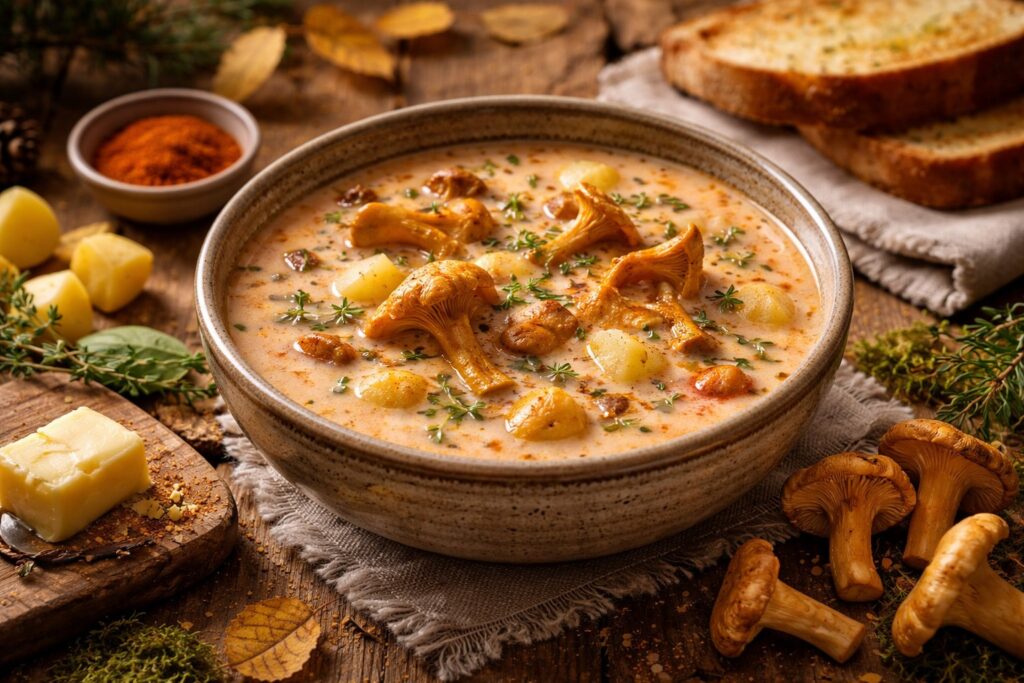
Golden Chanterelle and Potato Chowder with Smoked Paprika
The Ultimate Autumn Comfort: A Fusion of Smoke and Forest Gold
⏱️ 55 min🍴 Easy🔥 340 kcal🌱 Wild-Harvested
When the first frost touches the European highlands and the leaves begin their slow descent to the forest floor, the kitchen becomes a sanctuary. In these moments, nothing satisfies the soul quite like a thick, steaming bowl of chowder. This Chanterelle and Potato Chowder is a modern interpretation of the traditional forager's stews found in the Balkans and the Baltic states. It is a dish that celebrates the marriage of the humble potato—the anchor of European survival—with the "Gold of the Forest," the Cantharellus cibarius. By introducing a touch of smoked paprika, we bridge the gap between the fresh, apricot-scented aromatics of the chanterelle and the deep, camp-fire nostalgia of autumn. It is a culinary masterpiece of texture and warmth.
This chowder is designed to be substantial. Unlike clear broths, a chowder relies on the natural starches of the potato to create a velvety, "hug-in-a-bowl" consistency. Using wild-harvested chanterelles instead of store-bought mushrooms elevates this dish from a simple soup to an umami-rich gourmet experience. The chanterelle's resilience is key here; it won't break down or become slimy during the simmering process, instead providing a meaty, satisfying bite in every spoonful. This recipe honors the Mycorrhizal symbiosis of the forest, bringing the complex mineral profile of the deep woods into the heart of the home. It is a celebration of seasonal eating and the profound depth of European culinary traditions.
CHEF’S SPECIAL OFFER
Create the perfect chowder with our premium dried Chanterelles. Concentrated forest flavor in every bag.
BUY 2, GET 1 FREE!
EU-wide tracked shipping. Foraged with care, delivered with love.
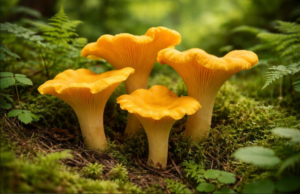
The Cantharellus cibarius is a sensory powerhouse. To the uninitiated, its bright yellow hue might suggest a delicate flavor, but the reality is a complex matrix of white pepper, stone fruit, and earth. This peppery finish is particularly important in a creamy chowder, as it provides a natural "lift" that prevents the dairy from feeling too heavy. In the wild, chanterelles are the guardians of the mossy clearings. They grow in a delicate exchange with European Beech and Pine, pulling minerals from the deep soil that give them their distinct, slightly metallic "terroir." This wild-harvested origin ensures a concentration of Vitamin D and Potassium that is unmatched by any cultivated variety. Their firm, toothy texture is a result of high-quality chitin, which remains intact even after prolonged simmering.
Foraging for chanterelles in the late season requires a sharp eye. They often hide beneath the yellowed birch leaves, mimicking their color to perfection. For this chowder, foragers often seek out the larger, more mature "trumpets" which have a higher concentration of guanylates—the compounds responsible for the intense umami sensation. These older specimens have a lower water content, making them ideal for a soup where you want the mushroom essence to bleed into the cream. This European wilderness gift is a reminder of the slow-growth cycles of nature; a chanterelle takes its time to mature, and that patience is reflected in the depth of flavor it brings to the pot. It is Ancestral Nutrition in its most comforting form.
The Master Recipe: Forest Gold Chowder
This recipe uses a "Partial Purée" technique to achieve a creamy texture without using excessive amounts of flour.
500g Fresh or 50g Dried Chanterelles (Cantharellus cibarius)
600g Yukon Gold Potatoes, peeled and cubed
1 Large Yellow Onion, diced
2 Stalks Celery, finely sliced
1 liter Vegetable or Chicken Bone Broth
200ml Heavy Cream (Crème Fraîche for extra tang)
1 tsp Smoked Paprika (Pimentón de la Vera)
2 tbsp Grass-fed Butter
Fresh Thyme and Bay Leaf
Sea Salt and Cracked Black Pepper
Step 1: The Aromatic Sweat
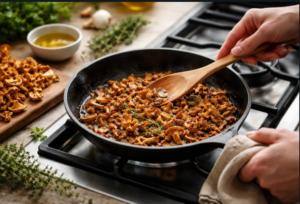
In a large heavy-bottomed pot, melt the butter. Add the onions and celery, sweating them over medium heat until translucent. Do not brown them; you want to keep the base sweet and pale. Add the smoked paprika and stir for 30 seconds until the oil turns a vibrant red and the smokiness is released. This creates the "aromatic heart" of your chowder.
Step 3: The Mushroom and Potato Simmer
Clean your chanterelles and tear them into bite-sized pieces rather than slicing (this preserves the texture). Add the mushrooms and the cubed potatoes to the pot. Pour in the broth and add the bay leaf and thyme. Bring to a boil, then reduce the heat and simmer gently for 20-25 minutes until the potatoes are tender. The broth will begin to thicken naturally as the potatoes release their starch.
Step 4: The Texture Refinement
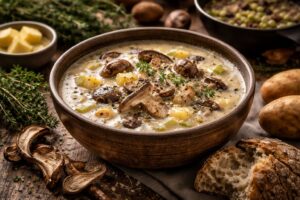
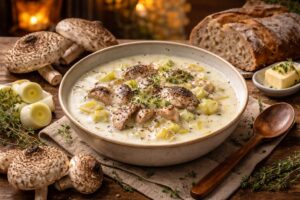
Remove the bay leaf. Take a potato masher and lightly crush about 20% of the potatoes directly in the pot. This creates a thick, luxurious body for the soup without needing a roux. Stir in the heavy cream and simmer for another 5 minutes. The golden chanterelles will now be suspended in a beautiful, creamy, salmon-pink liquid. Season with sea salt and plenty of black pepper.
Pro Technique: The “Overnight Mellow”
Like many stews, this chowder is actually better the next day. A professional secret is to let the soup cool and "mellow" in the refrigerator overnight. This allows the lipophilic (fat-soluble) flavor molecules from the smoked paprika and the chanterelles to fully bond with the dairy proteins in the cream. When reheated gently, the flavor will be significantly more rounded and complex.
The Umami Secret: Synergistic Glutamates
Potatoes are a surprising source of free glutamates, especially when slow-cooked. When combined with the guanylates in the wild chanterelles and the savory compounds in the bone broth, they create a "flavor explosion" that signals deep nutritional satisfaction to the brain. This is why chowder feels so incredibly "filling"—it is literally feeding your umami receptors with maximum efficiency.
The Art of the Pairing
Serve this chowder with a thick slice of sourdough bread toasted with garlic butter. Sommelier's Selection: A buttery Chardonnay or a dry Hard Cider. The crisp apple acidity of the cider is a legendary match for both pork-based dishes and creamy mushroom soups, cutting through the richness with ease.
Ancestral Nutrition
This chowder is a textbook example of Ancestral Nutrition. It provides a dense source of B-vitamins, Iron, and Selenium from the wild mushrooms, combined with the energy-stable complex carbohydrates of the potatoes. By using grass-fed butter and heavy cream, you are providing the healthy fats necessary to absorb the Vitamin D found in the chanterelles, making this a truly "functional" food for the colder months.
The Chanterelle Lexicon: Global Names for Cantharellus cibarius
The Golden Chanterelle is one of the most commercially important wild mushrooms worldwide. Its names often reflect its apricot aroma and bright yellow hue:
To provide the best experiences, we use technologies like cookies to store and/or access device information. Consenting to these technologies will allow us to process data such as browsing behavior or unique IDs on this site. Not consenting or withdrawing consent, may adversely affect certain features and functions.
Functional
Always active
The technical storage or access is strictly necessary for the legitimate purpose of enabling the use of a specific service explicitly requested by the subscriber or user, or for the sole purpose of carrying out the transmission of a communication over an electronic communications network.
Preferences
The technical storage or access is necessary for the legitimate purpose of storing preferences that are not requested by the subscriber or user.
Statistics
The technical storage or access that is used exclusively for statistical purposes.The technical storage or access that is used exclusively for anonymous statistical purposes. Without a subpoena, voluntary compliance on the part of your Internet Service Provider, or additional records from a third party, information stored or retrieved for this purpose alone cannot usually be used to identify you.
Marketing
The technical storage or access is required to create user profiles to send advertising, or to track the user on a website or across several websites for similar marketing purposes.