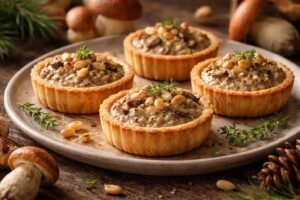
Description: Master this wild-harvested gourmet recipe. A Cantharellus cibarius culinary masterpiece featuring a nutty shortcrust and umami-rich forest filling.
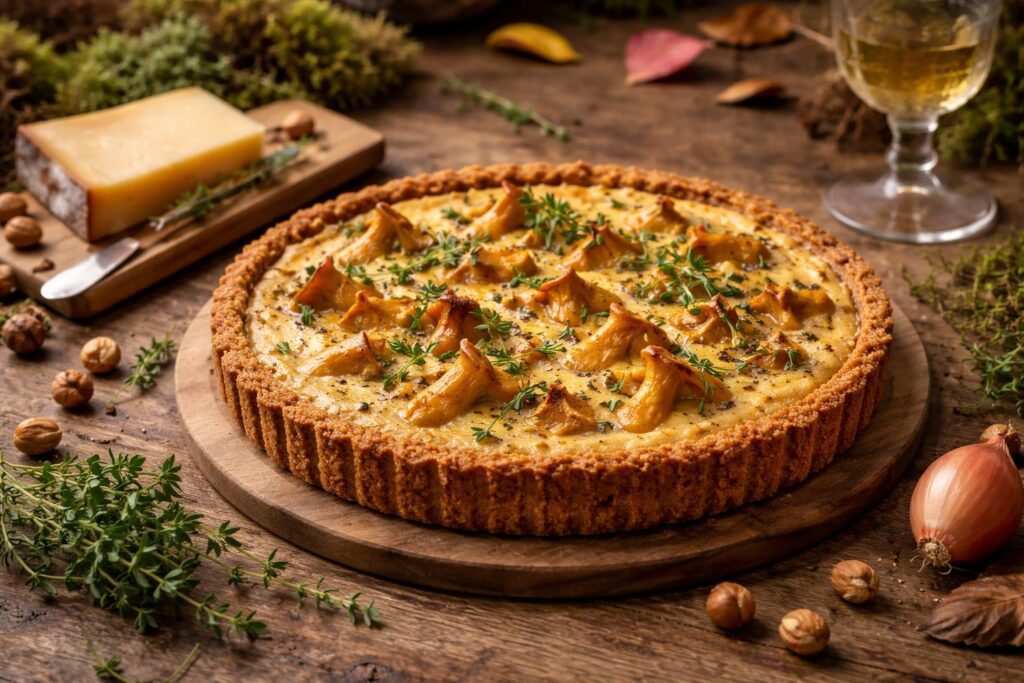
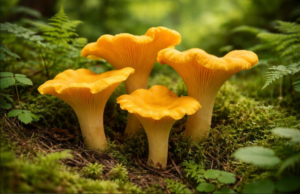
In the high-canopy forests of the European wilderness, the Cantharellus cibarius often shares its root space with the wild hazel (Corylus avellana). The Golden Chanterelle Tart with Hazelnut Crust is a culinary expression of this botanical companionship. Historically, such tarts were the centerpiece of late-summer harvest festivals in Central Europe, where the year's first nuts were ground into flour to complement the final flushes of the gold-hued fungi.
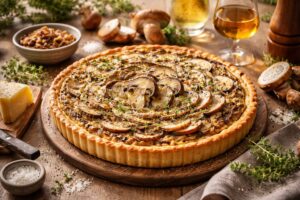
This wild-harvested gourmet recipe elevates the rustic mushroom into a sophisticated savory pastry. By incorporating toasted hazelnuts into the dough, we create a sensory bridge to the mushroom's own nutty undertones. It is a culinary masterpiece that balances the crumbly, dry heat of the pastry with a silken, umami-rich custard filling. The result is a dish that tastes of the forest's transition—from the lush dampness of the moss to the dry, toasted scents of the coming autumn.
🌲 EXCLUSIVE FOREST HARVEST OFFER 🌲
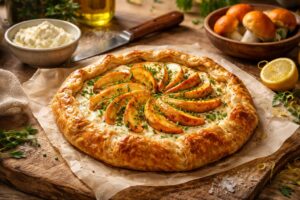
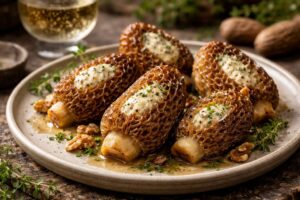
Elevate your kitchen with the rarest Chanterelles, Porcini, and Morels.
Sensory & Foraging Profiles: Lignins and Lipid Bonds
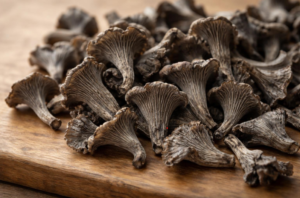
The Cantharellus cibarius is a masterpiece of Mycorrhizal symbiosis, trading minerals for sugars with forest giants. This biological process infuses the mushroom with carotenoids and complex aldehydes that give it a unique, apricot-like olfactory profile. When these aromas interact with the toasted lignins of the hazelnuts, a new, third flavor profile emerges: one of "roasted stone fruit."
Microbiology & Chemistry: The microbiology of the tart involves the thermal denaturation of proteins in the crust and the coagulation of ovoprotein in the custard. Chemically, the glutamic acid in the Chanterelles finds a perfect carrier in the fatty acid chains of the hazelnut oil. This creates a "lipid-locking" effect, where the savory depth of the mushroom is anchored to the palate by the nut fats.
Texture Analysis: This dish is a study in textural contrast. The crust provides a short, "sandy" breakage (sablage), while the center offers a tremulous, custard-like yield. The wild-harvested Chanterelles, having been pre-sautéed, provide a meaty, resilient bite that prevents the tart from feeling overly soft.
The Master Recipe: Hazelnut & Chanterelle Tart
Ingredients
350g Wild-Harvested Cantharellus cibarius (chopped or torn)
For the Crust: 200g All-purpose flour, 50g toasted Hazelnut flour, 125g cold Butter, 1 Egg yolk.
For the Filling: 200ml Crème fraîche, 2 large Eggs, 1 tsp fresh Thyme leaves.
1 small Shallot, finely minced
40g Gruyère cheese, finely grated
Sea salt and freshly ground Nutmeg
Culinary Steps
The Crust: Pulse the flours and cold butter until it looks like breadcrumbs. Add the egg yolk and a splash of water. Mix until a dough forms. Chill for 30 minutes.
The Blind Bake: Roll out the dough and line a 23cm tart tin. Bake at 180°C for 15 minutes with weights, then 5 minutes without.
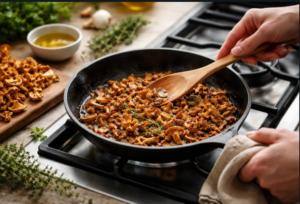
The Mushroom Preparation: Sauté the Cantharellus cibarius with the shallot until all moisture has evaporated and they are slightly golden.
The Custard: Whisk the crème fraîche, eggs, nutmeg, and thyme. Stir in the grated cheese.
The Assembly: Scatter the sautéed mushrooms evenly across the pre-baked base. Pour the custard mixture over them.
The Final Bake: Return to the oven for 25-30 minutes until the center is set and the top is lightly bronzed. Let rest for 10 minutes before slicing.
Pro Technique: The “Barrier Coat”
To prevent a "soggy bottom," a common pitfall in mushroom tarts, apply a barrier coat. After blind baking and while the crust is still hot, brush the base with a thin layer of leftover beaten egg white and return to the oven for 2 minutes. This creates a waterproof protein seal that protects the wild-harvested hazelnut crust from the moisture of the custard and the Cantharellus cibarius, ensuring a crisp, professional snap.
The Umami Secret: Roasted Nut and Nucleotide Synergy
Hazelnuts contain high levels of aspartic acid, which acts as a secondary umami booster. When these roasted nut proteins meet the natural glutamates and nucleotides in Cantharellus cibarius, it triggers a synergistic reaction known as "flavor layering." This makes the tart taste substantially richer than the sum of its parts, providing a deep, umami-rich profile that satisfies even the most discerning palate.
The Art of the Pairing
The nutty, buttery profile of the tart is a perfect match for a Vintage Champagne or a Chardonnay from the Jura region (oxidative style). For a non-alcoholic pairing, a warm roasted dandelion root tea offers a bitter, coffee-like earthiness that cuts through the richness of the crème fraîche and hazelnut crust.
Ancestral Nutrition
This tart is a dense source of Vitamin E, Magnesium, and Vitamin D2. The Cantharellus cibarius provides essential Polysaccharides for gut health, while the hazelnuts provide heart-healthy monounsaturated fats. Historically, these energy-rich pastries were the "survival cakes" of foraging communities, designed to provide long-lasting fuel and concentrated bioavailable minerals.
To provide the best experiences, we use technologies like cookies to store and/or access device information. Consenting to these technologies will allow us to process data such as browsing behavior or unique IDs on this site. Not consenting or withdrawing consent, may adversely affect certain features and functions.
Functional
Always active
The technical storage or access is strictly necessary for the legitimate purpose of enabling the use of a specific service explicitly requested by the subscriber or user, or for the sole purpose of carrying out the transmission of a communication over an electronic communications network.
Preferences
The technical storage or access is necessary for the legitimate purpose of storing preferences that are not requested by the subscriber or user.
Statistics
The technical storage or access that is used exclusively for statistical purposes.The technical storage or access that is used exclusively for anonymous statistical purposes. Without a subpoena, voluntary compliance on the part of your Internet Service Provider, or additional records from a third party, information stored or retrieved for this purpose alone cannot usually be used to identify you.
Marketing
The technical storage or access is required to create user profiles to send advertising, or to track the user on a website or across several websites for similar marketing purposes.