How to Identify Premium Wild Dried Mushrooms: An Expert Guide for Connoisseurs
In the world of haute cuisine, few ingredients can rival the depth, complexity, and "umami" intensity of dried wild mushrooms. They are more than just food; they are a concentrated essence of the forest, capturing the earth's moisture, the purity of the air, and the raw energy of nature.
For the Pure Umami team, offering varieties such as King Porcini (Boletus edulis), Mousseron (Scotch Bonnet), Caesar's Mushroom, Silver Chanterelle, Golden Chanterelle, and Morel is not merely a business—it is a mission to preserve the botanical identity of these forest treasures. In this guide, we will walk you through the nuances of identifying true quality, ensuring that your investment transforms your culinary creations.
1. The Power of Wild Origin: Why “Wild” is Irreplaceable
Before examining the details of the dried product, it is fundamental to understand the difference between wild and cultivated mushrooms. Wild mushrooms grow in a complex symbiosis with trees and soil microorganisms, giving them a unique chemical composition and flavor profile that is impossible to replicate in an artificial environment.
At Pure Umami, we believe that the wild state guarantees not only a more potent aroma but also a superior nutritional value. When you choose wild mushrooms, you are choosing a product that has grown freely, without human intervention, pesticides, or artificial fertilizers. This is pure food in its most primal form.
2. Visual Cues and Botanical Identity
The first contact with a quality mushroom is always visual. A premium dried mushroom should "speak" of its origin through its appearance.
Natural Color Profile
King Porcini (Boletus edulis): Look for slices with a creamy-white to light brown color. Excessively dark slices often suggest over-mature mushrooms, which will have a mushy texture after rehydration.
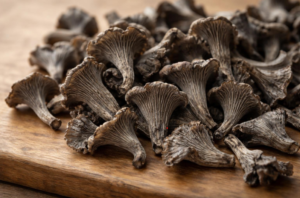
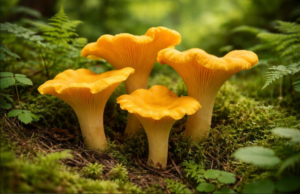
Chanterelle: It should retain its specific golden to apricot hue. If it appears colorless or grey, it is a sign of poor storage.
Morel (Morchella): The architectural jewel of the forest. Its color varies from sandy to dark chocolate, but always with a clear definition of its "honeycomb" structure.
Integrity as the Gold Standard
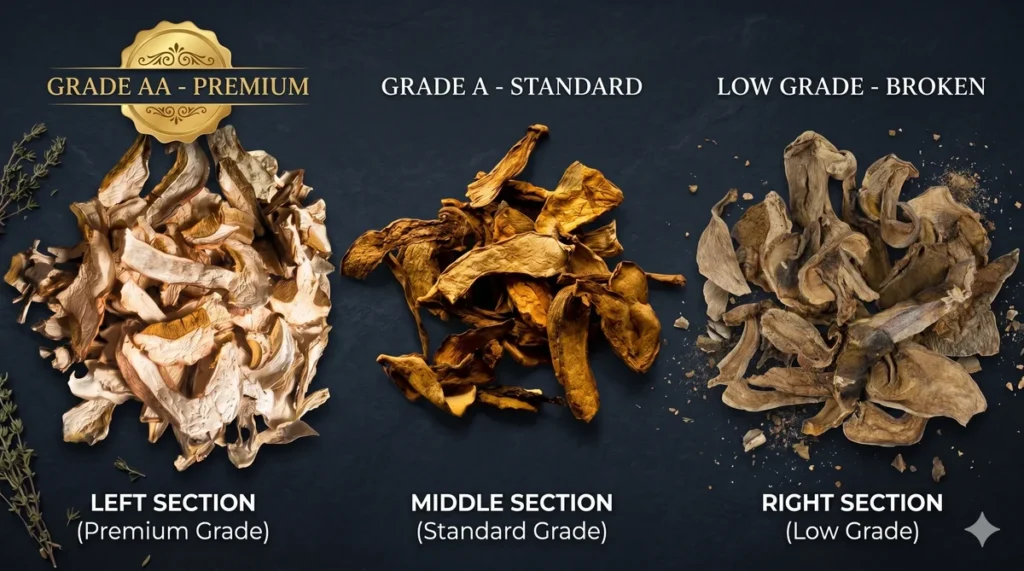
One of the clearest signs of professional processing is the integrity of the slice. Premium dried mushrooms are carefully sliced, often by hand, to preserve their structure. When you open a high-end package, you should see complete cross-sections of the mushroom—from the cap to the stem. This is not just about aesthetics; a whole slice cooks evenly and retains its elasticity.
3. Identifying Low Quality: Warning Signs
The market is unfortunately flooded with low-quality mushrooms often masked by attractive prices. Here is how to spot them:
Compromised Color and “Dullness”
Mushrooms that appear grey, faded, or have unnatural black spots are a danger signal. This usually means the raw material sat for too long before drying or was attacked by bacteria due to high humidity. Such mushrooms will lack umami and instead offer a bitter, unpleasant aftertaste.
Drying Errors (Overheating)
Drying mushrooms is a craft requiring precise temperature control. If a producer uses excessively high temperatures to speed up the process, the mushrooms become "toasted". They become brittle, crumble easily, and lose their delicate aromas, replaced by a burnt smell.
The “Dust” Fraction and Crumbled Remains
If the bottom of the package is full of small pieces and mushroom dust, it indicates two things: either low-quality, brittle raw material was used, or the product was subjected to rough logistics. In the kitchen, this is unacceptable, as small fragments will turn to mush while larger slices are only beginning to rehydrate.
4. Authenticity: Nature’s Marks as a Certificate of Quality
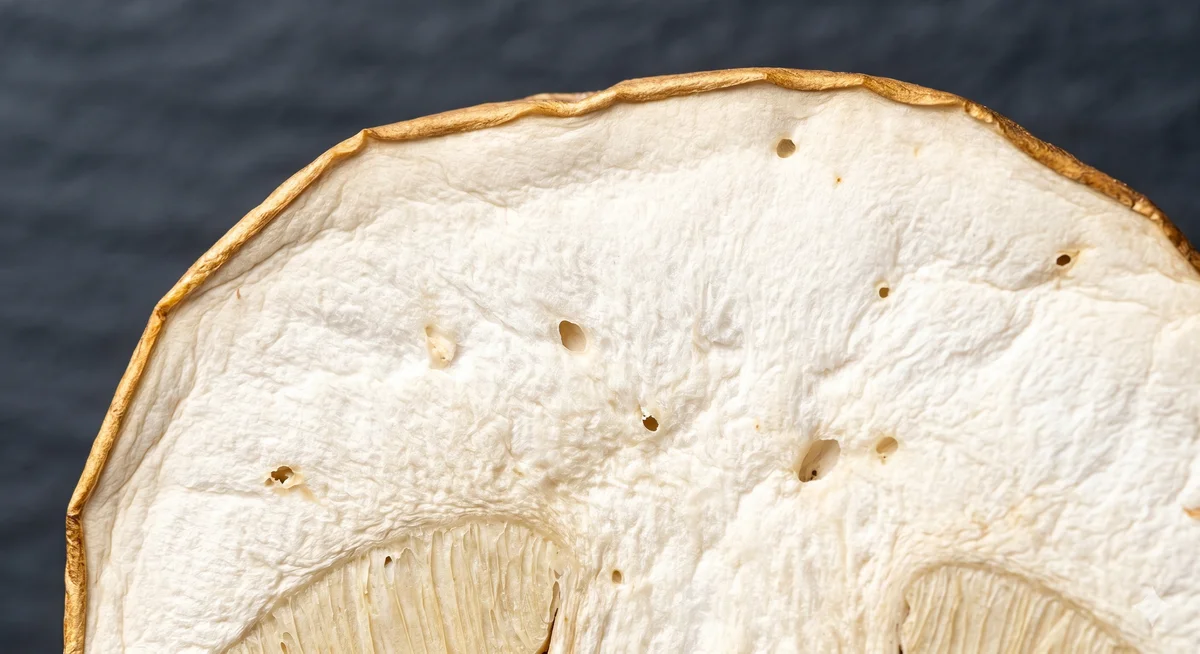
A vital topic for any connoisseur is natural markings. Many inexperienced buyers worry when they see small holes on the surface of a dried Porcini. At Pure Umami, we want to change that perception.
Nature's certificate: Small natural marks prove a 100% wild, untreated origin.
Small traces of forest life are perfectly normal for a 100% wild product. They are evidence that the mushroom grew in a real ecosystem. Wild mushrooms do not grow in sterile laboratories. These small "marks of nature" confirm that the product is authentic and has not been treated with aggressive insecticides. When you buy a wild mushroom with light natural marks, you are buying biologically pure food that respects the natural cycle of the forest.
5. The Science Behind Umami
"Umami" is the fifth taste—that deep, savory, "meaty" sensation that makes us crave another bite. Dried mushrooms are one of the richest natural sources of glutamates.
Pure Umami’s Intensity Scale:
Porcini and Morel (5/5): The heavyweights. Use these when you want the mushroom to be the primary driver of the dish.
Golden and Silver Chanterelles (3/5): Offer a more ethereal, fruity-earthy profile, ideal for delicate risottos.
Mousseron and Caesar's Mushroom (2/5): Fine and elegant, these are the ideal choice for clear soups and light garnishes where a nuance, rather than dominance, is desired.
6. The 10-to-1 Ratio: The Efficiency of Dried Products
One of the biggest mistakes home cooks make is underestimating the power of the dried mushroom. The gold standard ratio in the industry is 10:1. This means that to produce 100 grams of our premium dried mushrooms, we process approximately 1 kilogram of fresh forest raw material.
This makes dried mushrooms an exceptionally economical choice. Just a handful of dried Porcini is enough to give an entire pot of soup an aroma that 2 kilograms of cultivated button mushrooms could never achieve.
7. Profile of Pure Umami Varieties
Every variety in our portfolio has its own individual "personality":
King Porcini (Boletus edulis): The King of the forest. It adds density and a royal flair to sauces.
Morel (Morchella): The gourmet symbol of spring. Sought after for its ability to soak up creamy sauces in its porous structure.
Golden Chanterelle: Unrivaled with its apricot scent. It must be dried slowly to avoid becoming leathery.
Mousseron: Small, but with an incredibly intense aroma of fresh grass and almond.
Silver Chanterelle: Often underestimated, but highly valued by chefs for its smoky, mysterious flavor.
Caesar's Mushroom: A delicacy with a specific taste that requires gentle handling to shine on the plate.
8. Buyer’s Guide: Reading the Label and the Product
Region of Origin: Premium mushrooms should come from ecologically clean mountain regions, such as the Bulgarian forests.
Drying Method: Look for "artisanal" or "slow" drying to ensure vitamins and enzymes are preserved.
Packaging: It must be hermetically sealed to prevent the mushrooms from "drinking" moisture from the air.
9. FAQ: Frequently Asked Questions
"Why do my mushrooms look brown rather than snow-white?"
Natural Porcini is rarely snow-white. Depending on the soil and the tree it grew under, the color varies. What matters is the absence of a grey or black tint.
"Should I throw away the soaking water?"
Never! The water in which the mushrooms have rehydrated is "liquid gold". Strain it and add it to your dish as the purest possible broth.
10. Conclusion: From the Forest to Your Table
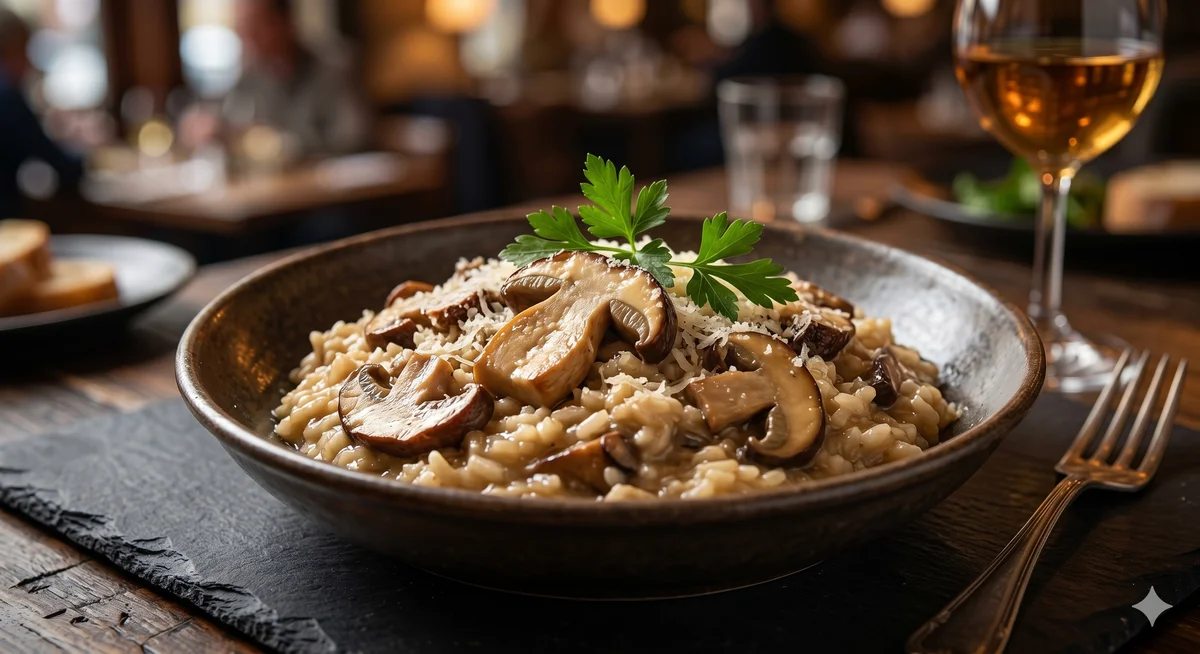
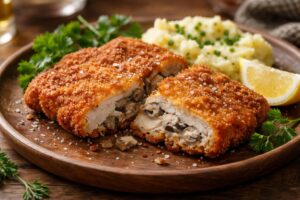
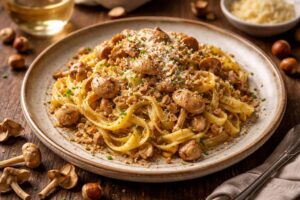
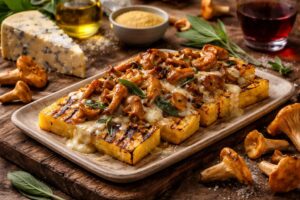
The culinary reward: A masterpiece created with authentic wild forest treasures.
Choosing premium dried mushrooms is a matter of knowledge and trust. At Pure Umami, we combine wild nature with artisanal precision to offer you a product without compromise. Whether you are a chef preparing a menu for a Michelin-starred restaurant or a home enthusiast, the quality of the mushroom is the foundation upon which you build your culinary success.
Ready to start cooking?
Quality ingredients deserve expert handling. To ensure you unlock the full flavor potential and perfect texture of your selection, read our detailed guide on How to Properly Prepare Dried Wild Mushrooms. From optimal rehydration times to professional tips on using "liquid gold" broth, learn how to treat these forest treasures with the respect they deserve.
To provide the best experiences, we use technologies like cookies to store and/or access device information. Consenting to these technologies will allow us to process data such as browsing behavior or unique IDs on this site. Not consenting or withdrawing consent, may adversely affect certain features and functions.
Functional
Always active
The technical storage or access is strictly necessary for the legitimate purpose of enabling the use of a specific service explicitly requested by the subscriber or user, or for the sole purpose of carrying out the transmission of a communication over an electronic communications network.
Preferences
The technical storage or access is necessary for the legitimate purpose of storing preferences that are not requested by the subscriber or user.
Statistics
The technical storage or access that is used exclusively for statistical purposes.The technical storage or access that is used exclusively for anonymous statistical purposes. Without a subpoena, voluntary compliance on the part of your Internet Service Provider, or additional records from a third party, information stored or retrieved for this purpose alone cannot usually be used to identify you.
Marketing
The technical storage or access is required to create user profiles to send advertising, or to track the user on a website or across several websites for similar marketing purposes.