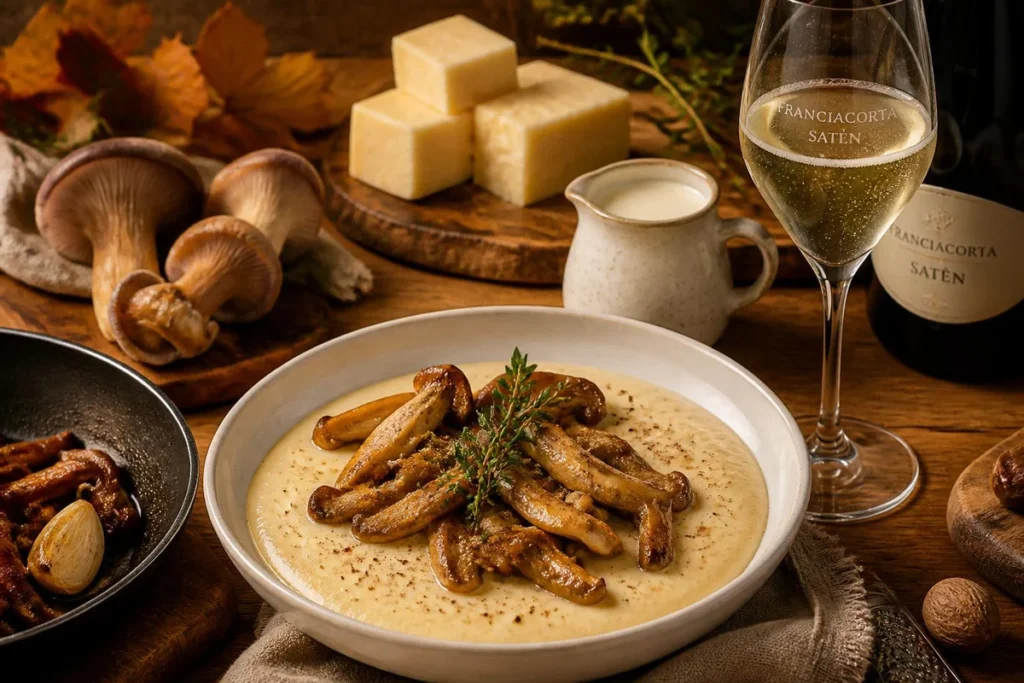
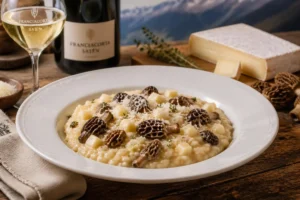
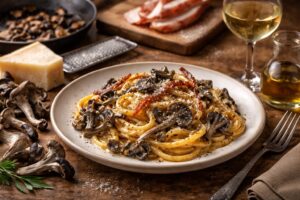
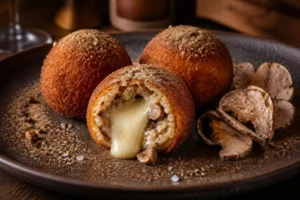
This preparation explores the biochemical affinity between the sulfur compounds in aged Lombardy cheese and the floral volatiles of the Wood Blewit, resulting in a rich, molecularly dense emulsion.
Lombardy Taleggio Fonduta with Wood Blewit
In the alpine foothills of Lombardy, where the damp autumn air encourages the growth of the Clitocybe nuda, the local tradition of "Fonduta" is the ultimate expression of comfort and sophistication. This dish utilizes Taleggio DOC, a cheese whose pungent, earthy aroma acts as a perfect scientific mirror to the floral and forest-floor notes of the Wood Blewit. Historically, shepherds in the Val Taleggio would melt their cheeses with wild fungi, a rustic practice we have refined here through molecular temperature control to create a velvet-textured masterpiece.
Prep Time
Cook Time
Complexity
Calories
Region
30 min
20 min
Grand Officier
450 kcal
Lombardy, Italy
Master Recipe (1:10 Ratio)
The 1:10 ratio of cream to cheese is vital for achieving the correct viscosity for the fonduta base.
500g Fresh Clitocybe nuda (caps sliced into thick batons)
200g Taleggio DOC (rind removed, cubed)
20ml Heavy cream (high fat)
2 Egg yolks (for emulsification)
30g Unsalted butter
1 Garlic clove (bruised)
Pinch of freshly grated nutmeg
The Technique
Begin by sautéing the Clitocybe nuda in butter with the bruised garlic until they are golden and have released their excess moisture. Set aside. For the fonduta, combine the Taleggio and cream in a double boiler (bain-marie). Maintain a temperature below 65°C to avoid protein coagulation. Once melted, whisk in the egg yolks to initiate the Emulsification, creating a glossy, thick sauce. Deglazing the mushroom pan with a tablespoon of white wine before folding them into the cheese ensures all savory fond is incorporated. Season with nutmeg to bridge the earthy and floral notes.
Shop Integration
The rich, creamy profile of a Taleggio fonduta is an exceptional medium for our premium Boletus edulis or the intense, nutty character of our Morchella conica. To balance the weight of the cheese, consider pairing this dish with the peppery highlights of Cantharellus cibarius or the subtle, almond-like notes of Marasmius oreades. Our Amanita caesarea and Craterellus cinereus offer the necessary structural contrast to ensure a diverse and scientifically balanced mycological experience.
The Umami Profile
This dish represents "molecular umami synergy." The aging process of Taleggio produces free amino acids that perfectly complement the glutamates in the Wood Blewit. The fat in the cream and cheese serves as a sensory amplifier, extending the "tail" of the flavor on the back of the tongue. The result is a profound, lingering savory sensation that is balanced by the mushroom's natural floral sweetness.
Sommelier’s Choice
A wine with significant structural acidity and effervescence is required to cut through the richness of the fonduta. We recommend a Franciacorta Satèn. Its creamy bubbles mirror the texture of the cheese sauce, while its notes of toasted bread and dried fruit harmonize with the sautéed Wood Blewits.
The Etymological Chronicle
In the Lombardy dialect, the Wood Blewit is often called Fonz viloet. While the French name Pied-bleu and the Spanish Piecito azul emphasize the color, the German Violetter Rötelritterling highlights its botanical classification. The Italian Agarico violetto remains a favorite in the North, celebrating the mushroom as a regal inhabitant of the alpine woods during the final days of autumn.
Pure Umami | Mycological Research & Culinary Arts | 2026
To provide the best experiences, we use technologies like cookies to store and/or access device information. Consenting to these technologies will allow us to process data such as browsing behavior or unique IDs on this site. Not consenting or withdrawing consent, may adversely affect certain features and functions.
Functional
Always active
The technical storage or access is strictly necessary for the legitimate purpose of enabling the use of a specific service explicitly requested by the subscriber or user, or for the sole purpose of carrying out the transmission of a communication over an electronic communications network.
Preferences
The technical storage or access is necessary for the legitimate purpose of storing preferences that are not requested by the subscriber or user.
Statistics
The technical storage or access that is used exclusively for statistical purposes.The technical storage or access that is used exclusively for anonymous statistical purposes. Without a subpoena, voluntary compliance on the part of your Internet Service Provider, or additional records from a third party, information stored or retrieved for this purpose alone cannot usually be used to identify you.
Marketing
The technical storage or access is required to create user profiles to send advertising, or to track the user on a website or across several websites for similar marketing purposes.