A technical study in Malt-Saccharide Reduction and Acetic-Lipid Balancing, utilizing the Parasol mushroom's porous architecture to absorb the caramelized depth of dark abbey ale and spiced biscuit sediment.
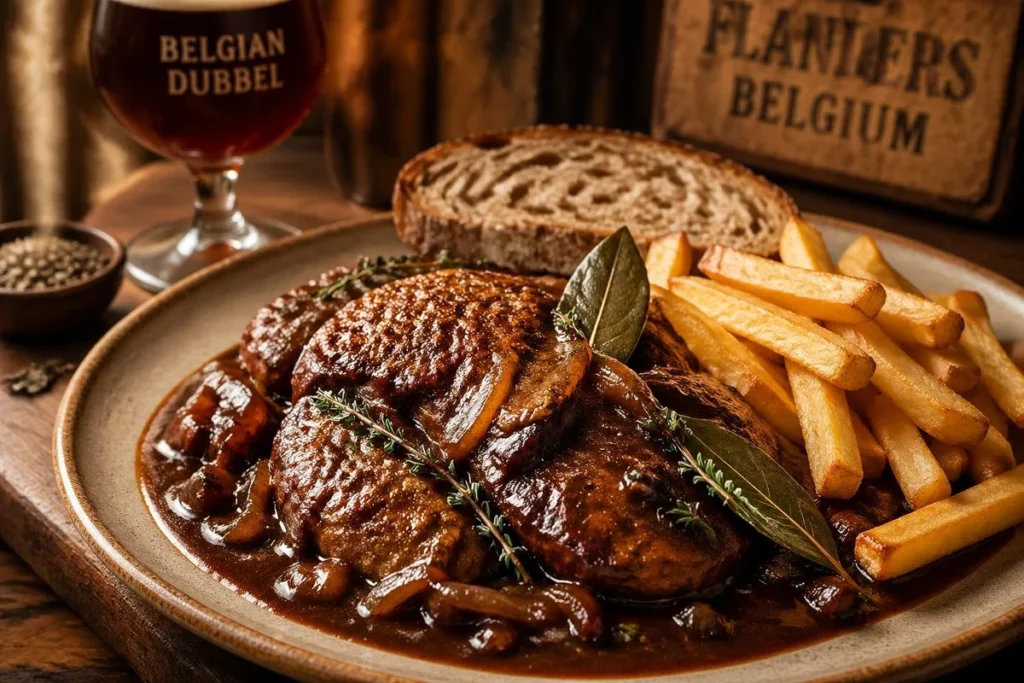
Belgian-style Parasol “Carbonnade”
For our 108th technical formulation, we analyze Maltose Reduction and Polysaccharide Thickening. Macrolepiota procera (Parasol Mushroom), locally identified as Macrolepiota procera, possesses the textural resilience required to withstand long braising in high-gravity fluids. At pure-umami.cc, we utilize the Carbonnade Flamande method. By substituting beef with whole Parasol caps and simmering them in a dark Belgian Abbey ale, we facilitate a Molecular Infusion where the beer's roasted malt esters replace the mushroom's internal air, creating a succulent, "meaty" bite with a bittersweet finish.
The Culinary Physics of This Dish
The engineering of this carbonnade relies on Enzymatic Onion Breakdown and Maillard-Derived Viscosity. Molecularly, the volume of onions (1:1 ratio with mushrooms) provides a massive source of Inulin and Fructose. Through slow cooking, these saccharides caramelize and thicken the ale into a natural syrup. The traditional addition of a mustard-coated Speculoos (spiced biscuit) acts as a Complex Binding Agent; the biscuit's starch stabilizes the emulsion while its cinnamon and clove volatiles (eugenol) provide a high-frequency contrast to the deep, earthy Macrolepiota procera guanylates.
Terroir Narrative
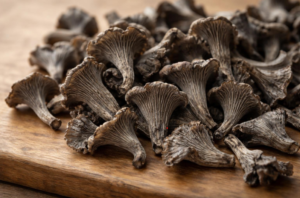
This formulation is a tribute to Flanders (Vlaanderen) and the brewing heritage of the Trappist monks. We bridge the rain-swept cobblestones of Bruges and Ghent with the Balkan highland meadows. The terroir is expressed through the marriage of the forest's "wild" Macrolepiota procera and the dark, fermented soul of Belgian ale. This follows the same technical rigor we apply to our Boletus edulis (Porcini) and Craterellus cinereus (Grey Chanterelle), treating the braise as a study in fermentation-driven umami.
Quick Info Bar
Liquid Catalyst
Thickening Agent
Complexity
Region
Belgian Dark Ale (Dubbel)
Speculoos & Mustard
Grand Officier
Flanders, BE
Master Recipe (1:10 Rule)
500g Fresh Macrolepiota procera caps (Macrolepiota procera) – kept in large chunks
500g Yellow Onions (finely sliced for Saccharide Density)
330ml Belgian Dark Ale (e.g., Leffe Brune, Chimay Blue)
2 Speculoos Biscuits + 1 tbsp Sharp Dijon Mustard
1 tbsp Brown Sugar + 1 tbsp Cider Vinegar (The Agrodolce Balance)
Fresh Thyme, Bay Leaf, and Butter
Fleur de Sel and Black Pepper
The Technique
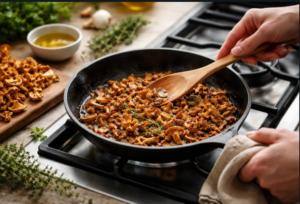
The Caramelization Phase: Sweat the onions in butter with brown sugar over low heat for 30 minutes. The onions must reach a deep mahogany color—this is the Maillard Pre-requisite for the sauce.
The Fungal Sear: Sauté the **Macrolepiota procera** chunks in a separate pan until golden. Add them to the caramelized onions.
The Malt Infusion: Deglaze with the dark ale. Add the thyme, bay leaf, and vinegar. The vinegar acts as a pH Adjuster to brighten the heavy malt notes.
The Speculoos Seal: Spread mustard on the Speculoos biscuits and place them on top of the stew. Cover and simmer for 40 minutes. The biscuits will dissolve, providing Starch stabilization and a spiced aromatic lift.
Service: Serve with thick-cut Belgian fries (Frites) or crusty rye bread. The fried starch provides a necessary lipid contrast to the bittersweet sauce.
Shop Integration
The Macrolepiota procera provides the succulent mass, but its umami depth can be layered. We recommend adding a concentrated reduction of our dried Boletus edulis (Porcini) to the ale for a meatier aromatic profile. If you seek a brighter peppery contrast, garnish with sautéed Cantharellus cibarius (Chanterelle). For a luxury upgrade, finish the sauce with a few drops of Morchella conica (Morel) oil. If available, a side of raw Amanita caesarea (Caesar's mushroom) with a simple vinaigrette provides a necessary mineral "reset." For a smoky baseline, our Craterellus cinereus (Grey Chanterelle) can be minced into the onion base for a dark visual and flavor depth.
The Umami Profile
This dish features **Fermentation-Malt Synergistic Umami**. The Macrolepiota procera provides the necessary fungal guanylates, while the ale introduces yeast-derived glutamates and complex sugars. The mustard and vinegar provide Acidic Amplitudal Modulation, making the savory notes of the mushroom feel broader and more resonant on the palate. The result is a savory experience that is exceptionally heavy, "dark," and culturally profound.
Sommelier’s Choice
A glass of the same **Belgian Dubbel** used in the cooking or a structured **Trappist Quadruple**. The beer's natural carbonation and high alcohol content are the technical requirement to cut through the rich, syrupy sauce and match the earthy intensity of the Parasol mushroom.
The Etymological Chronicle
The term Carbonnade is **French/Belgian**, deriving from charbon (coal), referring to the slow-cooking method over embers. In **Italian**, this would be a Stufato di Funghi alla Belga. In **German**, it is Belgisches Parasolpilz-Bierragout. In **Spanish**, it is Carbonada de Galamperna. Regardless of the language, the **Parasol mushroom** Carbonnade remains the definitive standard for technical beer-based mycological engineering.
Pure Umami | Mycological Research & Culinary Arts | 2026
To provide the best experiences, we use technologies like cookies to store and/or access device information. Consenting to these technologies will allow us to process data such as browsing behavior or unique IDs on this site. Not consenting or withdrawing consent, may adversely affect certain features and functions.
Functional
Always active
The technical storage or access is strictly necessary for the legitimate purpose of enabling the use of a specific service explicitly requested by the subscriber or user, or for the sole purpose of carrying out the transmission of a communication over an electronic communications network.
Preferences
The technical storage or access is necessary for the legitimate purpose of storing preferences that are not requested by the subscriber or user.
Statistics
The technical storage or access that is used exclusively for statistical purposes.The technical storage or access that is used exclusively for anonymous statistical purposes. Without a subpoena, voluntary compliance on the part of your Internet Service Provider, or additional records from a third party, information stored or retrieved for this purpose alone cannot usually be used to identify you.
Marketing
The technical storage or access is required to create user profiles to send advertising, or to track the user on a website or across several websites for similar marketing purposes.