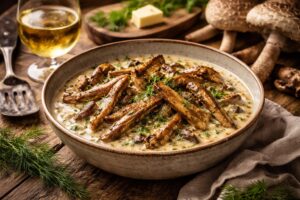
Description A refined 800-word guide to Parasol Mushroom Scaloppine. Learn how to transform Macrolepiota procera into a silky, citrus-infused Italian classic with a meaty, wild-harvested twist.
Parasol Mushroom “Scaloppine”
Highland Elegance: A Silky Mediterranean Classic from the Forest Glade
⏱️ 20 min🍴 Intermediate🔥 310 kcal🌱 Wild-Harvested
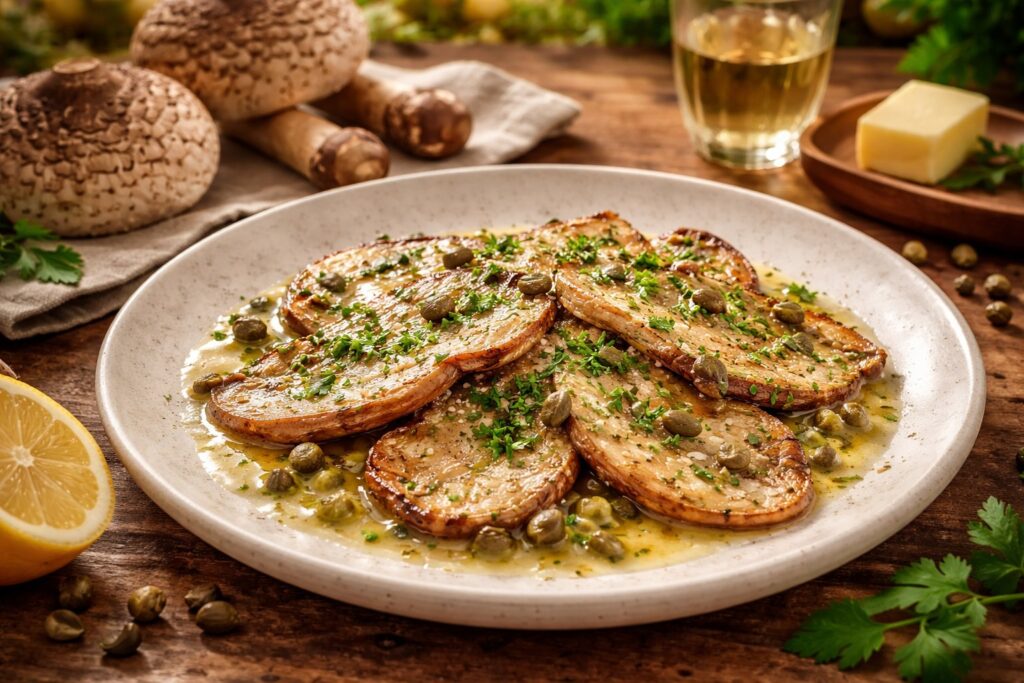
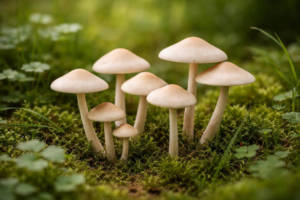
In the quiet, sun-dappled meadows of the European wilderness, the Macrolepiota procera offers a biological alternative to the finest cuts of veal. Our Parasol Mushroom Scaloppine is a culinary masterpiece that brings the refinement of Italian trattorias to the forest edge. Known in the Balkans as Сърнела (Sarnela), this wild-harvested giant possesses a meaty texture that holds its integrity when pounded thin and dredged in flour. This umami-rich dish is the height of sophisticated forest dining, where the mushroom's hazelnut-infused sweetness is brightened by a sharp, white wine and lemon reduction. It is a gourmet experience designed for those who value both elegance and the raw power of nature.
The Parasol mushroom is a pillar of Ancestral Nutrition, acting as a natural accumulator for Vitamin D, Copper, and bioavailable Proteins. By choosing wild-harvested Сърнела, you are opting for a biologically clean fuel source that has reached peak mineral complexity in the wild pastures of the European wilderness. This Scaloppine is more than a meal; it is a nutrient-dense celebration of biodiversity, offering a biological purity that supports metabolic health and cardiovascular vitality. It is a dish that respects the ancient gathering traditions of the highlands while delivering a high-performance, gourmet experience to the modern table.
PREMIUM FOREST STEAKS
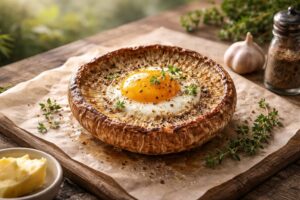
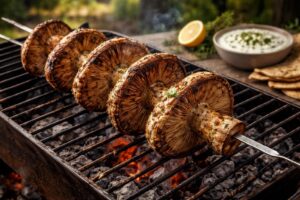
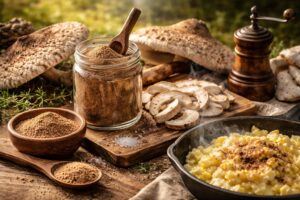
Taste the "Highland Veal." Our wild-harvested Parasol mushrooms (Сърнела) are hand-picked for their large, tender caps—perfectly suited for thin-slicing and gourmet pan-searing.
BUY 2, GET 1 FREE!
Tracked priority shipping across the UK and EU. Pure, sustainable, and foraged at peak maturity.
The sensory profile of the Macrolepiota procera is famously defined by its toasted nut fragrance and a texture that becomes incredibly silky when simmered in butter and wine. This wild-harvested treasure thrives in the transitional grasslands of the European wilderness, often appearing after the first late-summer rains. Foragers prioritize large, fully-opened caps for Scaloppine, as their expanded surface area allows for a thin, even pan-sear that mimics traditional cutlets. These mushrooms are a high-density source of Selenium and B-vitamins, reflecting the ancient saprobic health of the forest glades. Their ability to emulsify fats makes them a staple of Ancestral Nutrition and high-end Mediterranean cuisine.
Biologically, the Parasol mushroom is built from fibrous chitin that softens into a succulent, tender bite without losing its shape. In this preparation, the acidic white wine acts as a tenderizing agent, while the hazelnut-infused volatile oils blend with the butter to create a rich, velvety sauce. By choosing wild-harvested Сърнела, you are opting for biological complexity that modern agriculture simply cannot replicate. This dish is a gourmet experience that honors the mushroom's natural resilience, offering a sophisticated forest dining result that is both delicate and strikingly savory.
The Master Recipe The Parasol Scaloppine
The secret is "The Flour Veil"—a very light dredging that creates a micro-crust, trapping the umami-rich juices while allowing the Macrolepiota procera to absorb the lemon-wine sauce.
2 Large Parasol Mushroom Caps (Macrolepiota procera), sliced into wide cutlets
40g Grass-fed Butter
60ml Dry White Wine (Pinot Grigio or Sauvignon Blanc)
Juice of half a Lemon
1 tbsp Capers, drained
Light dusting of Flour (or Almond Flour for a keto twist)
Fresh Parsley, finely chopped
Sea Salt and White Pepper
Step 1 The Cutlet Prep
Gently remove the stems from the wild-harvested Parasols. Wipe the caps clean. Slice the caps into 2-inch wide strips. Place them between two sheets of parchment paper and press down lightly with a rolling pin to even out the thickness. Dust very lightly with flour, salt, and pepper.
Step 2 The Golden Sear
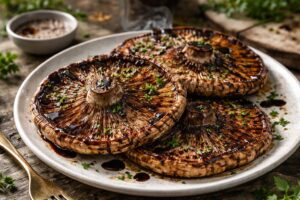
Melt half the butter in a large skillet over medium-high heat. Sear the Parasol mushroom strips for 2-3 minutes per side until golden. The hazelnut-infused aroma will intensify as the meaty texture firms up. Remove the mushrooms and keep warm.
Step 3 The Deglaze
Pour the white wine into the hot pan, scraping up the browned bits. Let it reduce by half. Add the lemon juice and capers. Whisk in the remaining butter to create a glossy, umami-rich emulsion. This preserves the biological purity of the Macrolepiota procera flavors.
Step 4 The Finish
Return the Parasol "scaloppine" to the pan for 1 minute to coat them in the sauce. Garnish with fresh parsley and serve immediately over pasta or a light salad. This is a culinary masterpiece of the European wilderness.
Pro Technique The “Butter Emulsion”
To achieve a professional gourmet experience, ensure the butter added at the end is ice-cold. This rapid temperature difference creates a "beurre monté"—a stable emulsion that stays thick and silky on the Macrolepiota procera surface rather than breaking into oil. This technique is the hallmark of sophisticated forest dining.
The Umami Secret Tartaric-Glutamate Extraction
The explosive flavor of this dish is due to Tartaric-Glutamate Extraction. The tartaric acids in white wine act as a solvent, pulling umami-rich nucleotides out of the Parasol mushroom's cells and into the sauce. This chemical interaction intensifies the hazelnut-infused notes, creating a flavor profile that is physically satisfying and complex. This is why wild-harvested Сърнела is the superior biological choice for scaloppine-style preparations.
The Art of the Pairing
A silky, citrus-infused scaloppine needs a pairing that matches its brightness and mineral depth. Chef's Selection A Crisp Chardonnay or a Dry Sparkling Prosecco. The acidity of the wine perfectly balances the hazelnut profile and the buttery finish of the Parasol mushroom.
Ancestral Nutrition
Following the path of Ancestral Nutrition, this dish provides a power-boost of bioavailable minerals and clean fats. Parasol mushrooms are an exceptional source of Selenium and Potassium, supporting immune resilience and cellular health. By choosing wild-harvested fungi, you are fueling your body with the biological purity and nutrient density of the ancient forest world.
Experience the golden light of the meadow in every silky bite.
We proudly offer over ten species of premium wild mushrooms year-round. Discover the authentic, untamed taste of the European wilderness with us.
The Parasol Lexicon: Global Names for Macrolepiota procera
The Parasol Mushroom is one of the most elegant and easily recognized wild fungi. Its names across various cultures often refer to its majestic height and umbrella-like cap:
Language
Regional & Folk Names
Expert Notes
Bulgarian
Сърнела, Чадъреста гъба, Конска гъба, Кукувиче
"Sarnela" comes from "Sarna" (Roe Deer), due to the spotted cap.
English
Parasol Mushroom, Drumstick (young stage)
Named for its resemblance to a lady's parasol.
Italian
Mazza di tamburo, Ombrellone, Bubbola maggiore
"Mazza di tamburo" means "Drumstick".
French
Coulemelle, Lépiote élevée, Nez de chat
"Coulemelle" is the traditional culinary name in France.
Spanish / Catalan
Galamperna, Macrolepiota, Paloma, Apagallums
"Apagallums" (Catalan) means "Light extinguisher".
German
Parasol, Riesenschirmling, Paukenschläger
"Riesenschirmling" means "Giant Umbrella".
Russian / Polish
Гриб-зонтик / Kania, Sowa
"Kania" is one of the most beloved wild mushrooms in Poland.
Romanian / Greek
Burete șerpesc / Ζαρκάδι (Zarkadi)
"Zarkadi" also refers to a deer, similar to the Bulgarian name.
Portuguese / Turkish
Frade, Cogumelo guarda-sol / Turna Bacağı
"Turna Bacağı" (Turkish) means "Crane's Leg".
Hungarian / Czech
Nagy őzlábgomba / Bedla vysoká
Common and highly appreciated in Central European cuisine.
Scientific identification: Macrolepiota procera | Pure Umami Research 2026
To provide the best experiences, we use technologies like cookies to store and/or access device information. Consenting to these technologies will allow us to process data such as browsing behavior or unique IDs on this site. Not consenting or withdrawing consent, may adversely affect certain features and functions.
Functional
Always active
The technical storage or access is strictly necessary for the legitimate purpose of enabling the use of a specific service explicitly requested by the subscriber or user, or for the sole purpose of carrying out the transmission of a communication over an electronic communications network.
Preferences
The technical storage or access is necessary for the legitimate purpose of storing preferences that are not requested by the subscriber or user.
Statistics
The technical storage or access that is used exclusively for statistical purposes.The technical storage or access that is used exclusively for anonymous statistical purposes. Without a subpoena, voluntary compliance on the part of your Internet Service Provider, or additional records from a third party, information stored or retrieved for this purpose alone cannot usually be used to identify you.
Marketing
The technical storage or access is required to create user profiles to send advertising, or to track the user on a website or across several websites for similar marketing purposes.