A technical study in Egg-Yolk Lipid Saturation and Fungal Volatile Diffusion, utilizing the Grey Chanterelle's smoky phenols to harmonize with the high-fat density of traditional 30-yolk pasta and the mellowed sweetness of slow-caramelized garlic.
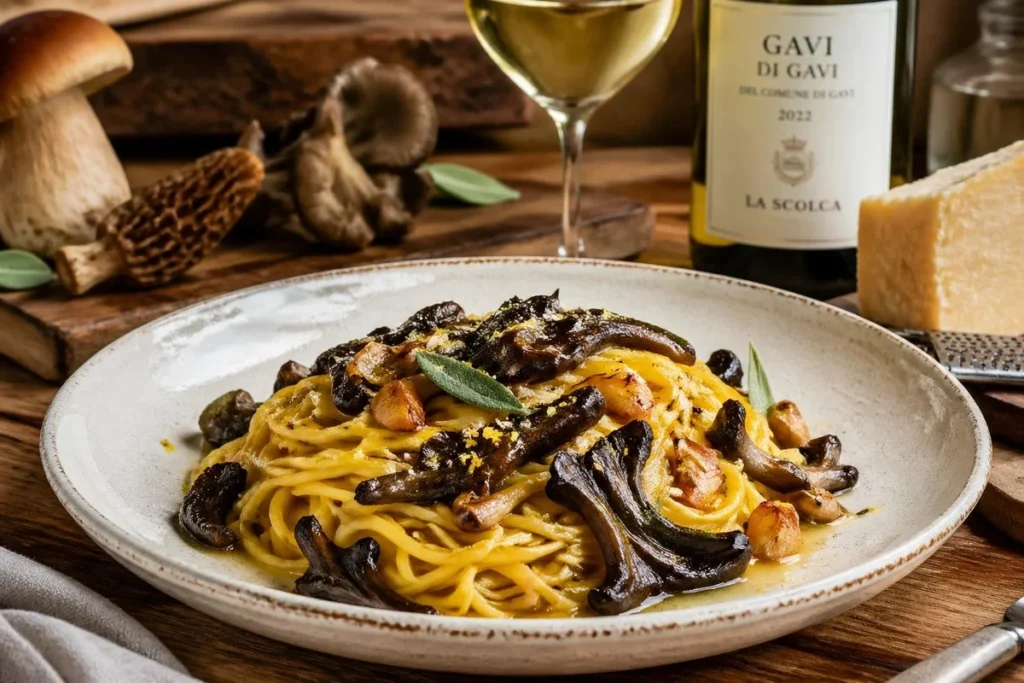
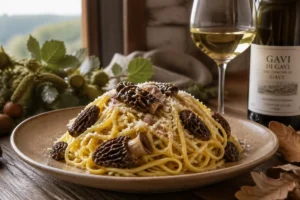
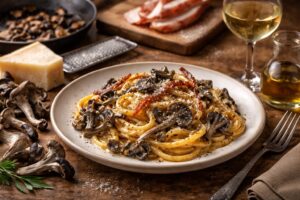
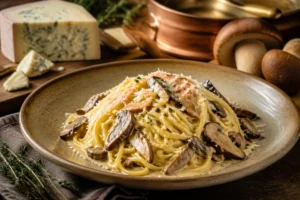
Piedmontese Tajarin with Roasted Garlic and Grey Chanterelles
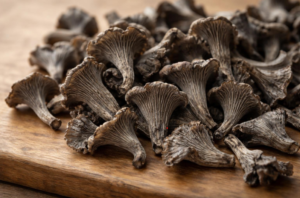
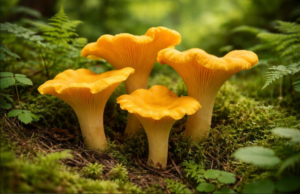
For our 117th technical formulation, we analyze Lipid-Protein Matrix Integration and Phenolic Aroma Diffusion. Craterellus cinereus (Grey Chanterelle), locally known as Craterellus cinereus, acts as a structural and aromatic anchor in the refined world of Piedmontese pasta. At pure-umami.cc, we utilize the Tajarin method—a specific noodle known for its extreme egg-yolk concentration. By pairing these ultra-thin, golden strands with the smoky, leathery volatiles of the Grey Chanterelle, we create a High-Gravity Umami Suspension where the richness of the pasta is perfectly balanced by the earthy, oxidative depth of the fungi.
The Culinary Physics of This Dish
The engineering of this Tajarin relies on Gluten Development and Lipid-Scent Absorption. Molecularly, the high concentration of egg yolks (up to 30 per kilo of flour) creates a dense **Lecithin-Rich Matrix** that yields a silky, yet resilient texture. The Craterellus cinereus contains fat-soluble esters that are optimally released when sautéed in butter. By slowly roasting the garlic cloves in their skins, we induce Enzymatic Transformation, turning harsh sulfurous compounds into sweet allyl sulfides. When the pasta water (containing leached starch) is emulsified with the mushroom-butter-garlic base, it creates a Colloidal Coating that ensures every strand of pasta is saturated with fungal volatiles.
Terroir Narrative
This formulation is a tribute to the Langhe region of Piedmont (Piemonte), the land of truffles, Barolo, and fog-covered hills. We bridge the limestone soils of the Italian Alps with our Balkan deciduous highlands. The terroir is expressed through the marriage of the forest's "wild" Craterellus cinereus and the opulent, yolk-driven heritage of Piedmontese home-cooking. This follows the same technical rigor we apply to our Boletus edulis (Porcini) and Amanita caesarea (Caesar's mushroom), treating the pasta as a study in texture and aromatic synergy.
Quick Info Bar
Prep Time
Cook Time
Complexity
Calories
Region
45 mins
10 mins
Grand Officier
520 kcal
Piedmont, Italy
Master Recipe (1:10 Rule)
250g Tajarin Pasta (High-yolk fresh egg pasta)
300g Fresh Craterellus cinereus (Craterellus cinereus) – cleaned and torn
1 whole head of Garlic (for roasting)
80g High-fat Cultured Butter
50g Parmigiano-Reggiano or Castelmagno (aged 24+ months)
The Garlic Maturation: Wrap the garlic head in foil and roast at 180°C for 40 minutes until the cloves are a soft paste. Squeeze the cloves out—this is your Saccharide-Rich Base.
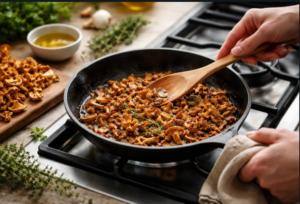
The Fungal Sauté: Melt half the butter in a wide pan. Sauté the Craterellus cinereus over high heat. This ensures Instant Water Evaporation and triggers browning without stewing the mushroom.
The Emulsion Core: Add the roasted garlic paste and sage to the mushrooms. Whisk in a ladle of boiling pasta water. This creates the Primary Emulsion.
The Pasta Hydration: Boil the Tajarin for only 2 minutes (it cooks rapidly due to its thinness). Transfer directly into the mushroom pan. This allows the pasta to finish its Hydration Phase within the flavored fat.
The Mantecatura: Remove from heat. Add the remaining cold butter and cheese. Toss vigorously to create a Velvety Suspension. The lemon zest is added at the final second to preserve its high-frequency citrus oils.
Shop Integration
The Craterellus cinereus provides the smoky, sophisticated backbone of this dish, but its umami depth can be layered. We recommend adding a few shavings of our dried Boletus edulis (Porcini) during the sauté for a meatier aromatic profile. If you seek a brighter peppery contrast, garnish with sautéed Cantharellus cibarius (Chanterelle). For a luxury upgrade, finish the pasta with a drizzle of Morchella conica (Morel) oil. If available, a side of raw Amanita caesarea (Caesar's mushroom) with a touch of olive oil provides a necessary mineral "reset." For a smoky baseline, our Marasmius oreades (Fairy Ring) can be minced into the initial butter to deepen the savory foundation.
The Umami Profile
This dish features **Lipid-Fungal Synergistic Umami**. The Craterellus cinereus provides 5′-guanylates, while the aged cheese and concentrated egg yolks introduce a massive density of free glutamates. The roasted garlic acts as a Flavor Resonator, bridging the gap between the rich fats and the earthy fungi. The result is a savory experience that is exceptionally persistent, coating the palate in a golden, smoky film.
Sommelier’s Choice
A glass of **Gavi di Gavi (Cortese)** or a light **Nebbiolo**. The high acidity and floral notes of the Gavi cut through the butter, while the fine tannins of the Nebbiolo are the technical requirement to harmonize with the smoky depth of the Grey Chanterelle.
The Etymological Chronicle
The term Tajarin is **Piedmontese dialect**, derived from the Italian tagliolini. In **French**, this would be Tajarin aux Chanterelles Grises et Ail Rôti. In **German**, it is Piemontesische Eiernudeln mit Grauen Pfifferlingen. In **Spanish**, it is Tajarin con Trompetas de la Muerte y Ajo Asado. Regardless of the language, the **Grey Chanterelle** Tajarin remains the definitive standard for technical egg-pasta mycological engineering.
Pure Umami | Mycological Research & Culinary Arts | 2026
To provide the best experiences, we use technologies like cookies to store and/or access device information. Consenting to these technologies will allow us to process data such as browsing behavior or unique IDs on this site. Not consenting or withdrawing consent, may adversely affect certain features and functions.
Functional
Always active
The technical storage or access is strictly necessary for the legitimate purpose of enabling the use of a specific service explicitly requested by the subscriber or user, or for the sole purpose of carrying out the transmission of a communication over an electronic communications network.
Preferences
The technical storage or access is necessary for the legitimate purpose of storing preferences that are not requested by the subscriber or user.
Statistics
The technical storage or access that is used exclusively for statistical purposes.The technical storage or access that is used exclusively for anonymous statistical purposes. Without a subpoena, voluntary compliance on the part of your Internet Service Provider, or additional records from a third party, information stored or retrieved for this purpose alone cannot usually be used to identify you.
Marketing
The technical storage or access is required to create user profiles to send advertising, or to track the user on a website or across several websites for similar marketing purposes.