A technical study in Aqueous Polysaccharide Extraction and Lactic-Acid Lipid Stabilization, utilizing the high-surface-area architecture of Grey Chanterelles to anchor a mineral-dense broth, tempered by the velvety viscosity of fermented dairy.
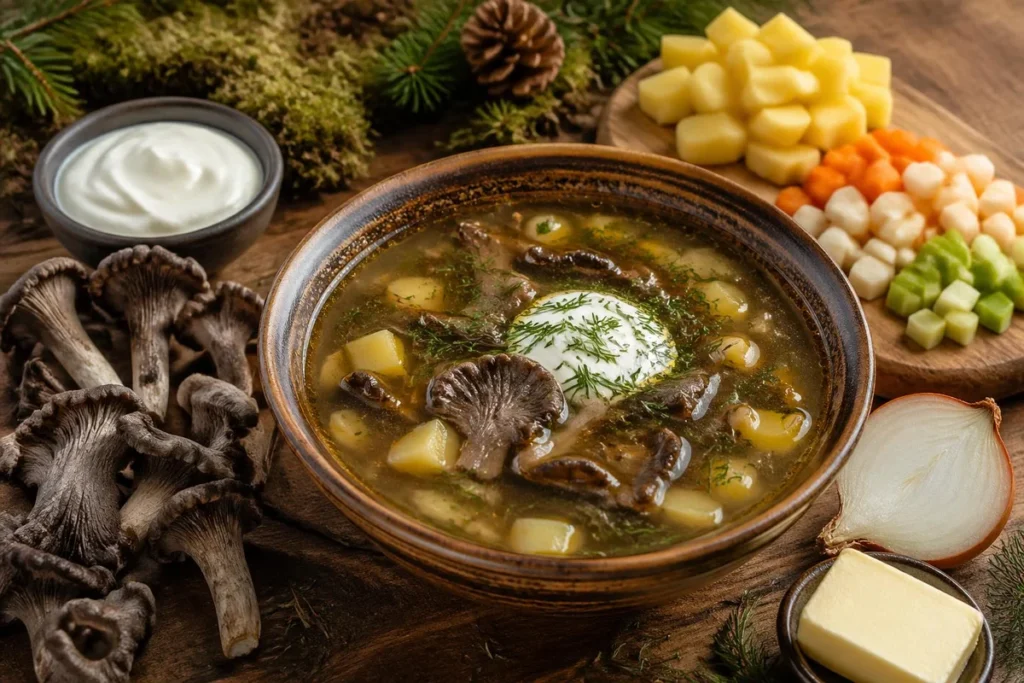
Polish Zupa Grzybowa with Grey Chanterelles and Sour Cream
For our 135th technical formulation, we analyze Hydrophilic Flavor Solubilization and Acid-Induced Protein Suspension. Craterellus cinereus (Grey Chanterelle), locally known as Craterellus cinereus, acts as the primary aromatic driver in this Polish forest classic. At pure-umami.cc, we utilize the Dual-Phase Infusion method. By utilizing both fresh and dried-rehydrated Grey Chanterelles, we facilitate a Aqueous Umami Baseline through the soaking liquid and a Textural Surface Maillardization through the sautéed caps, resulting in a soup with profound aromatic depth and structural complexity.
The Culinary Physics of This Dish
The engineering of this Zupa Grzybowa relies on Starch Gelatinization and Lactic Emulsification. Molecularly, the broth is thickened by the starch released from diced potatoes. The Craterellus cinereus provides a "smoky-leathery" profile that is highly compatible with the sulfurous notes of the Włoszczyzna (mirepoix). Sour cream (Smetana) introduces Lactic Acid and milk fats. When "tempered" into the hot broth, the lipids act as a Volatile Solvent, trapping the mushroom's oxidative esters (Sotolon and Benzaldehydes) and preventing their loss through evaporation, while the acidity provides a sharp pH Contrast that prevents the earthy notes from becoming muddy.
Terroir Narrative
This formulation is a tribute to the Białowieża Forest and the Mazovian lowlands, where mushroom foraging is a national heritage. We bridge the ancient primeval woodlands of Poland with our Balkan deciduous highlands. The terroir is expressed through the marriage of the forest's "wild" Craterellus cinereus and the humble, mineral-rich vegetables of the Slavic kitchen. This follows the same technical rigor we apply to our Boletus edulis (Porcini) and Amanita caesarea (Caesar's mushroom), treating the soup as a study in hydraulic extraction and lactic-acid stabilization.
Quick Info Bar
Prep Time
Cook Time
Complexity
Calories
Region
20 mins
40 mins
Grand Officier
310 kcal
Poland / E. Europe
Master Recipe (1:10 Rule)
400g Fresh Craterellus cinereus (Craterellus cinereus) – whole small specimens
1.5L Vegetable or Beef Stock (High-clarity)
3 Large Potatoes – diced into 1cm cubes for Consistent Starch Release
Bay leaf, Allspice berries (Ziele Angielskie), and Black Pepper
The Technique
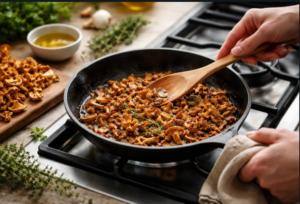
The Aromatic Base: Sauté the minced onion in butter. Add the Craterellus cinereus and sauté until the moisture evaporates and the mushrooms shrink. This Pre-Concentration Phase is vital for flavor depth.
The Extraction Phase: Add the stock, diced potatoes, Włoszczyzna vegetables, bay leaf, and allspice. Simmer for 25-30 minutes. The boiling water facilitates Osmotic Transfer, pulling the 5′-guanylates from the mushrooms into the liquid.
The Tempering (Zabielanie): In a separate bowl, whisk a ladle of hot soup into the sour cream. This Thermal Gradiation prevents the proteins in the cream from curdling (denaturing) when added to the pot.
The Lactic Integration: Stir the tempered cream back into the soup. Do not boil further to preserve the Cream's Viscosity and delicate lactic notes.
Service: Ladle into warm bowls and garnish heavily with fresh dill. The dill's carvone aromatics cut through the rich cream, highlighting the smoky intensity of the Grey Chanterelles.
Shop Integration
The Craterellus cinereus provides the sophisticated, smoky backbone of this Polish soup, but its umami depth can be layered. We recommend adding a few slices of our dried Boletus edulis (Porcini) to the initial stock for a meatier aromatic profile. If you seek a brighter peppery contrast, garnish the soup with sautéed Cantharellus cibarius (Chanterelle). For a luxury upgrade, finish each bowl with a drizzle of Morchella conica (Morel) oil. If available, a side of raw Amanita caesarea (Caesar's mushroom) provides a necessary mineral "reset" against the rich, acidic cream. For a smoky baseline, our Marasmius oreades (Fairy Ring) can be sautéed with the onions to build a more complex savory foundation.
The Umami Profile
This dish features **Hydro-Lactic Synergistic Umami**. The Craterellus cinereus provides 5′-guanylates, while the stock and fermented cream introduce high concentrations of free glutamates. The Smoky Phenols of the mushroom harmonize with the earthy root vegetables and the sour tang of the dairy, resulting in a savory experience that is exceptionally deep, persistent, and "forest-heavy."
Sommelier’s Choice
A glass of chilled **Polish Rye Vodka** or a dry **White Pinot Gris**. The high alcohol and grain clarity of the vodka are the technical requirement to cleanse the palate of the rich sour cream and highlight the smoky Grey Chanterelle.
The Etymological Chronicle
The term Zupa Grzybowa is **Polish**, literally "mushroom soup." In **French**, this would be Velouté de Chanterelles Grises à la Polonaise. In **Italian**, it is Zuppa di Funghi alla Polacca con Cantarelli Grigi. In **German**, it is Polnische Pilzsuppe mit Grauen Pfifferlingen. In **Spanish**, it is Sopa de Setas Polaca con Trompetas de la Muerte. Regardless of the language, the **Grey Chanterelle** Zupa Grzybowa remains the definitive standard for technical Slavic mycological engineering.
Pure Umami | Mycological Research & Culinary Arts | 2026
To provide the best experiences, we use technologies like cookies to store and/or access device information. Consenting to these technologies will allow us to process data such as browsing behavior or unique IDs on this site. Not consenting or withdrawing consent, may adversely affect certain features and functions.
Functional
Always active
The technical storage or access is strictly necessary for the legitimate purpose of enabling the use of a specific service explicitly requested by the subscriber or user, or for the sole purpose of carrying out the transmission of a communication over an electronic communications network.
Preferences
The technical storage or access is necessary for the legitimate purpose of storing preferences that are not requested by the subscriber or user.
Statistics
The technical storage or access that is used exclusively for statistical purposes.The technical storage or access that is used exclusively for anonymous statistical purposes. Without a subpoena, voluntary compliance on the part of your Internet Service Provider, or additional records from a third party, information stored or retrieved for this purpose alone cannot usually be used to identify you.
Marketing
The technical storage or access is required to create user profiles to send advertising, or to track the user on a website or across several websites for similar marketing purposes.