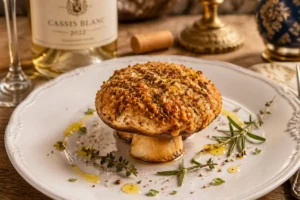
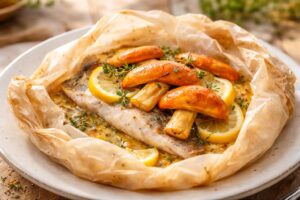
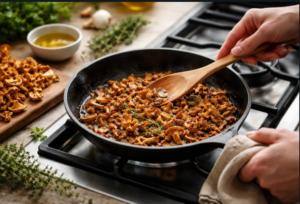
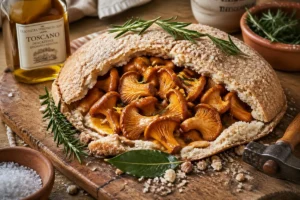
Experience the minimalist luxury of the Côte d'Azur with this Amanita caesarea recipe, featuring a protective sea salt crust and wild aromatic herbs. A masterclass in preserving delicate fungal moisture.
Riviera Sea Salt Crusted Caesar Mushroom
Terroir Narrative
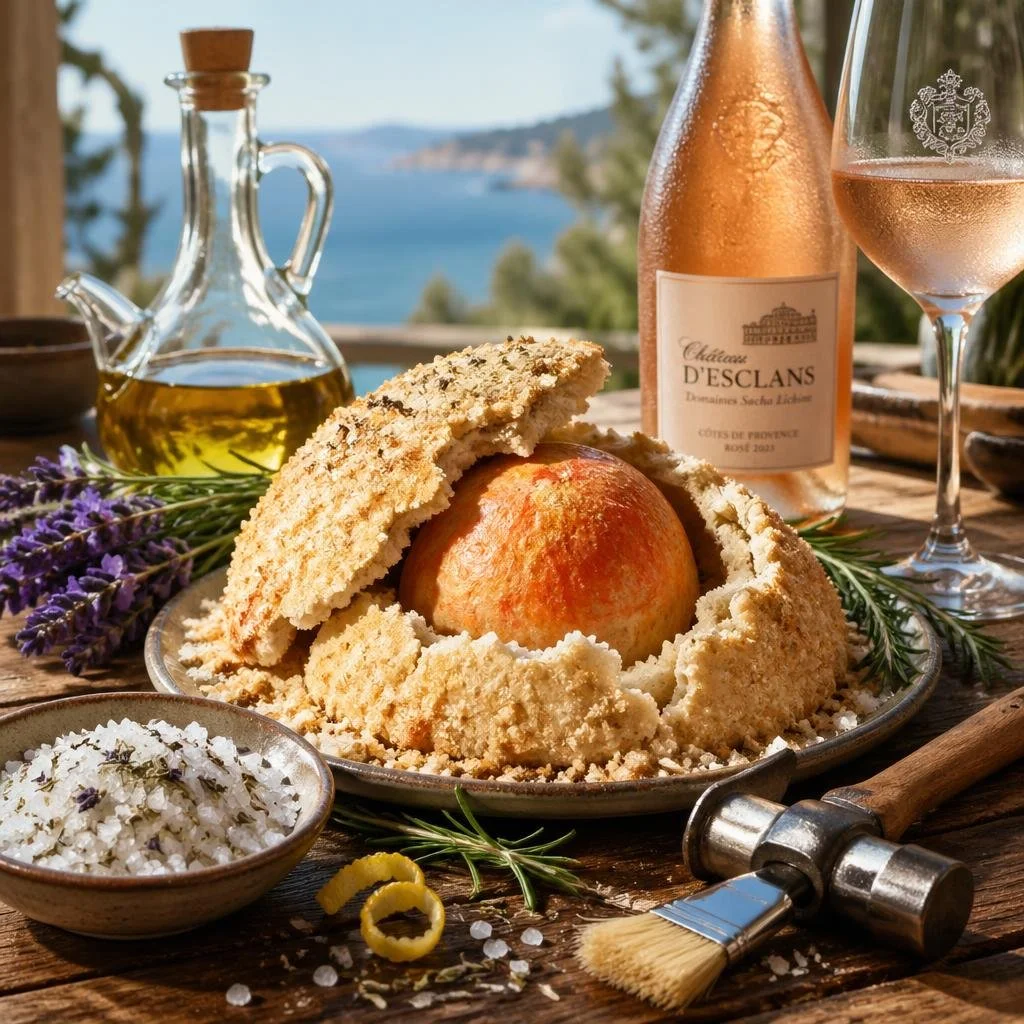
Along the rugged coastline of the French Riviera, where the maritime Alps meet the Mediterranean, the Amanita caesarea is treated with the same precision as the day's fresh catch. This recipe utilizes the ancient technique of Croûte de Sel, a method traditionally used for sea bass, now adapted for the most prestigious of mushrooms. By encasing the Caesar mushroom in a mineral-rich salt crust from the Camargue marshes, we protect it from the direct aggression of the heat, allowing it to steam in its own imperial juices amidst the scent of coastal lavender and rosemary.
The Culinary Physics of This Dish
The science behind this preparation is Hygroscopic Thermal Insulation. The salt crust acts as a secondary "oven" within the oven. As the salt heats, it hardens into a porous ceramic-like shell that regulates the temperature, preventing it from exceeding 100°C internally. This ensures that the delicate cell walls of the Amanita caesarea do not rupture, preserving the intracellular vacuoles filled with aromatic esters. The salt also draws out a minute amount of moisture, concentrating the mushroom's natural sugars and amino acids without the need for additional fat.
Salt Preparation: In a large bowl, mix the coarse sea salt with the egg whites and dried herbs until it reaches the consistency of wet sand.
Protection: Lightly brush the whole mushrooms with a thin film of olive oil. This creates a barrier so the salt doesn't stick directly to the delicate skin.
Casting: On a baking tray, create a 1cm bed of the salt mixture. Place the mushrooms on top and carefully cover them with the remaining salt, pressing firmly to seal all gaps.
Baking: Roast in a preheated oven at 200°C for exactly 12 minutes. The salt shell should turn slightly golden but remain hard.
The Reveal: Bring the tray to the table. Crack the crust with a small hammer or the back of a spoon. Carefully lift the mushrooms and brush away any excess salt crystals.
"On the Riviera, we don't season the Caesar mushroom; we allow the sea itself to embrace it." — Notes from a Chef in Saint-Tropez
Shop Integration
The perfect crust requires high-purity minerals. Discover our hand-harvested Camargue salts and professional pastry brushes for delicate glazing in the [Pure Umami Store].
The Umami Secret
By cooking the mushroom whole and enclosed, the 5′-ribonucleotides are trapped within the fungal tissue. When the crust is cracked, the sudden release of these concentrated vapors provides an olfactive umami "shock" that prepares the palate for the intense, clean flavor of the steam-cooked Amanita caesarea.
Sommelier’s Choice
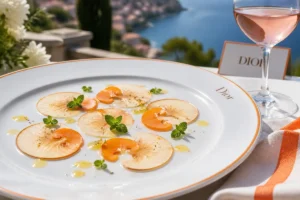
A chilled Château d'Esclans Rosé is the natural partner for this coastal preparation. Its notes of red berries and subtle salinity perfectly complement the herb-infused mushroom steam.
The Etymological Chronicle: The Spanish “Oronja”
In the vast mycological landscape of the Iberian Peninsula, particularly in central Spain, the mushroom is known as the Oronja. The name is a linguistic cousin to the French Oronge, but in Spanish, it carries a deeper phonetic weight, often associated with the golden-orange hue of the naranja (orange fruit). Historically, the term was used in the Spanish courts to distinguish this "Noble Mushroom" from the common forage. In the regions of Extremadura and Castile, the Oronja was so highly regarded that it was often used as a diplomatic gift between monastic orders, signifying mutual respect and shared refined taste. The name Oronja remains a testament to the shared Latin roots of Mediterranean gastronomy, representing a time when the color orange was a rarity reserved for kings and the forest floor.
To provide the best experiences, we use technologies like cookies to store and/or access device information. Consenting to these technologies will allow us to process data such as browsing behavior or unique IDs on this site. Not consenting or withdrawing consent, may adversely affect certain features and functions.
Functional
Always active
The technical storage or access is strictly necessary for the legitimate purpose of enabling the use of a specific service explicitly requested by the subscriber or user, or for the sole purpose of carrying out the transmission of a communication over an electronic communications network.
Preferences
The technical storage or access is necessary for the legitimate purpose of storing preferences that are not requested by the subscriber or user.
Statistics
The technical storage or access that is used exclusively for statistical purposes.The technical storage or access that is used exclusively for anonymous statistical purposes. Without a subpoena, voluntary compliance on the part of your Internet Service Provider, or additional records from a third party, information stored or retrieved for this purpose alone cannot usually be used to identify you.
Marketing
The technical storage or access is required to create user profiles to send advertising, or to track the user on a website or across several websites for similar marketing purposes.