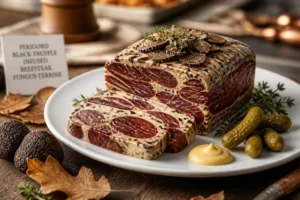
A technical exploration of mycological curing and cold-smoking preservation. This preparation utilizes the dense, meat-like histology of Fistulina hepatica as a substrate for salt-curing and cold-thermal smoke infusion, resulting in a plant-based charcuterie that mirrors the texture and deep umami profile of traditional Alpine Bresaola.
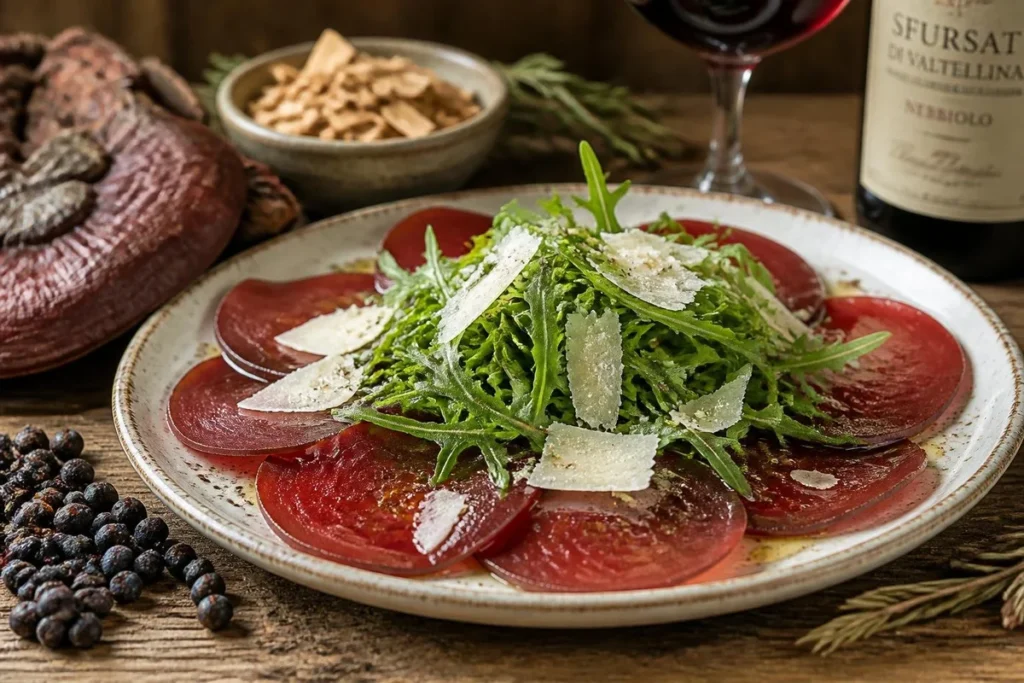
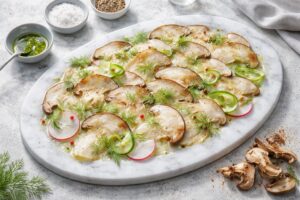
Smoked Beefsteak Fungus Bresaola with Arugula
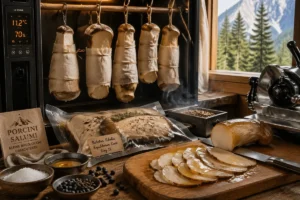
This culinary protocol focuses on the osmotic dehydration and phenolic infusion of Fistulina hepatica. To create a high-fidelity Bresaola surrogate, we exploit the mushroom's unique "muscle-grain" texture. Through a 48-hour salt-and-spice cure followed by a low-temperature cold smoke, we transform the foraged fungus into a dense, translucent charcuterie. The mushroom's natural oxalic acid acts as a biological preservative, ensuring the "meat" remains vibrant red without the need for excessive synthetic nitrates.
The Culinary Physics of This Dish
Fistulina hepatica possesses a poroid structure with high water activity. We utilize Osmotic Solute Exchange. By burying the mushroom in a salt-sugar-spice matrix, we force cellular water out while drawing aromatics in. This increases the concentration of free glutamates. During the cold-smoking phase (below 25°C), wood smoke particles (phenols and carbonyls) adhere to the surface lipids, creating a protective antimicrobial layer and adding the characteristic "cured meat" olfactory signal. The final result is a structural alignment between the mushroom's fibers and the expectations of a cured beef product.
Terroir Narrative
Inspired by the Valtellina valley in the Italian Alps, the home of traditional Bresaola, this dish adapts mountain air-curing techniques for the mycological world. In the mixed oak and chestnut forests of Northern Italy, the "Lingua di bue" appears as an autumnal gift. This recipe reflects the Cucina delle Alpi, where preservation is not just a necessity but an art form, turning a fleeting forest find into a shelf-stable delicacy that pairs perfectly with the region's sharp cheeses and peppery wild greens.
Prep Time
Cure/Smoke Time
Complexity
Calories
Region
30 Mins
52 Hours
Grand Officier
140 kcal
Valtellina, Italy
Master Recipe (1:10 Rule)
600 g Fistulina hepatica (large, thick specimens, cleaned)
100 g Sea salt & 50 g Brown sugar (Curing base)
10 g Juniper berries, Black peppercorns, and Dried rosemary
Beechwood or Oak chips (for cold smoking)
50 g Wild Arugula (Rocket)
30 g Parmigiano Reggiano (shaved)
Extra Virgin Olive Oil and Lemon juice
The Technique
1. The Dry Cure: Crush the juniper, pepper, and rosemary. Mix with salt and sugar. Coat the Fistulina hepatica thoroughly. Place in a non-reactive container, weighted down with a 1kg plate. Refrigerate for 48 hours. The mushroom will release significant liquid and turn deep, dark red.
2. The Rinse: Remove from the cure, rinse under cold water to remove excess salt, and pat completely dry with a lint-free cloth. The texture should now be firm and "leathery."
3. Cold Smoking: Place the cured mushroom in a cold smoker (or a modified grill) using a smoke generator. Smoke at temperatures strictly below 25°C for 4 hours. This adds flavor without cooking the delicate proteins.
4. Lamination: Chill the smoked Bresaola for 2 hours to firm the structure. Use a mandoline or a very sharp slicing knife to create paper-thin, translucent slices.
5. The Dressing: Toss the arugula with olive oil and a squeeze of lemon. The acidity will brighten the smoky, salt-cured depth of the "Bresaola."
6. Service: Arrange the mushroom slices on a plate, top with the dressed arugula and shaved Parmigiano. The contrast of the dark red mushroom against the white cheese and green rocket is visually striking and palate-cleansing.
Shop Integration
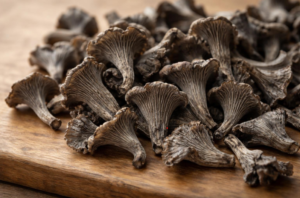
This charcuterie-style dish is a prime candidate for pairing with our boutique range. You can add a noble earthy finish by serving with a few drops of our Boletus edulis (Boletus edulis) oil. For a visual pop, incorporate pickled Cantharellus cibarius (Cantharellus cibarius) on the side. If you are building a forest-themed "Antipasto," include our Amanita caesarea (Amanita caesarea) sliced raw with salt and lemon. For a deeper, muskier profile, rehydrated Craterellus cornucopioides (Craterellus cinereus) can be finely minced and used as a garnish over the Bresaola.
The Umami Profile
This dish demonstrates Cure-Induced Umami Concentration. The removal of water during the 48-hour cure results in a high density of glutamates. The smoke introduces guaiacol and syringol compounds, which the brain interprets as savory "meatiness." Combined with the inosinates found in the Parmigiano, this creates a complete umami triangle that lingers on the palate (kokumi).
Sommelier’s Choice
Sfursat di Valtellina (Nebbiolo): A powerful, dried-grape red wine from the region. Its high acidity and notes of tobacco, dried rose, and spice perfectly match the smoky, salt-cured intensity of the mycological Bresaola.
THE ETYMOLOGICAL CHRONICLE
Italian:Lingua di bue – Referring to the tongue shape, which makes it ideal for slicing into charcuterie-style ribbons.
Spanish:Hígado de buey – "Ox liver," a name that underscores the blood-red color preserved by the curing process.
French:Langue de bœuf – Used in French regional charcuterie to describe the mushroom's meat-like versatility.
German:Leberreischling – Highlighting the rich, iron-heavy profile that the salt-curing concentrates into a savory delicacy.
To provide the best experiences, we use technologies like cookies to store and/or access device information. Consenting to these technologies will allow us to process data such as browsing behavior or unique IDs on this site. Not consenting or withdrawing consent, may adversely affect certain features and functions.
Functional
Always active
The technical storage or access is strictly necessary for the legitimate purpose of enabling the use of a specific service explicitly requested by the subscriber or user, or for the sole purpose of carrying out the transmission of a communication over an electronic communications network.
Preferences
The technical storage or access is necessary for the legitimate purpose of storing preferences that are not requested by the subscriber or user.
Statistics
The technical storage or access that is used exclusively for statistical purposes.The technical storage or access that is used exclusively for anonymous statistical purposes. Without a subpoena, voluntary compliance on the part of your Internet Service Provider, or additional records from a third party, information stored or retrieved for this purpose alone cannot usually be used to identify you.
Marketing
The technical storage or access is required to create user profiles to send advertising, or to track the user on a website or across several websites for similar marketing purposes.