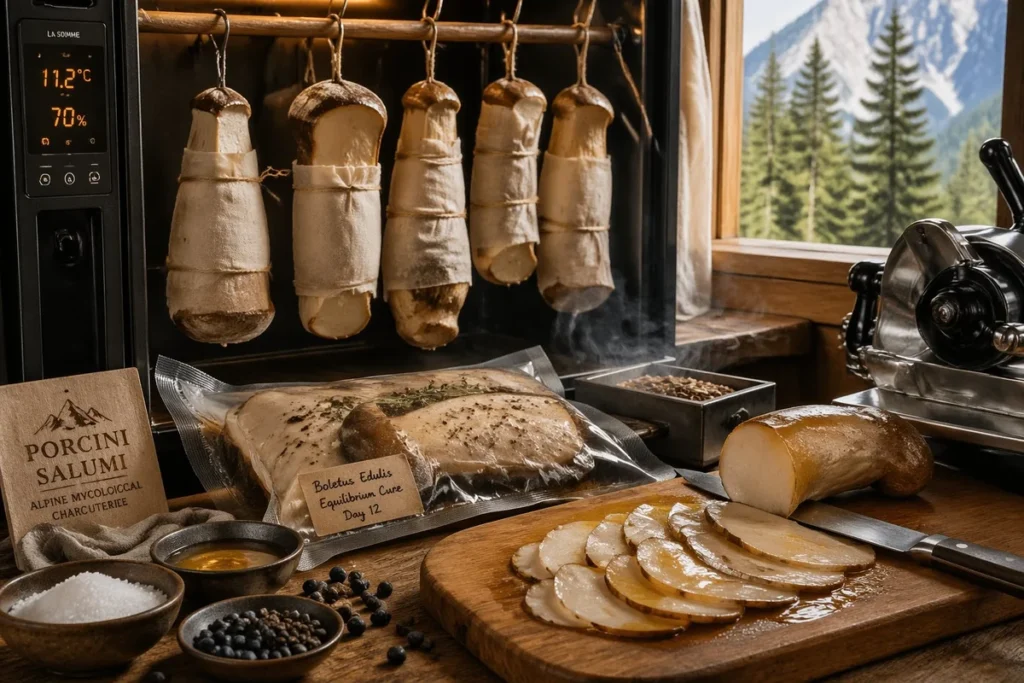
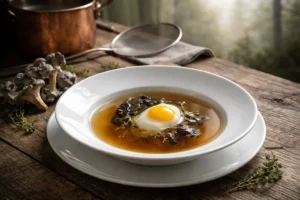
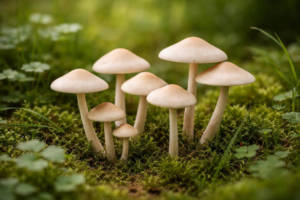
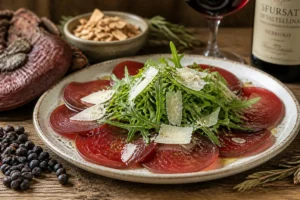
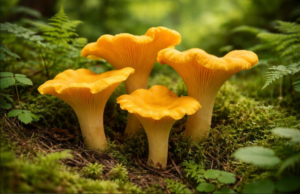
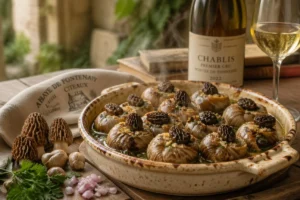
An avant-garde preparation where large wild Boletus edulis stems are cured, aged, and sliced like traditional bresaola, offering a profound concentration of forest umami.
Cured Porcini Salumi
The Art of Mycological Charcuterie: Alchemy of Salt and Time
The Historical Prelude: The Monastic Larders of the Italian Alps
In the secluded monasteries of the Italian Alps, specifically within the regions of Trentino-Alto Adige, the preservation of food was not just a necessity but a spiritual discipline. While meat-based salumi like Bresaola are world-renowned, the monks and mountain shepherds historically practiced a "Ghost Charcuterie." When a surplus of Boletus edulis occurred in late autumn, they applied the same curing techniques used for venison and beef to the thick, bulbous stems of the mushrooms.
This Porcini Salumi (or Salame di Bosco) was a secret of the high-altitude larders. By subjecting the dense, protein-rich stems to a controlled salt-cure and a subsequent cold-aging period, the moisture is slowly expelled, collapsing the cellular walls and concentrating the glutamates to a point where the mushroom takes on the texture and flavor profile of cured wagyu. This recipe represents a revival of that forgotten mycological alchemy—bridging the gap between the vegetable kingdom and the deep savory satisfaction of artisanal charcuterie.
⏱ Time: 48 Hours Cure + 14 Days Aging
📊 Difficulty: Elite Technical / Scientific
🔥 Calories: 95 kcal / Serving
🍄 Type: Extra-Large Porcini Stems
Culinary Philosophy: The Concentration of the Macro-Fungi
The philosophy of Mycological Charcuterie is Biomimicry. We treat the Porcini not as a plant, but as a biological medium for aging. By removing the "aerial" caps and focusing exclusively on the "structural" stems, we utilize the mushroom's natural chitin to create a dense, sliceable texture. The salt-cure initiates a rapid osmotic exchange, replacing water with mineral seasoning, while the aging process allows for the development of complex "aged" volatiles that mimic the enzymatic breakdown of meat proteins.
Sensory & Foraging Profile: The Alpine Slate & Pine Terroir
Latin Nomenclature:Boletus edulis (The "Bulbous" phenotype). Terroir Analysis: For Salumi, we specifically source Porcini from high-altitude Norway Spruce (Picea abies) forests. The mushrooms here grow in cold, slate-heavy soils, which forces the stems to become exceptionally dense and thick to support the weight of the cap through mountain winds. This density is the prerequisite for a successful cure.
Professional Protocols: We select "Titan" specimens—mushrooms with stems at least 6cm in diameter. The stems must be ivory-white and free from any larval tunnels. In charcuterie, any internal void is a site for potential spoilage; only "solid-core" Boletes are acceptable for the aging rack.
Essential Equipment
🔸 Curing Chamber / Wine Fridge: To maintain a constant 10-12°C and 70% humidity.
🔸 Vacuum Sealer (Optional): For an "Equilibrium Cure" that ensures salt is distributed evenly.
🔸 Muslin Wrap and Kitchen Twine: To hang and shape the stems during the aging phase.
The Master Recipe: The Mycological Aging
Stage 1: The Equilibrium Cure
Remove the caps (save for other use). Weigh the stems. Mix 3% of the stems' weight in sea salt, 0.5% in black pepper, and 0.1% in dried juniper. Rub the stems and seal in a vacuum bag or glass container for 48 hours in the fridge. This "cures" the core.
Stage 2: The Botanical Wash
Remove the stems from the brine. Quickly rinse with white wine vinegar to lower the surface pH and prevent unwanted mold. Pat extremely dry with a sterile cloth.
Stage 3: The Hanging (The Maturation)
Wrap each stem tightly in muslin cloth and tie with twine, creating a uniform cylindrical shape. Hang in a cool, humid environment (12°C) for 10 to 14 days. The stems will lose approximately 35-40% of their weight, becoming firm and leathery.
Stage 4: The Slicing
Unwrap the "Salumi." The exterior should be dark and firm. Using a meat slicer or a very sharp knife, cut into translucent, paper-thin rounds. Serve with a drizzle of cold-pressed nut oil.
Pro Technique: The “Smoke-Finish”
Before hanging the stems for aging, subject them to a 2-hour cold-smoke using beechwood or applewood chips. This mimics the traditional Speck techniques of the Alto Adige region. The smoke acts as a natural antimicrobial agent and adds a layer of "campfire" depth that perfectly complements the concentrated mushroom umami.
The Umami Secret: Chitin Concentration
Unlike meat, which relies on muscle fibers, Porcini stems are made of Chitin. During the 14-day aging process, the water evaporates but the chitin remains, creating a "microporous" structure that traps the concentrated guanylic acid. When sliced thinly, these chitin layers provide the exact same "melt-on-the-tongue" sensation as the fat in a high-end salumi, despite containing almost no lipids.
The Art of Pairing
Sommelier's Selection: A structured, high-acid white wine like an Etna Bianco or a **Dry Riesling**. The minerality of the wine acts as a perfect foil to the intense "meatiness" of the cured Porcini.
Non-Alcoholic: A chilled, fermented kombucha made from forest berries (bilberries or wild strawberries).
Micro-FAQ
Q: Is there a risk of botulism? A: By using 3% salt and a vinegar wash, the environment becomes hostile to harmful bacteria. However, ensure the stems are perfectly fresh and cleaned of all dirt before starting.
Q: What if white mold appears on the surface? A: A thin layer of white *Penicillium* mold is actually a sign of a healthy curing environment (just like in salami). If it turns green or black, discard the batch.
The Porcini Directory: Global Names for Boletus edulis
The King Bolete, or simply Porcini, is arguably the most recognized wild mushroom in the culinary world. Its linguistic variety reflects its presence in forests from the Alps to the Himalayas:
Language
Regional & Folk Names
Expert Insights
Italian
Porcino, Brisa, Fungo di faggio
"Porcini" (little pigs) is the global trade name.
French
Cèpe de Bordeaux, Gros pied, Polonais
"Cèpe" comes from the Gascon word for trunk/stump.
German
Steinpilz, Herrenpilz, Edelpilz
"Steinpilz" (Stone mushroom) refers to its firm flesh.
To provide the best experiences, we use technologies like cookies to store and/or access device information. Consenting to these technologies will allow us to process data such as browsing behavior or unique IDs on this site. Not consenting or withdrawing consent, may adversely affect certain features and functions.
Functional
Always active
The technical storage or access is strictly necessary for the legitimate purpose of enabling the use of a specific service explicitly requested by the subscriber or user, or for the sole purpose of carrying out the transmission of a communication over an electronic communications network.
Preferences
The technical storage or access is necessary for the legitimate purpose of storing preferences that are not requested by the subscriber or user.
Statistics
The technical storage or access that is used exclusively for statistical purposes.The technical storage or access that is used exclusively for anonymous statistical purposes. Without a subpoena, voluntary compliance on the part of your Internet Service Provider, or additional records from a third party, information stored or retrieved for this purpose alone cannot usually be used to identify you.
Marketing
The technical storage or access is required to create user profiles to send advertising, or to track the user on a website or across several websites for similar marketing purposes.