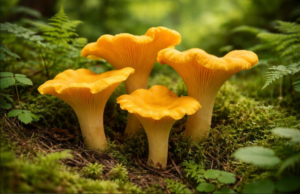
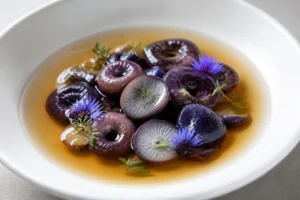
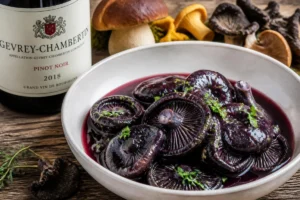
This molecular execution utilizes precision thermal immersion to achieve the perfect textural equilibrium within the Russula cyanoxantha. By vacuum-sealing the Charcoal Burner with aromatic lipids and finishing with a vibrant Champagne reduction, we emphasize the mushroom's ability to absorb complex acidity while maintaining its signature flexible structure.
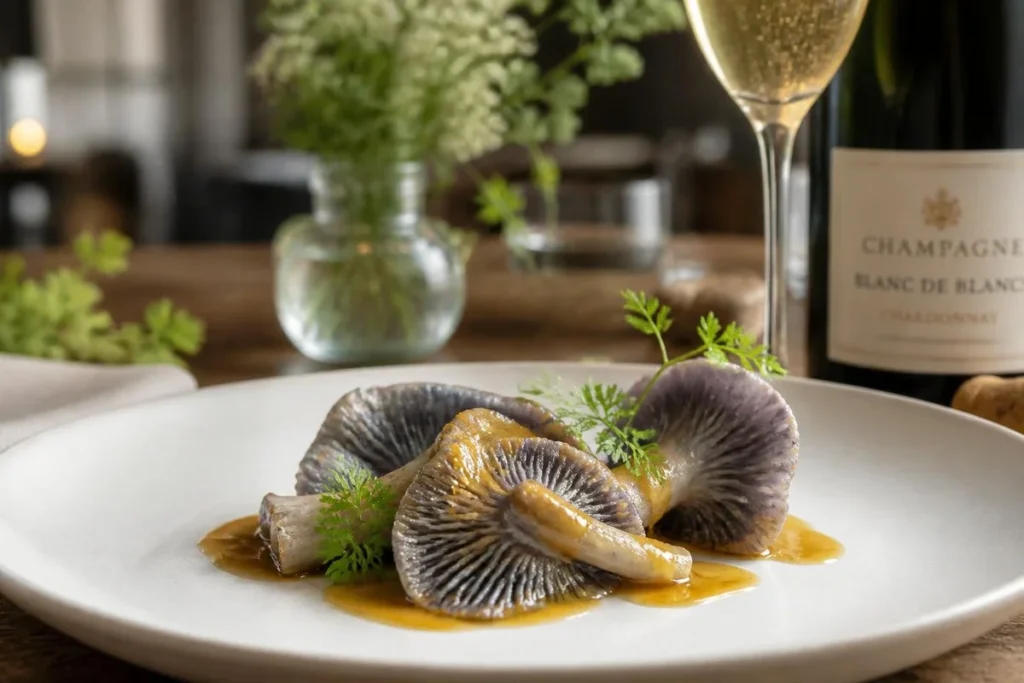
Sous-Vide Charcoal Burner Champagne Reduction
This molecular execution utilizes precision thermal immersion to achieve the perfect textural equilibrium within the Russula cyanoxantha. By vacuum-sealing the Charcoal Burner with aromatic lipids and finishing with a vibrant Champagne reduction, we emphasize the mushroom's ability to absorb complex acidity while maintaining its signature flexible structure.
The Culinary Physics of This Dish
The Russula cyanoxantha is an ideal candidate for Sous-Vide (under vacuum) cooking because its gills do not fragment, allowing it to withstand the pressure of vacuum sealing without losing its aesthetic form. At a constant 82°C, the mushroom's hemicellulose begins to soften without the cellular collapse associated with traditional frying. This temperature-locked environment allows for a deep infusion of the aromatics directly into the flexible lamellae, while the Champagne reduction provides a high-acid contrast that cuts through the dense, buttery texture of the poached mushroom.
Terroir Narrative
This dish is inspired by the legendary hospitality of the Champagne-Ardenne region of France. In the chalky soils of this territory, the Charcoal Burner thrives in the vast beech and oak forests surrounding the vineyards of Reims. By pairing the local "Charbonnier" with the region's world-famous sparkling wine, we create a sensory bridge between the deep, shadowed forest floor and the bright, effervescent elegance of the cellar. It is a dish that represents modern French haute cuisine—rooted in nature, refined by science.
Prep Time
Cook Time
Complexity
Calories
Region
15 Mins
45 Mins
Grand Officier
195 kcal
Champagne, France
Master Recipe (1:10 Rule)
500 g Russula cyanoxantha (Whole small caps or vertical slices)
50 g Clarified butter (Beurre Clarifié)
200 ml Brut Champagne (or high-quality dry sparkling wine)
1 Sprig of fresh chervil
1 Small shallot (finely minced)
50 ml Heavy cream (Crème Fleurette)
5 g Fleur de Sel
The Technique
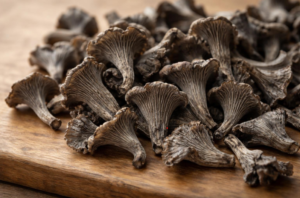
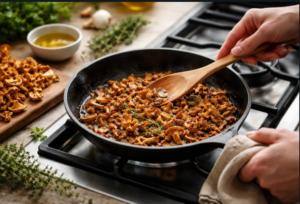
1. Vacuum Infusion: Place the cleaned Russula cyanoxantha into a vacuum bag with the clarified butter and a pinch of salt. Seal at 95% vacuum to ensure the butter is pressed into every gill cavity.
2. Thermal Immersion: Place the bag in a water bath pre-heated to 82°C. Poach for 45 minutes. This gentle process yields a texture that is exceptionally tender yet structurally sound.
3. The Reduction: While the mushrooms cook, combine the Champagne and minced shallots in a small saucepan. Reduce over medium heat until only 20% of the liquid remains (a syrupy consistency).
4. The Liaison: Whisk in the heavy cream and continue to reduce until the sauce coats the back of a spoon. Season lightly with Fleur de Sel.
5. Plating: Carefully remove the mushrooms from the bag. Arrange them on a warmed plate. Nappe (lightly drape) the Champagne reduction over the center of the mushrooms.
6. Finishing: Garnish with fresh chervil to add a subtle anise note that complements the brightness of the Champagne.
Shop Integration
While the Sous-Vide method highlights the silken texture of the Charcoal Burner, our boutique offers other varieties to enhance your molecular experiments. Consider adding our Boletus edulis (Boletus edulis) for a more traditional forest profile, or the delicate Marasmius oreades (Marasmius oreades) to infuse into the reduction. For a striking visual and flavor contrast, pair this dish with sautéed Cantharellus cibarius (Cantharellus cibarius) or the majestic Amanita caesarea (Amanita caesarea). For winter-themed menus, the deep, dark notes of Craterellus cornucopioides (Craterellus cinereus) or the honeycomb texture of Morchella (Morchella conica) provide endless creative possibilities.
The Umami Profile
The Sous-Vide process prevents the loss of soluble amino acids into the cooking water or pan, keeping 100% of the umami within the mushroom tissues. The high concentration of tartaric acid in the Champagne reduction acts as a flavor catalyst, lowering the pH on the tongue and making the glutamate receptors more sensitive to the mushroom's savory profile.
Sommelier’s Choice
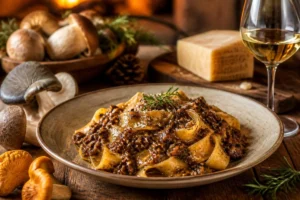
Champagne Blanc de Blancs (Chardonnay): The high acidity and citrus-driven profile of a pure Chardonnay Champagne mirror the notes in the reduction, while the "brioche" notes from the yeast aging complement the mushroom's natural nuttiness.
THE ETYMOLOGICAL CHRONICLE
French:Russule charbonnière – Derived from the varied gray and lilac cap colors that mimic the hues of cooling charcoal embers.
Italian:Colombina maggiore – Meaning "The Great Dove," referring to the gentle, soft-colored skin of the cap.
German:Frauentäubling – A poetic name meaning "Lady's Little Dove," signifying the mushroom's non-brittle, flexible nature.
Spanish:Carbonera – A name historically linked to charcoal burners who prized this mushroom for its meat-like quality.
To provide the best experiences, we use technologies like cookies to store and/or access device information. Consenting to these technologies will allow us to process data such as browsing behavior or unique IDs on this site. Not consenting or withdrawing consent, may adversely affect certain features and functions.
Functional
Always active
The technical storage or access is strictly necessary for the legitimate purpose of enabling the use of a specific service explicitly requested by the subscriber or user, or for the sole purpose of carrying out the transmission of a communication over an electronic communications network.
Preferences
The technical storage or access is necessary for the legitimate purpose of storing preferences that are not requested by the subscriber or user.
Statistics
The technical storage or access that is used exclusively for statistical purposes.The technical storage or access that is used exclusively for anonymous statistical purposes. Without a subpoena, voluntary compliance on the part of your Internet Service Provider, or additional records from a third party, information stored or retrieved for this purpose alone cannot usually be used to identify you.
Marketing
The technical storage or access is required to create user profiles to send advertising, or to track the user on a website or across several websites for similar marketing purposes.