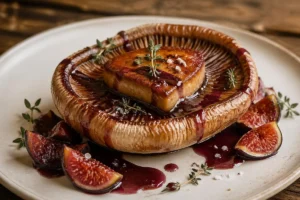
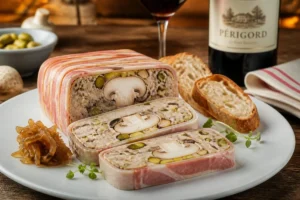
A technical cold-press assembly that utilizes the flexible lamellae of Russula cyanoxantha to create a structural matrix within a rich duck liver base. By layering precision-poached Charcoal Burner caps with smooth Foie Gras, we achieve a high-contrast mosaic of textures, where the mushroom's resilience acts as a counterpoint to the velvet-like lipids of the liver.
Terrine of Russula Cyanoxantha and Foie Gras
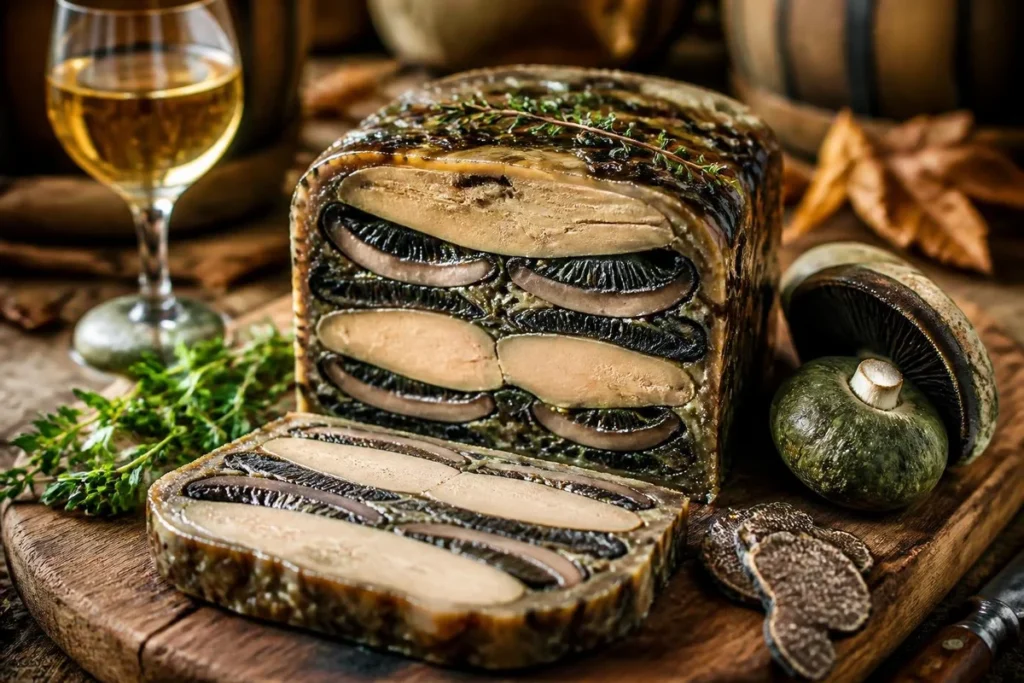
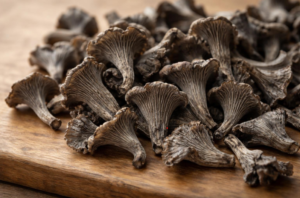
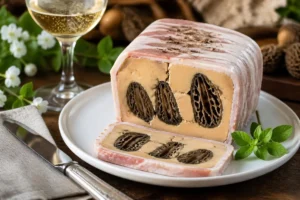
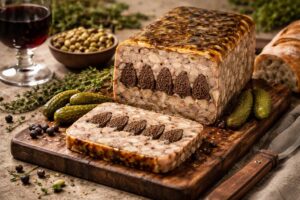
A technical cold-press assembly that utilizes the flexible lamellae of Russula cyanoxantha to create a structural matrix within a rich duck liver base. By layering precision-poached Charcoal Burner caps with smooth Foie Gras, we achieve a high-contrast mosaic of textures, where the mushroom's resilience acts as a counterpoint to the velvet-like lipids of the liver.
The Culinary Physics of This Dish
The Russula cyanoxantha is essential for terrine construction because its gills do not shed or crumble during the 12-hour pressing phase. Under weights, most mushrooms would lose their aesthetic cross-section, but the Charcoal Burner's "greasy" and flexible structure allows it to be compressed into a tight, sliceable block. The mushroom acts as a lipid sponge, absorbing the rendered fats and the aromatic volatiles of the Armagnac, while its own chitinous structure provides the necessary "bite" to distinguish the layers from the soft liver pate.
Terroir Narrative
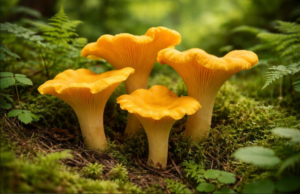
This dish finds its soul in the Périgord region of France, the spiritual home of duck and truffles. In the humid, ancient forests of the Dordogne, the "Charbonnier" is often found in the same terroir as the oaks used for truffle production. This terrine represents the ultimate marriage of forest and farm—a celebratory preparation typically served during the autumn harvest festivals. It is a dish that honors the "slow food" ethos, requiring time, pressure, and high-quality foraged ingredients.
Prep Time
Rest Time
Complexity
Calories
Region
45 Mins
12-24 Hours
Grand Officier
380 kcal
Périgord, France
Master Recipe (1:10 Rule)
400 g Fresh Foie Gras (deveined and tempered)
300 g Russula cyanoxantha (Select whole caps of uniform size)
30 ml Armagnac or Cognac
10 g Sel Rose (Curing salt)
5 g Fine sugar
2 g Freshly ground white pepper
100 ml Port wine (for macerating)
The Technique
1. Maceration: Season the Foie Gras with salt, sugar, pepper, and Armagnac. Let rest for 2 hours to allow the alcohol to denature the proteins slightly.
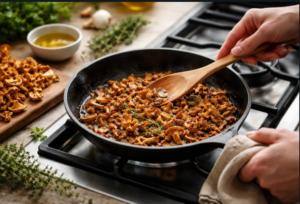
2. Mycological Poaching: Gently poach the Russula cyanoxantha caps in a mixture of Port wine and a touch of water until they are tender but still firm. Drain and pat dry thoroughly; excess moisture will cause the terrine to separate.
3. The Assembly: Line a terrine mold with plastic wrap. Press a layer of Foie Gras into the bottom. Arrange the Charcoal Burner caps in a single, overlapping layer, gills facing downwards to create a beautiful pattern when sliced.
4. Lamination: Repeat the layering process until the mold is full. Ensure there are no air pockets between the mushrooms and the liver.
5. Cooking (Bain-Marie): Place the mold in a water bath at 50°C for approximately 40 minutes. The internal temperature must reach exactly 45°C to preserve the delicate fats.
6. The Press: Remove from the oven, place a weighted board on top of the terrine, and refrigerate for at least 12 hours. This mechanical pressure is what fuses the mushroom structure to the liver.
Shop Integration
The luxurious depth of this terrine can be accented with other premium varieties from our shop. For an even more intense earthy aroma, consider adding a layer of dried and reconstituted Boletus edulis (Boletus edulis) or the concentrated umami of Craterellus cornucopioides (Craterellus cinereus). Our Amanita caesarea (Amanita caesarea) and Cantharellus cibarius (Cantharellus cibarius) offer vibrant color contrasts, while the delicate Marasmius oreades (Marasmius oreades) can be used to fill smaller gaps in the terrine. For the ultimate spring-inspired terrine, explore our Morchella (Morchella conica) collection.
The Umami Profile
This dish represents the peak of Lipid-Enhanced Umami. The high fat content of the Foie Gras acts as a continuous solvent for the mushroom's glutamates, ensuring they are evenly distributed across the tongue. The addition of Armagnac provides a complex ester profile that triggers a secondary olfactory response, making the savory perception of the "Charbonnier" feel significantly richer and more persistent.
Sommelier’s Choice
Sauternes (Bordeaux): The classic pairing for Foie Gras. The wine's honeyed sweetness and high acidity balance the intense richness of the liver, while its apricot and ginger notes resonate with the subtle hazelnut finish of the Russula.
THE ETYMOLOGICAL CHRONICLE
French:Russule charbonnière – Highlighting the cap's resemblance to the varied colors of burning charcoal.
Italian:Colombina maggiore – Acknowledging the "dove-like" grace and culinary superiority of the species.
German:Frauentäubling – A traditional name reflecting the flexible, non-brittle nature of the "Lady Dove" mushroom.
Spanish:Carbonera – Referencing the dark, charcoal-hued pigments of the cap's skin.
To provide the best experiences, we use technologies like cookies to store and/or access device information. Consenting to these technologies will allow us to process data such as browsing behavior or unique IDs on this site. Not consenting or withdrawing consent, may adversely affect certain features and functions.
Functional
Always active
The technical storage or access is strictly necessary for the legitimate purpose of enabling the use of a specific service explicitly requested by the subscriber or user, or for the sole purpose of carrying out the transmission of a communication over an electronic communications network.
Preferences
The technical storage or access is necessary for the legitimate purpose of storing preferences that are not requested by the subscriber or user.
Statistics
The technical storage or access that is used exclusively for statistical purposes.The technical storage or access that is used exclusively for anonymous statistical purposes. Without a subpoena, voluntary compliance on the part of your Internet Service Provider, or additional records from a third party, information stored or retrieved for this purpose alone cannot usually be used to identify you.
Marketing
The technical storage or access is required to create user profiles to send advertising, or to track the user on a website or across several websites for similar marketing purposes.