A technical exploration of lipid-bound aromatic stabilization and the structural integration of Morchella within a high-density porcine and avian protein matrix.
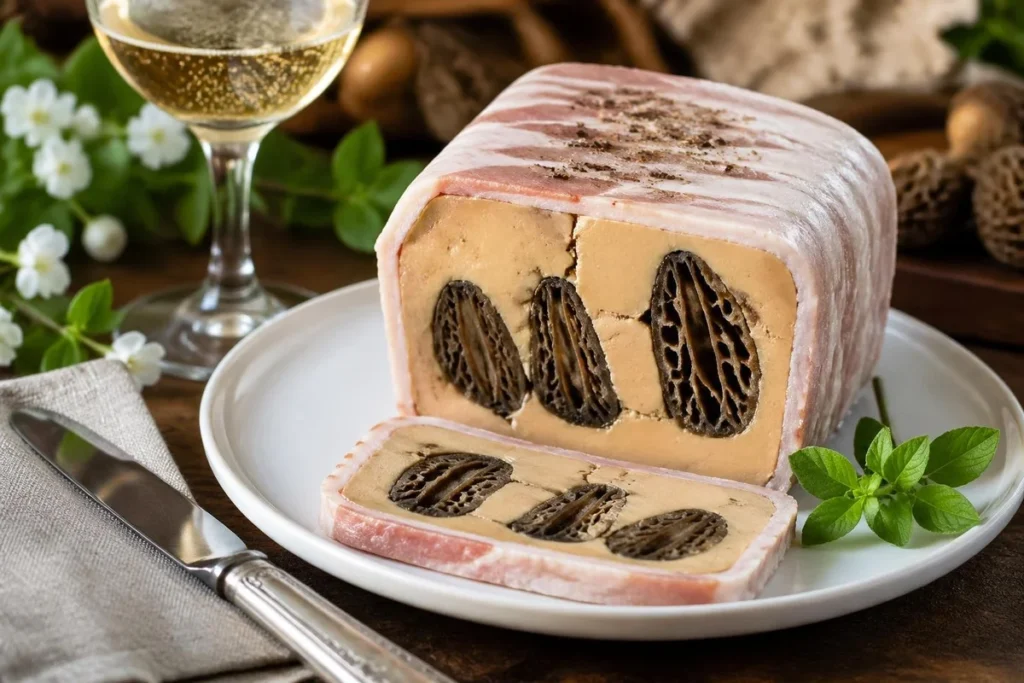
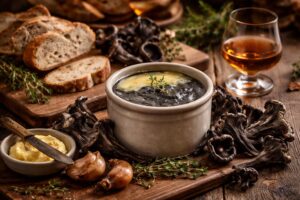
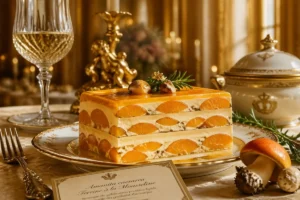
Foie Gras & Morel Terrine (Périgord Style)
In the gastronomic traditions of the Dordogne, the Morel is the only spring fungus considered worthy of standing alongside the Foie Gras. While truffles define the winter, the Morel defines the spring terrine. This preparation is a technical exercise in lipid-phase aromatic capture. Because Foie Gras is over 80% fat, it serves as the ultimate solvent for the earthy, smoky terpenes found in the Morel's alveolar walls, resulting in a cold preparation where the flavor is structurally locked into the fat matrix.
The Culinary Physics of This Dish
The core scientific challenge here is differential protein coagulation. A terrine consists of a "farce" (forcemeat) and "inclusions" (the Morels). During the slow, low-temperature poaching (bain-marie) at 70°C, the proteins in the Foie Gras begin to denature and trap the fats. The hollow Morels must be pre-sautéed to remove their internal water; otherwise, the "water-fat repulsion" would create gaps in the terrine, causing it to crumble upon slicing.
Furthermore, the porous chitin of the Morel acts as a mechanical anchor. As the Foie Gras fat liquefies and then solidifies during the cooling phase, it fills the pits of the mushroom, creating a physical bond between the inclusion and the base. This ensures a clean, architectural slice where the Morel remains perfectly centered within the rich liver matrix.
Terroir Narrative
Périgord is a land of oak forests and limestone meadows. The Morels gathered here in April are traditionally dried and then rehydrated in Cognac to be used in these luxury terrines. This pairing represents the pinnacle of "Maison" charcuterie—bringing together the forest's early harvest with the farmhouse's preserved luxury. It is a dish that speaks of the damp, warming earth and the sophisticated preservation techniques of the French Southwest.
Prep Time
Rest Time
Complexity
Calories
Region
60 min
48 hours
Grand Officier
410 kcal
Périgord, France
Master Recipe (The Golden Ratio)
In high-end charcuterie, the 1:10 rule applies to the ratio of aromatically intense inclusions (Morels) to the primary fat/protein base, ensuring a refined aromatic presence without overwhelming the Foie Gras.
500 g Raw Foie Gras (Grade A, deveined)
100 g Fresh Morels (or 20g dried/rehydrated)
200 g Lean Pork Shoulder (finely ground)
15 ml Cognac or Armagnac
12 g Sel Nitrité (Curing salt)
1 pinch Quatre Épices (French spice blend)
To wrap Thinly sliced Pork Fatback (Lardière)
The Technique
The Maceration: Break the Foie Gras into large lobes. Season with salt, spices, and Cognac. Let macerate for 12 hours. This ensures the salt penetrates the lipid structure, preventing oxidation.
Mushroom Prep: Sauté the Morels in a dry pan until their moisture is completely gone. If using dried Morels, rehydrate them in a small amount of Cognac and dry them thoroughly before use.
Assembly: Line a ceramic terrine mold with the sliced fatback. Pack half the Foie Gras/pork mixture into the bottom. Lay the whole Morels in a single line down the center. Cover with the remaining mixture.
The Poach: Place the terrine in a bain-marie. Cook at 75°C in the oven until the internal temperature reaches exactly 54°C.
The Press: Once removed, place a weight on top of the terrine to compress the layers. Refrigerate for at least 48 hours. This time allows the "fat-flavor fusion" to occur, as the aromatics migrate from the Morels into the liver.
"In a terrine, time is an ingredient. You are not just cooking; you are engineering a marriage of fat and forest." – Maître Charcutier, Sarlat
The Umami Profile
The umami profile of Morchella is amplified by the glutamates in the liver. Because Morels have a slightly "meaty" texture and a high nucleotide count, they provide a savory bridge that makes the Foie Gras feel even richer. Pure Umami offers the finest dried and fresh Morels, as well as Porcini, Chanterelle, and Morel, for your high-end charcuterie projects.
A classic Sauternes or a late-harvest Monbazillac is the traditional pairing, providing a sweet counterpoint to the salt and fat. However, for a technical pairing that highlights the Morels, choose an Aged Champagne. The toastiness and acidity cut through the Foie Gras while mirroring the nutty, earthy notes of the mushrooms.
The Etymological Chronicle
In the French charcuterie tradition (Post B), the term Inclusions refers to the visual "gems" inside a terrine. Historically, Morels were called "Diamonds of the Spring" in the Périgord, as their dark, honeycomb structure resembles a precious stone when sliced through a pale, buttery Foie Gras. This aesthetic and flavorful contrast has made them a staple of royal French banquets since the 17th century.
To provide the best experiences, we use technologies like cookies to store and/or access device information. Consenting to these technologies will allow us to process data such as browsing behavior or unique IDs on this site. Not consenting or withdrawing consent, may adversely affect certain features and functions.
Functional
Always active
The technical storage or access is strictly necessary for the legitimate purpose of enabling the use of a specific service explicitly requested by the subscriber or user, or for the sole purpose of carrying out the transmission of a communication over an electronic communications network.
Preferences
The technical storage or access is necessary for the legitimate purpose of storing preferences that are not requested by the subscriber or user.
Statistics
The technical storage or access that is used exclusively for statistical purposes.The technical storage or access that is used exclusively for anonymous statistical purposes. Without a subpoena, voluntary compliance on the part of your Internet Service Provider, or additional records from a third party, information stored or retrieved for this purpose alone cannot usually be used to identify you.
Marketing
The technical storage or access is required to create user profiles to send advertising, or to track the user on a website or across several websites for similar marketing purposes.