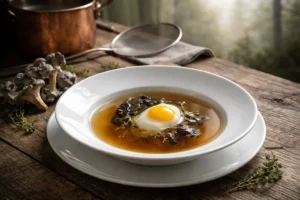
A technical examination of collagenous texture synergy and the stabilization of volatile fungal aromatics within a high-heat lipid sear.
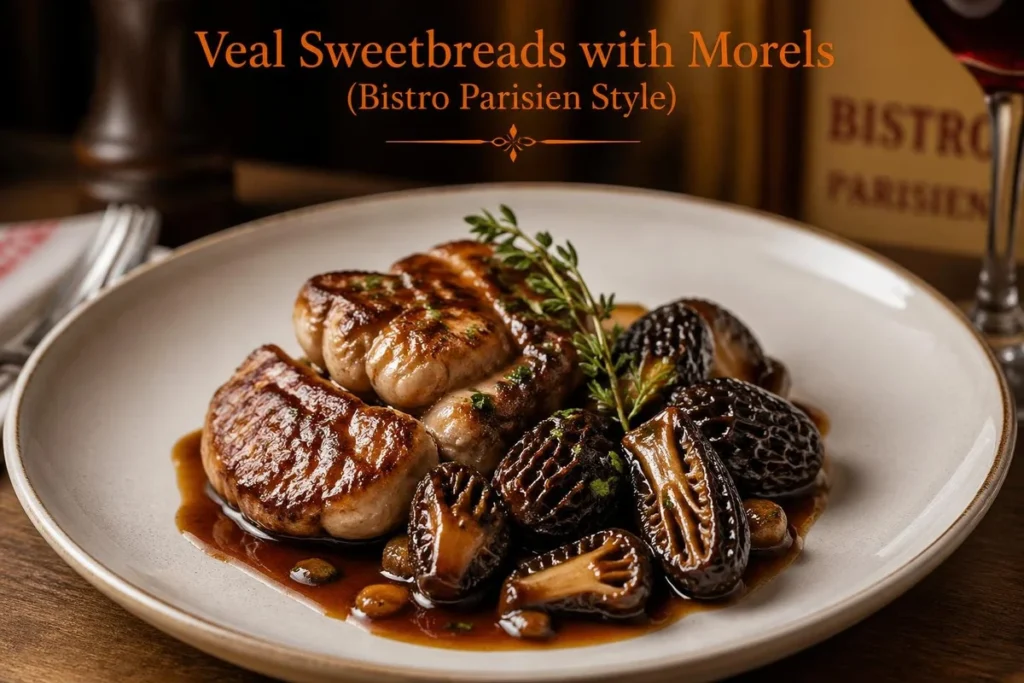
Veal Sweetbreads with Morels (Bistro Parisien Style)
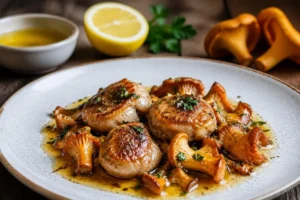
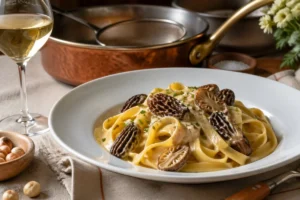
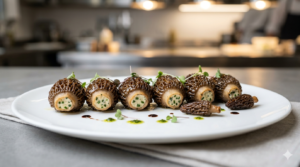
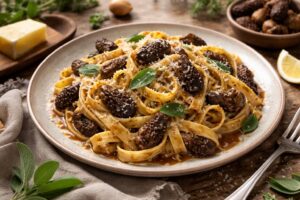
In the "Grandes Tables" of Paris, Ris de Veau (Veal Sweetbreads) paired with Morels is considered the definitive test of a saucier's skill. This dish is a technical masterclass in textural matching. The sweetbread—a collagen-rich organ with a creamy, custard-like interior—requires a firm, earthy partner that won't disintegrate under high heat. The Morchella, with its resilient honeycomb structure, provides the perfect structural foil to the velvet-soft protein.
The Culinary Physics of This Dish
The core scientific principle is the Maillard-Lipid Hybridization. Sweetbreads are notoriously difficult to sear due to their high moisture and connective tissue content. By dusting them in flour and searing in clarified butter, we create a crisp, glycogen-rich crust. When the Morels are introduced to the same pan, their alkaline-loving terpenes react with the rendered veal fats, creating a deep, smoky aromatic profile that is chemically impossible to achieve with standard cultivated mushrooms.
Furthermore, the nucleotides (specifically GMP) in the Morels interact with the glutamic acid in the veal. This creates a "synergistic umami" effect, where the savory perception is multiplied. As the pan is deglazed with Madeira, the alcohol acts as a solvent, pulling the mushroom's nutty essences into the reduction, which then binds to the collagen released by the sweetbreads, forming a naturally thick, high-gloss sauce.
Terroir Narrative
Parisian bistro culture is built on the "Marché" (market) cycle. In April, when the first wild Morels arrive from the forests of Fontainebleau or the Sologne, they are immediately paired with the finest milk-fed veal from the Corrèze. This dish represents the "Cuisine Bourgeoise"—sophisticated, technically demanding, and unapologetically rich. It is a celebration of the brief window where the earth's most prized fungus meets the kitchen's most delicate protein.
Prep Time
Cook Time
Complexity
Calories
Region
60 min (incl. soaking)
15 min
Grand Officier
380 kcal
Paris, France
Master Recipe (1:10 Rule)
In this high-end preparation, we maintain a 1:10 ratio of concentrated Morel glaze to the volume of the sweetbreads, ensuring a potent but balanced aromatic experience.
500 g Fresh Veal Sweetbreads (Heart/Throat gland)
250 g Fresh Morels (kept whole or halved if very large)
50 g Clarified Butter (for a higher smoke point)
100 ml Madeira Wine (Sercial or Verdelho)
150 ml Veal Glace (double-reduced stock)
To coat All-purpose Flour (T45)
To taste Salt and White Pepper
The Technique
The Blanch: Soak sweetbreads in cold water for 4 hours to remove impurities. Blanch in simmering water with lemon for 3 minutes, then shock in ice. Peel the outer membrane carefully—this is the secret to a professional, "clean" bite.
The Press: Place the sweetbreads between two trays with a weight on top for 1 hour. This compacts the lobes, ensuring a uniform sear and better textural density.
The Sear: Flour the sweetbreads lightly. Sear in clarified butter over medium-high heat until deep golden and "croquant" (crispy). Remove and rest.
The Fungal Infusion: Add Morels to the same pan. Sauté until their moisture evaporates and they begin to "whistle" in the butter. This indicates the cells are opening to absorb the veal fats.
Deglazing: Add Madeira, scraping the bottom (succs). Add veal glace and reduce by half until the sauce is syrupy and coats the Morels perfectly.
Assembly: Return the sweetbreads to the pan just to glaze. Serve immediately on a warm plate.
"The sweetbread is the pillow; the Morel is the spirit. One cannot exist without the other in the pantheon of Parisian taste." – Chef de Cuisine, 8th Arrondissement
The Umami Profile
The umami profile of Morchella is intensified by the lipid rendering of the veal. Because sweetbreads have a high-fat content, they act as a perfect vehicle for the mushroom's fat-soluble compounds. Pure Umami offers selected fresh and dried Morels, as well as Porcini, Chanterelle, and Marasmius, for your professional culinary projects.
Elevate your menu with our Restaurant-Grade Morels, hand-selected for their structural integrity and flavor density.
Sommelier’s Choice
A wine with significant structure and "oxidative" notes is required to match the Madeira and Morels. A Meursault (Chardonnay) from Burgundy offers the buttery, nutty character needed. For a red alternative, choose an Aged Gevrey-Chambertin; its earthy tannins and dark fruit will mirror the smoky notes of the seared Morels.
The Etymological Chronicle
In the French culinary tradition (Post B), the term Ris de Veau comes from the Old French "ris," meaning a sweet or fat piece. Historically, Morels were called "The Poor Man's Truffle" during the Middle Ages, but by the time of Carême and Escoffier, they had ascended to the same luxury status as sweetbreads, forming the legendary "Garniture à la Financière"—the most expensive garnish in the French repertoire.
To provide the best experiences, we use technologies like cookies to store and/or access device information. Consenting to these technologies will allow us to process data such as browsing behavior or unique IDs on this site. Not consenting or withdrawing consent, may adversely affect certain features and functions.
Functional
Always active
The technical storage or access is strictly necessary for the legitimate purpose of enabling the use of a specific service explicitly requested by the subscriber or user, or for the sole purpose of carrying out the transmission of a communication over an electronic communications network.
Preferences
The technical storage or access is necessary for the legitimate purpose of storing preferences that are not requested by the subscriber or user.
Statistics
The technical storage or access that is used exclusively for statistical purposes.The technical storage or access that is used exclusively for anonymous statistical purposes. Without a subpoena, voluntary compliance on the part of your Internet Service Provider, or additional records from a third party, information stored or retrieved for this purpose alone cannot usually be used to identify you.
Marketing
The technical storage or access is required to create user profiles to send advertising, or to track the user on a website or across several websites for similar marketing purposes.