The Historical Prelude: The Shepherd’s “Naked” Pasta
In the sun-drenched hills of Tuscany, specifically within the rugged Maremma region, the Gnudi (meaning "naked") was born from a culinary accident of the 16th century. Historically, these were the fillings of ravioli that had been prepared without their pasta "clothes" by peasant women who lacked the time or extra flour to roll out dough. Unlike the northern gnocchi, which relies on potatoes, the Tuscan Gnudi is a delicate suspension of Sheep's Milk Ricotta and spinach, held together by the sheer tension of a semolina dusting.
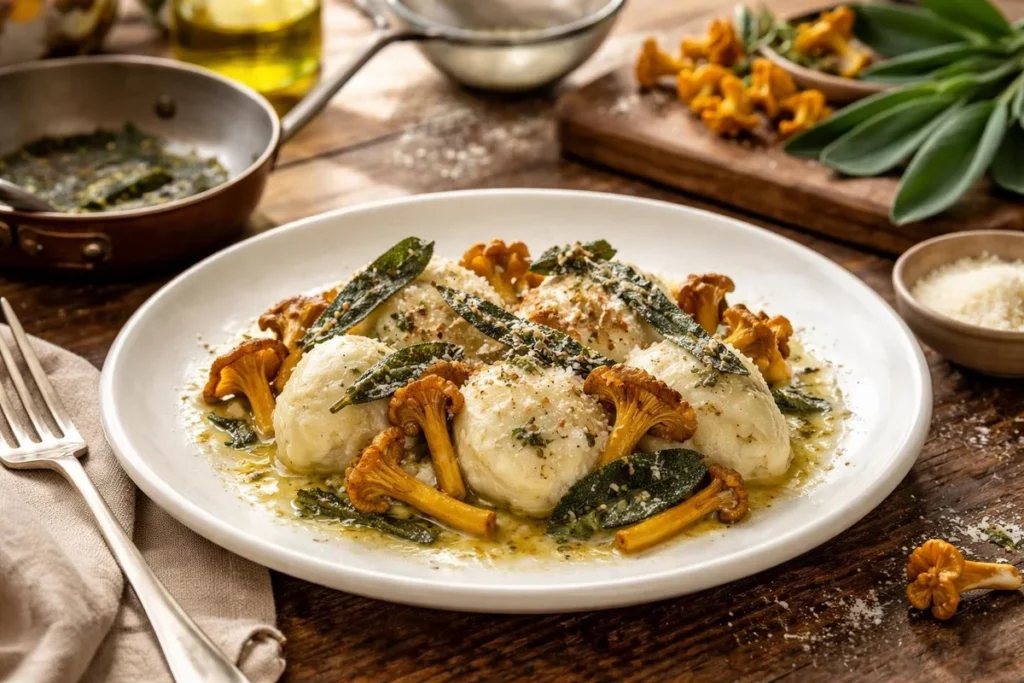
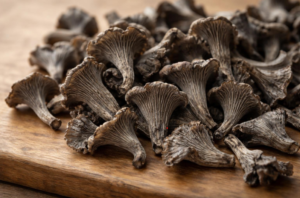
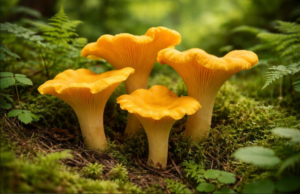
The introduction of the Yellow Foot Chanterelle (Craterellus lutescens) to this dish represents the arrival of the Autunno Toscano. As the shepherds moved their flocks through the chestnut and oak forests, they gathered these "Little Funnels" (Finferli). The apricot esters of the Yellow Foot were found to be a divine aromatic match for the lactic sweetness of sheep's milk.
By the 19th century, in the grand kitchens of Florence, the dish was refined. The addition of Sage (Salvia) fried in butter provided a resinous, herbal backbone that anchored the airy texture of the gnudi to the peppery earthiness of the mushrooms. It is a dish that celebrates the "Cucina Povera" luxury—taking humble ingredients and elevating them through technical precision into something that feels like an edible cloud.
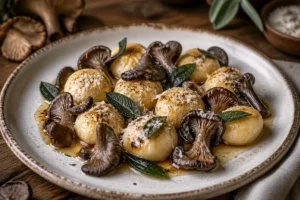
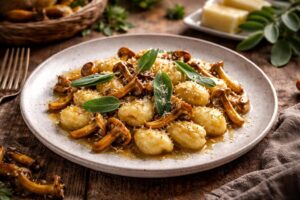
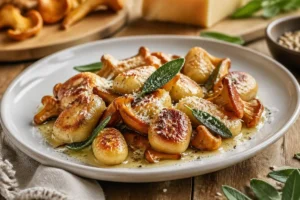
Narrative Intro: This dish is a "Lactic Cloud." Our philosophy for the Tuscan Gnudi is to treat the mushroom as a textural spice. The gnudi provides the soft, creamy substrate, while the Yellow Foot, sautéed to a "snap," provides the rhythmic contrast. The sage acts as the conductor, its camphor notes unifying the forest and the dairy.
Sensory & Foraging Profile: The Clay and Chestnut Terroir
The Craterellus lutescens of the Tuscan Apennines thrives in the calcareous clay soils beneath chestnut and holm oak canopies. This terroir imparts a deeper, more musk-like finish to the mushroom's natural apricot scent. The high mineral content of the soil ensures the stems remain firm even after the first autumn rains, making them ideal for the rapid searing required in this recipe.
Ethical Harvesting & Professional Protocols: In the Maremma, we follow the "Symbiotic Sweep"—only harvesting in areas where the forest floor is undisturbed by livestock. We utilize natural pig-hair brushes to clean the hollow stems, avoiding water at all costs to preserve the delicate spore-scent. We strictly leave the "pioneer" specimens—the first ones to emerge in a patch—to ensure the mycelial network's longevity.
Essential Equipment: The Gnudi Station
Fine Mesh Drum Sieve: Crucial for pressing the ricotta to remove excess moisture and achieve a silk-like texture.
Wide, Shallow Pot: For "Silent Simmering" (poaching) the gnudi without the turbulence of a hard boil.
Copper Sauté Pan: To achieve the perfect amber color in the butter (Beurre Noisette) without burning the milk solids.
Slotted Spoon (Spider): To handle the delicate gnudi without rupturing their fragile semolina skin.
Master Recipe: Tuscan Gnudi & Yellow Foot
Stage 1: The Ricotta Dehydration
Take 500g of Sheep's Milk Ricotta. Wrap in cheesecloth and hang for 4 hours to drain. Press through a fine sieve. Mix with 50g of grated Pecorino Toscano DOP, a pinch of nutmeg, and one egg yolk. Do not add flour yet; the moisture control here is the difference between an edible cloud and a leaden ball.
Stage 2: The Semolina Coating
Form small 2cm balls of the ricotta mixture. Roll them gently in Semolina flour. Place on a tray lined with more semolina and chill for 12 hours. The semolina will draw moisture from the ricotta to form a thin, protective "skin."
Stage 3: The Forest Infusion
In your copper pan, melt 60g of unsalted butter. Add 10 fresh sage leaves and fry until they are crisp and the butter smells of toasted hazelnuts. Add 300g of fresh Yellow Foot chanterelles. Sauté until the mushrooms are glazed and the apricot aroma fills the air.
Stage 4: The Silent Poach
Drop the gnudi into simmering salted water. They will sink, then rise to the surface after 2-3 minutes. Once they float, they are ready. Use the spider to transfer them directly into the butter and mushroom pan.
Stage 5: The Final Glaze
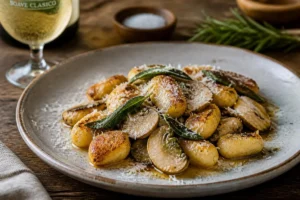
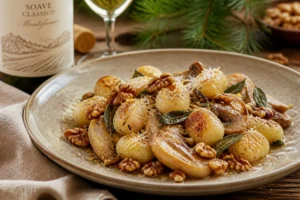
Gently swirl the pan to coat the gnudi in the sage-mushroom butter. Add a tablespoon of the poaching water to create a light emulsion. Serve immediately with a final dusting of Pecorino.
Substitutions & Variations: The Luxury Palette
The Dairy: If sheep's ricotta is too strong, use Buffalo Ricotta for a higher fat content and creamier finish.
The Herb: Replace sage with Wild Marjoram for a more floral, less resinous profile.
The Mushroom: For a deeper visual contrast, mix Yellow Feet with Black Trumpets (Craterellus cornucopioides) to create a "Gothic Forest" plate.
Pro Technique: The “Semolina Cure”
The secret to professional gnudi is time. The 12-hour rest in semolina allows for a partial enzymatic breakdown of the outer ricotta layer, which bonds with the flour to create a skin that is structurally sound but practically invisible when eaten. If you cook them immediately, they will disintegrate into the water.
The Umami Secret: Lactones and Cineole Synergy
The **Ricotta** is rich in delta-Lactones (creamy/apricot notes). The **Yellow Foot** is rich in Gamma-Octalactone (stone-fruit esters). The **Sage** contains 1,8-Cineole (camphor/eucalyptus). When combined in a fat-rich medium (Butter), the Cineole acts as a "sharpness catalyst" that prevents the two lactone sources from becoming too "heavy," resulting in a flavor profile that feels bright and aromatic rather than just fatty.
The Art of Pairing: The Sommelier’s Selection
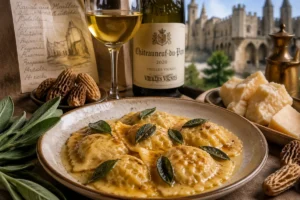
Sommelier's Choice: A Vernaccia di San Gimignano. This Tuscan white wine has a characteristic bitter almond finish and a crisp minerality that cuts through the sheep's milk fat.
Non-Alcoholic Alternative:Chilled Sage and Honey Infusion. The honey mirrors the mushroom's sweetness while the sage provides the herbal bridge.
Storage & Reheating
Gnudi cannot be stored after cooking as they become rubbery. **Pro Tip:** You can store the raw, semolina-coated gnudi in the refrigerator for up to 24 hours before poaching. If you have leftover mushroom butter, use it to top a simple steak or piece of grilled bread.
Ancestral Nutrition
Sheep's milk ricotta is naturally higher in Calcium and Medium-Chain Triglycerides (MCTs) than cow's milk. Yellow Foot chanterelles provide Vitamin D2 and are a source of Dietary Fiber. In Tuscan folk medicine, sage was considered a digestive aid, often served with rich foods like gnudi to prevent "heavy stomach" syndrome.
Micro-FAQ
Q: Why did my gnudi fall apart in the water? A: Either the ricotta wasn't drained enough, or you didn't let them "cure" in the semolina for at least 8-12 hours.
Q: Can I use spinach? A: Traditionally, yes. Ensure the spinach is squeezed until bone-dry, or the excess water will ruin the delicate ricotta structure.
Q: Why sheep's milk ricotta? A: It has a lower water content and a higher protein-to-fat ratio than cow's milk ricotta, making for a firmer, tastier gnudi.
To provide the best experiences, we use technologies like cookies to store and/or access device information. Consenting to these technologies will allow us to process data such as browsing behavior or unique IDs on this site. Not consenting or withdrawing consent, may adversely affect certain features and functions.
Functional
Always active
The technical storage or access is strictly necessary for the legitimate purpose of enabling the use of a specific service explicitly requested by the subscriber or user, or for the sole purpose of carrying out the transmission of a communication over an electronic communications network.
Preferences
The technical storage or access is necessary for the legitimate purpose of storing preferences that are not requested by the subscriber or user.
Statistics
The technical storage or access that is used exclusively for statistical purposes.The technical storage or access that is used exclusively for anonymous statistical purposes. Without a subpoena, voluntary compliance on the part of your Internet Service Provider, or additional records from a third party, information stored or retrieved for this purpose alone cannot usually be used to identify you.
Marketing
The technical storage or access is required to create user profiles to send advertising, or to track the user on a website or across several websites for similar marketing purposes.