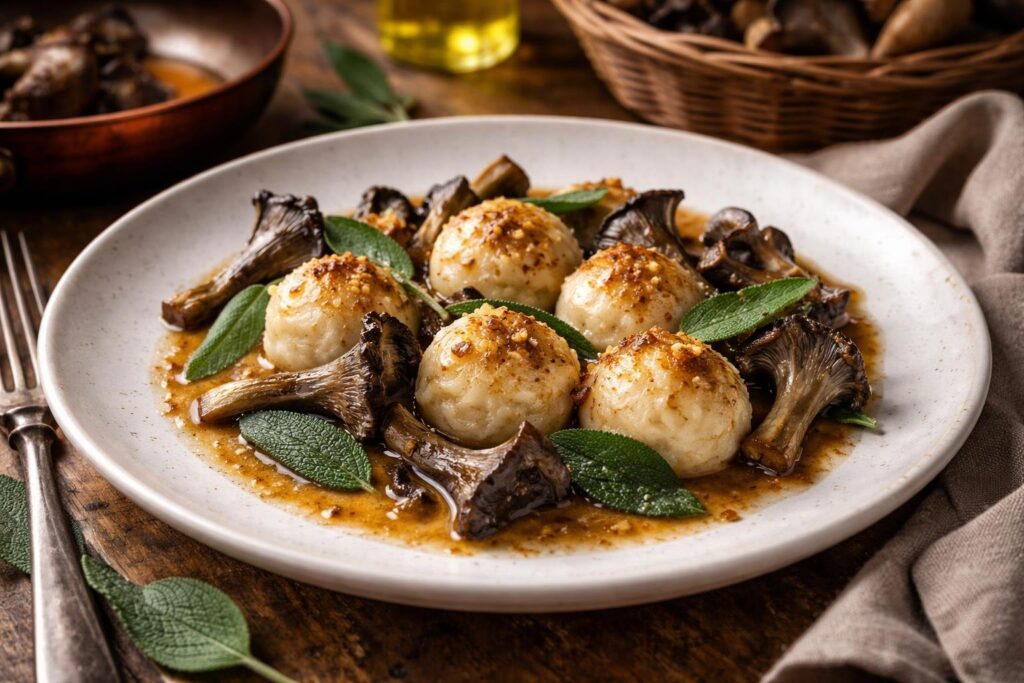
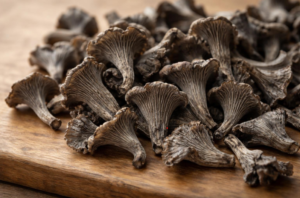
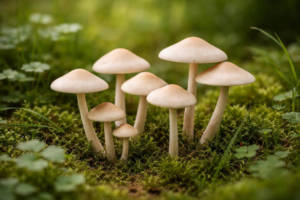
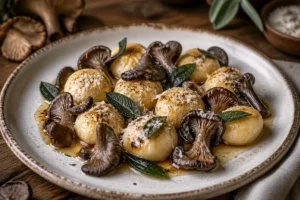
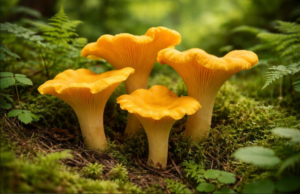
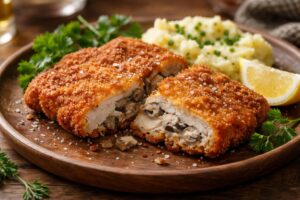
A silken transition from mountain forest to Tuscan table featuring the peppery Cantharellus cinereus and hand-rolled ricotta dumplings.
Tuscan Gray Chanterelle Gnudi
The Naked Ravioli and the Ash-Kissed Forests of the Apennines
The Historical Prelude: The Renaissance “Naked” Dumpling
The origin of Gnudi (literally "naked" in the Tuscan dialect) represents one of the most elegant evolutions in Italian Cucina Povera. Born in the heart of the Maremma and the hills of Siena, these dumplings were originally the filling of ravioli that had "lost" their pasta coats. While the peasantry prepared them with simple sheep's milk ricotta and wild greens, the dish ascended to the Medici courts of Florence during the 16th century, where it was refined with the addition of nutmeg and expensive mountain cheeses.
Historically, the infusion of wild mushrooms into this delicate dairy-based dish was a seasonal ritual practiced by the charcoal burners (carbonai) of the Apennine Mountains. Working in the deep forests, these laborers encountered the Cantharellus cinereus—a mushroom they called the "Grey Ghost"—growing in the shadows of the beech and chestnut trees. They realized that the mushroom's naturally peppery finish and firm texture provided the perfect structural contrast to the pillowy softness of the ricotta.
In the 1800s, Tuscan culinary manuscripts noted that the "grey-ash" chanterelle was superior to the golden variety for Gnudi because it released less moisture, preventing the delicate dumplings from disintegrating in the pan. This dish is a bridge between the rustic foraging traditions of the mountain workers and the sophisticated palates of Florence. To master the Gnudi is to understand the physics of moisture management and the alchemy of browning butter to the exact point where it meets the smoky terpenes of the forest fungi.
Narrative Intro: The Gnudi is a ghost in the kitchen—it must be light enough to vanish on the tongue but strong enough to carry the weight of the forest. Our philosophy is "The Semolina Skin." By resting the dumplings in a bed of fine semolina for 24 hours, we create a microscopic, protective "shell" that allows the interior to remain almost liquid. When paired with the Gray Chanterelle, the dish becomes a symphony of textures: the snap of the mushroom, the crunch of the sage, and the silken melt of the cheese.
Sensory & Foraging Profile: The Calcified Beech Terroir
The Cantharellus cinereus found in the Tuscan-Emilian Apennines is noted for its high mineral concentration, a result of the region's limestone-rich soil. Unlike coastal varieties, these mountain specimens have a tighter cellular structure and a scent reminiscent of toasted black tea and damp slate.
Ethical Harvesting & The "Mycelial Pulse": We harvest according to the "Mycelial Pulse"—waiting three days after a heavy rain for the caps to firm up. In Tuscany, professional forays involve the use of a traditional "Paniere" (wicker basket) which allows the heavy, slate-colored spores to drop through the weave as the forager walks, re-seeding the forest path. We practice "Stem-Shielding," ensuring that the leaf litter is returned to the exact spot of harvest to protect the delicate underground networks from UV exposure.
Essential Equipment: The Precision Larder
Ultrafine Sieve: To drain the ricotta until it reaches a "clay-like" consistency.
Spider Skimmer: For the delicate retrieval of the Gnudi without bruising the skin.
Heavy-Bottomed Copper Skillet: To achieve a perfectly even Beurre Noisette.
Food-Grade Muslin: For the initial 12-hour ricotta dehydration process.
Master Recipe: Gray Chanterelle Gnudi
Stage 1: The Dehydration of the Dairy
Take 500g of high-quality Ricotta di Pecora (sheep's milk) and wrap it in muslin. Weigh it down in a sieve for 12 hours in the refrigerator. The goal is to remove 20% of its weight in water, leaving a concentrated, fatty curd.
Stage 2: The Forest Filling
Finely dice 100g of fresh Gray Chanterelles. Sauté them in a dry pan until their liquid evaporates. Mix the mushrooms into the drained ricotta with 50g of Parmigiano Reggiano DOP (aged 30 months), one egg yolk, a pinch of nutmeg, and 50g of blanched, squeezed, and finely chopped wild spinach. Fold gently.
Stage 3: The Semolina “Cradle”
Form the mixture into small, walnut-sized balls. Roll them in a tray filled with Semola Rimacinata. Cover them completely and refrigerate for 24 hours. The semolina will draw out the surface moisture, creating a paper-thin, pasta-like skin without the need for flour in the dough.
Stage 4: The Searing of the Fungi
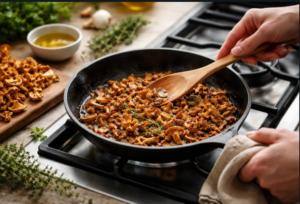
In a large skillet, melt 100g of unsalted Tuscan Butter. Add 200g of whole Gray Chanterelles and 10 fresh sage leaves. Cook until the butter begins to foam and turn a deep hazelnut brown (beurre noisette). The mushrooms will become slightly crispy on the edges.
Stage 5: The Gentle Boil and Assembly
Drop the Gnudi into simmering (not rolling) salted water. When they float to the surface (approx. 3 minutes), they are ready. Use the spider to transfer them directly into the sage and mushroom butter. Gently spoon the butter over the dumplings for 30 seconds to glaze.
Substitutions & Variations: The Luxury Palette
The Cheese: Replace the Parmigiano with Pecorino Toscano DOP for a sharper, more salt-forward mountain profile.
The Greens: In early spring, substitute spinach with wild nettles to enhance the mineral "forest" character of the dish.
The Fat: Use Buffalo Butter for an even creamier, high-fat emulsion that coats the mushrooms more densely.
Pro Technique: The “Thermal Glide”
When transferring the Gnudi from the water to the butter, ensure a small amount of the starchy pasta water hit the hot skillet. This creates a "glace" that binds the fat of the butter to the surface of the mushroom and the dumpling skin. Without this "bridge," the butter will simply slide off, leaving the Gnudi dry and the mushrooms isolated from the sauce.
The Umami Secret: Casein and Chitin Synergies
This dish utilizes the Maillard Reaction occurring in the butter's milk solids (casein) to amplify the nucleotides in the Gray Chanterelles. The ricotta provides a background of **Lactic Acid**, which acts as a flavor enhancer, lowering the threshold for the tongue to perceive the mushroom's savory guanylates. This results in a "long umami" tail that persists, anchored by the fatty richness of the sheep's milk.
The Art of Pairing: The Sommelier’s Selection
Sommelier's Choice: A Vernaccia di San Gimignano Riserva. The slight bitter-almond finish and golden weight of this Tuscan white wine mirror the sage butter and the mineral notes of the Gray Chanterelle.
Non-Alcoholic Alternative: A Sparkling Roasted Oolong Tea. The tea's toasted, woody notes provide a sophisticated "smoky" counterpoint that mimics the mushroom's terroir.
Storage & Reheating: Professional Restoration
Gnudi should be eaten immediately after the "skin" has formed and they have been boiled. However, the raw, semolina-coated dumplings can be frozen for up to 2 weeks. Cook them directly from frozen in simmering water for an extra 2 minutes. Never reheat a finished Gnudi dish, as the delicate skin will break and the interior will become rubbery.
Ancestral Nutrition: The Shepherd’s Strength
Tuscan sheep's milk ricotta is a superior source of Whey Protein and Calcium. The Gray Chanterelle contributes high levels of Vitamin B5 (Pantothenic Acid) and Potassium. Historically, this dish was served to those recovering from the physical strain of mountain work, as the combination of high-fat dairy and nutrient-dense fungi provided immediate and sustained cellular recovery.
Micro-FAQ
Q: Why did my Gnudi fall apart in the water? A: Either the ricotta was not drained sufficiently, or the dumplings did not spend enough time in the semolina to form a skin. Patience is the primary ingredient.
Q: Can I use regular flour for the coating? A: No. Regular flour creates a gummy, thick paste. Only coarse semolina creates the "translucent skin" characteristic of authentic Gnudi.
Q: Is the nutmeg necessary? A: Yes. Nutmeg is a traditional "aromatic bridge" in Italian dairy dishes, used to elevate the sweetness of the ricotta and ground the earthiness of the mushrooms.
The Ashen Lexicon: Global Names for Cantharellus cinereus
The Ashen Chanterelle is a sophisticated relative of the golden chanterelle, prized for its deep, fruity aroma. Its regional names often describe its elegant grey-to-black coloration and trumpet-like hollow stem:
To provide the best experiences, we use technologies like cookies to store and/or access device information. Consenting to these technologies will allow us to process data such as browsing behavior or unique IDs on this site. Not consenting or withdrawing consent, may adversely affect certain features and functions.
Functional
Always active
The technical storage or access is strictly necessary for the legitimate purpose of enabling the use of a specific service explicitly requested by the subscriber or user, or for the sole purpose of carrying out the transmission of a communication over an electronic communications network.
Preferences
The technical storage or access is necessary for the legitimate purpose of storing preferences that are not requested by the subscriber or user.
Statistics
The technical storage or access that is used exclusively for statistical purposes.The technical storage or access that is used exclusively for anonymous statistical purposes. Without a subpoena, voluntary compliance on the part of your Internet Service Provider, or additional records from a third party, information stored or retrieved for this purpose alone cannot usually be used to identify you.
Marketing
The technical storage or access is required to create user profiles to send advertising, or to track the user on a website or across several websites for similar marketing purposes.