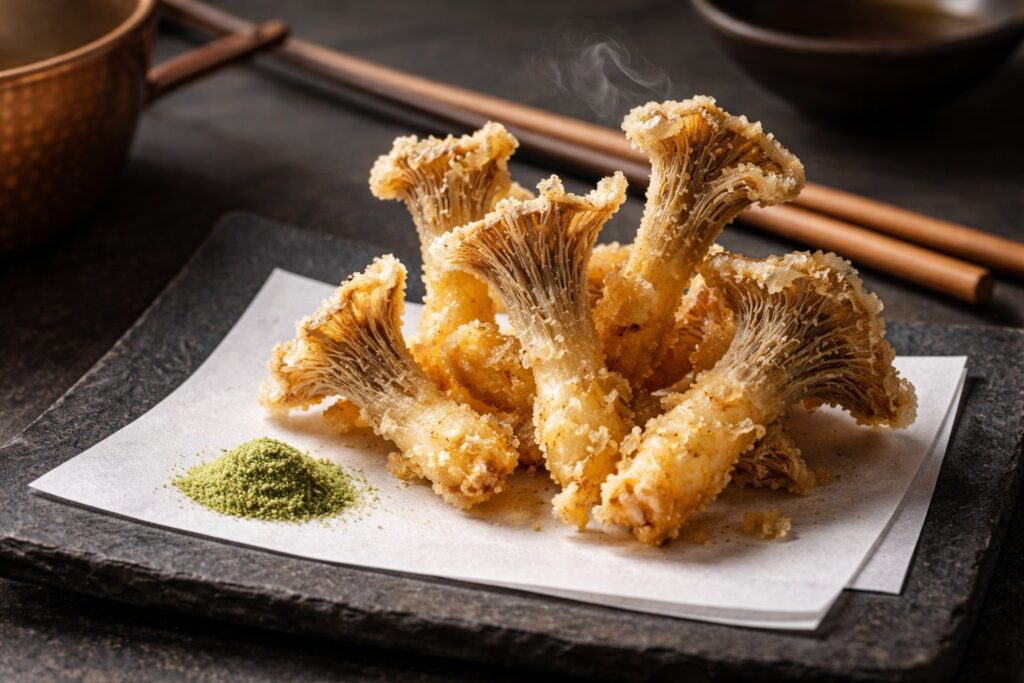
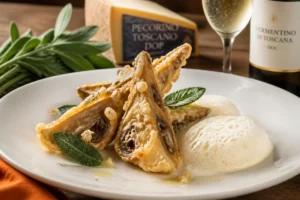
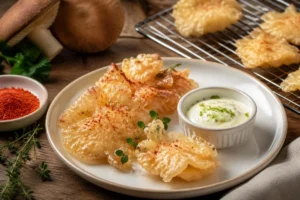
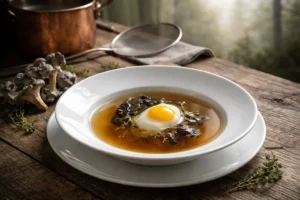
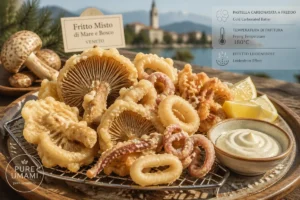
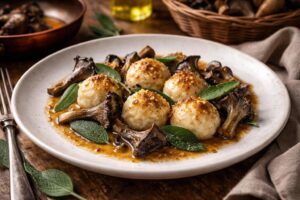
A masterclass in textural contrast featuring the peppery Cantharellus cinereus preserved in a gossamer light Japanese batter.
Gray Chanterelle Umami Tempura
The Peppery Ghost of the Woods and the Zen of Precision Frying
The Historical Prelude: From Portuguese Missions to Imperial Delicacy
The technique of Tempura is one of the most fascinating examples of culinary cross-pollination in history. Introduced to Japan by Portuguese Jesuit missionaries in the 16th century—originally as a meatless "Lenten" dish—it was rapidly transformed by the Japanese masters into a high-art form. While the Portuguese focused on heavy, breaded batters, the Japanese chefs of the Edo period refined the process into a science of evaporation, using a thin, ice-cold batter to "steam-fry" the ingredient within a golden lattice.
The introduction of wild forest fungi into the tempura repertoire was a natural progression for the Kyoto school of cooking, which emphasizes seasonal shun (the peak of freshness). While the Matsutake is the undisputed king of Japanese mushrooms, the Cantharellus cinereus—often found by European-influenced chefs working in modern Tokyo and Kyoto—was discovered to be a secret weapon for tempura.
Historically, the "Gray Chanterelle" was noted for its unique resilience; unlike many other mushrooms that turn soft and oily when fried, the Cantharellus cinereus maintains a firm, almost "meat-like" snap. By the late 20th century, top-tier Tempura-ya (specialized restaurants) began pairing the smoky, ashen notes of the Gray Chanterelle with the astringent, mineral power of Matcha salt. This pairing creates a sophisticated sensory loop: the heat of the fry activates the mushroom's pepperiness, which is then immediately balanced by the cooling, tea-infused salinity. This dish represents the ultimate synthesis of Western wild-harvested ingredients and Eastern technical perfection.
Narrative Intro: Tempura is not frying; it is a high-speed steaming process performed inside a protective shell of starch. Our philosophy for the Gray Chanterelle is "Thermal Preservation." Because the mushroom is hollow and peppery, we use an ultra-thin batter to capture its volcanic aromatics without allowing the oil to penetrate the flesh. The result is a bite that sounds like glass breaking and tastes like a forest fire quenched by spring rain.
Sensory & Foraging Profile: The Volcanic and Oak Terroir
The Cantharellus cinereus used in this preparation should ideally be harvested from well-drained, acidic soils. These mushrooms possess a sharper, more aggressive peppery finish than those grown in limestone basins. Their flavor profile is dominated by dry woodsmoke, black pepper, and a finish of dried apricot.
Ethical Harvesting & The "Breeze" Rule: Professional foragers only harvest the Gray Chanterelle when a "Breeze" can pass through the gills—meaning the mushroom is fully mature and has begun its spore release. We use carbon-fiber tweezers to handle the specimens during cleaning to prevent any warmth from our hands from bruising the delicate, thin walls of the cap. This preservation of the mushroom's "cold-harvest" state is vital for achieving the textural contrast required in tempura.
Essential Equipment: The Tempura Master’s Arsenal
Copper Agemono-nabe: A deep, thick-walled copper pot that maintains a constant thermal mass.
Saibashi (Long Bamboo Chopsticks): For the precise, gentle manipulation of the mushrooms in the oil.
Ice-Bain-Marie: A double-bowl system to keep the batter at exactly 4°C.
Kitchen Scale (0.1g precision): For the exact ratio of starch to carbonated liquid.
Master Recipe: Gray Chanterelle Umami Tempura
Stage 1: The Matcha Mineral Salt
Combine 20g of Maldon Sea Salt (crushed slightly) with 5g of ceremonial-grade Matcha powder. The salt provides the crystalline texture, while the matcha adds a bitter, vegetal depth that grounds the smoky chanterelle.
Stage 2: The Mushroom Architecture
Select whole, medium-sized Gray Chanterelles. Use a soft brush to remove forest debris. **Do not cut the mushrooms**; their hollow structure is essential for trapping steam during the frying process. Lightly dust them with a microscopic layer of cornstarch to ensure the batter adheres.
Stage 3: The Cold-Shock Batter
Mix 100g of low-protein cake flour with 150ml of ice-cold sparkling water and one egg yolk (chilled). Stir for only 10 seconds with chopsticks—**clumps are your friend**. The carbonation and cold temperature prevent gluten development, which is the secret to a crisp rather than bready shell.
Stage 4: The High-Speed Fry
Heat a mix of 80% neutral oil and 20% toasted sesame oil to exactly 180°C. Dip each mushroom into the cold batter and gently drop into the oil. Fry for only 60–90 seconds. The "singing" sound of the oil will change as the moisture within the mushroom evaporates.
Stage 5: The Presentation
Place the tempura on Washi paper to absorb any surface oil. Arrange them vertically to show their elegant, trumpet-like shapes. Serve immediately with a small mound of the Matcha salt on the side.
Substitutions & Variations: The Luxury Palette
The Oil: Use Tea Seed Oil for an even lighter, more authentically Japanese finish with a higher smoke point.
The Liquid: Replace sparkling water with ultra-cold dry Sake for a richer, more floral batter that caramelizes slightly faster.
The Salt: Substitute Matcha with Yuzu-kosho powder (fermented chili and citrus) for an explosive, spicy-acidic finish.
Pro Technique: The “Hollow Steam” Method
Because the Gray Chanterelle is a hollow "trumpet" mushroom, the air inside heats up rapidly. By keeping the stem opening clear of batter, you allow the mushroom to breathe. This prevents it from exploding in the oil and creates a "chimney effect" that cooks the interior perfectly in half the time of a solid mushroom like a Shiitake.
The Umami Secret: Chitinous Crisp and Theanine Synergy
The **Chitin** in the Gray Chanterelle's cell walls undergoes a rapid transformation at 180°C, becoming extraordinarily crisp. When this meets the **L-Theanine** (an amino acid found in Matcha), it creates a psychological "calming" savory effect. The **Guanylates** of the mushroom are concentrated by the steam-fry, resulting in an umami density that feels "clean" and focused rather than heavy and fatty.
The Art of Pairing: The Sommelier’s Selection
Sommelier's Choice: A Junmai Daiginjo Sake (served chilled). The clean, fruity notes of the sake (melon and pear) cut through the oil, while the high rice-polishing ratio complements the delicacy of the tempura batter.
Non-Alcoholic Alternative: A Cold-Brewed Gyokuro Green Tea. The intense savory "umami" of the tea and its cooling properties perfectly mirror the forest profile of the mushroom.
Storage & Reheating: Professional Restoration
Tempura is a fleeting art and should never be stored. If you must reheat, use a convection oven at 200°C for 2 minutes on a wire rack. Never use a microwave, which will turn the delicate chitin into a soggy, rubbery texture. The Matcha salt can be stored indefinitely in a vacuum-sealed container.
Ancestral Nutrition: The Zen Fortification
The Gray Chanterelle is a rare plant-based source of Vitamin D and Iron. Matcha contributes a massive dose of Antioxidants (EGCG) and Chlorophyll. Historically, forest tempura was seen as a way to provide "The Energy of the Oak" to monks and scholars, combining the grounding earthy elements of the mushroom with the mental clarity provided by the tea.
Micro-FAQ
Q: Why is my batter falling off the mushroom? A: The mushroom was likely too damp. The cornstarch "dusting" is critical—it acts as a biological glue between the mushroom skin and the liquid batter.
Q: Can I use regular flour? A: You can, but cake flour (low gluten) is preferred for that signature Japanese "shatter" texture.
Q: Is the sesame oil necessary? A: It is the "scent of Tokyo" tempura. It adds a nutty, toasted dimension that bridges the smoky mushroom to the vegetal matcha.
The Ashen Lexicon: Global Names for Cantharellus cinereus
The Ashen Chanterelle is a sophisticated relative of the golden chanterelle, prized for its deep, fruity aroma. Its regional names often describe its elegant grey-to-black coloration and trumpet-like hollow stem:
To provide the best experiences, we use technologies like cookies to store and/or access device information. Consenting to these technologies will allow us to process data such as browsing behavior or unique IDs on this site. Not consenting or withdrawing consent, may adversely affect certain features and functions.
Functional
Always active
The technical storage or access is strictly necessary for the legitimate purpose of enabling the use of a specific service explicitly requested by the subscriber or user, or for the sole purpose of carrying out the transmission of a communication over an electronic communications network.
Preferences
The technical storage or access is necessary for the legitimate purpose of storing preferences that are not requested by the subscriber or user.
Statistics
The technical storage or access that is used exclusively for statistical purposes.The technical storage or access that is used exclusively for anonymous statistical purposes. Without a subpoena, voluntary compliance on the part of your Internet Service Provider, or additional records from a third party, information stored or retrieved for this purpose alone cannot usually be used to identify you.
Marketing
The technical storage or access is required to create user profiles to send advertising, or to track the user on a website or across several websites for similar marketing purposes.