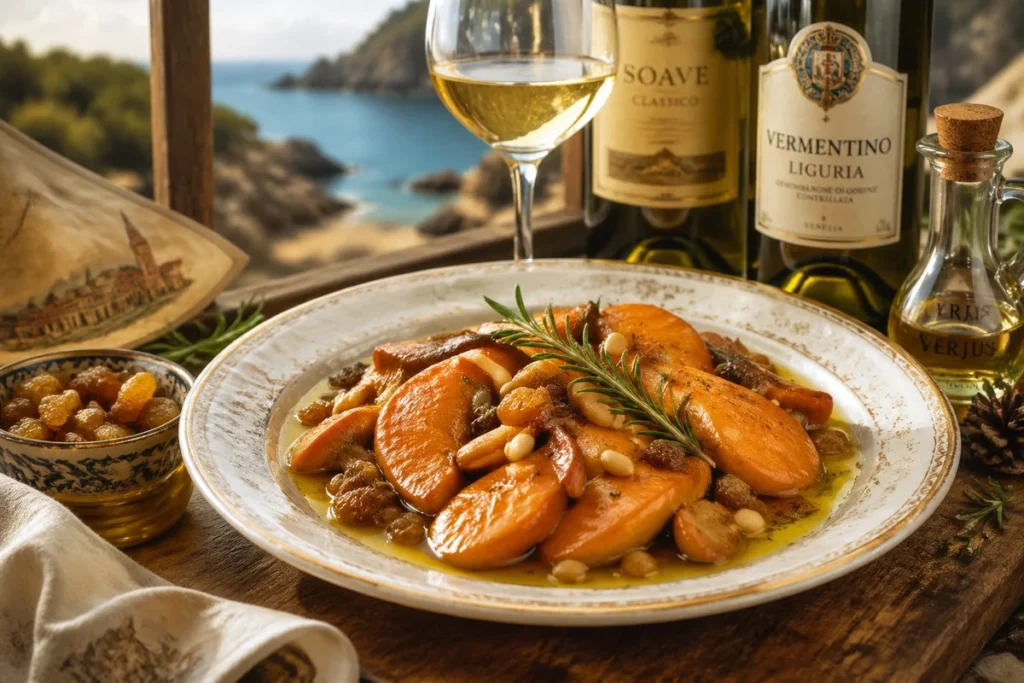
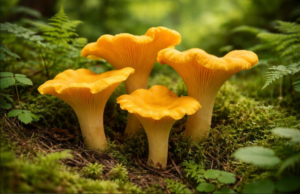
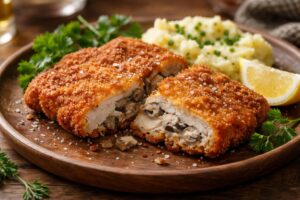
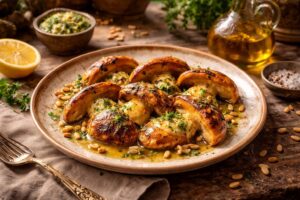
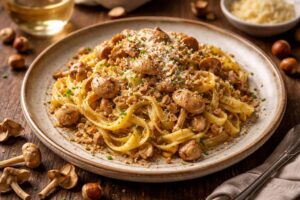
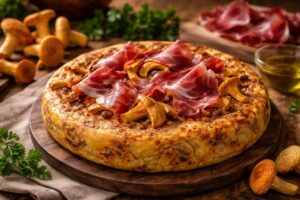
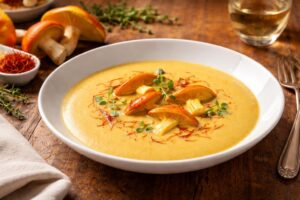
Elite Venetian heritage meets Azure Coast luxury in this Michelin-standard Amanita caesarea pine nut confit for ultimate perfection and umami.
Sensational Azure Coast Luxury Venetian Merchant Amanita and Pine Nut Confit for Ultimate Perfection
Why This Recipe Works
The foundation of this Venetian masterpiece lies in Pinene-Glutamate Synergy. The Caesar mushroom (Amanita caesarea) possesses specific aromatic compounds that resonate at a molecular level with the monoterpenes (pinenes) found in pine nuts. Through the process of Lipid-Thermal Confit, we use high-quality olive oil as a mediator that extracts fat-soluble pigments from the mushroom and locks them into the fatty structure of the nuts. This method prevents the evaporation of delicate esters while creating an Oleic-Umami suspension. The professional value of the recipe lies in the slow infusion, which transforms the crunchy texture of the pine nuts into a buttery extension of the mushroom's soft core. The result is a Michelin-standard experience that activates the palate's "thickness" receptors, achieving total culinary perfection.
The Historical Prelude
In the 16th century, Venice was not just a city, but the most powerful trading center in Western Europe, connecting the East with the royal courts of the Mediterranean. Venetian Merchants were the architects of culinary prestige, bringing rare spices, nuts, and sugar that changed the face of European gastronomy. Amanita caesarea, inherited as the "imperial mushroom" from Rome, was found in abundance in the coastal forests of the Adriatic and the Azure Coast, but it was in Venice that it received its "merchant" brilliance.
Legends tell of lavish banquets in palaces along the Grand Canal, where the Caesar mushroom was prepared in the form of a "confit"—a method that allowed precious mushrooms to be preserved and transported to elite homes. The addition of pine nuts was a symbol of Azure Coast Luxury—a union between the wild nature of the coast and the refined taste of the lagoon. This dish is the embodiment of Sensational Woodland Authenticity, viewed through the prism of Venetian wealth; it tells a story of ships loaded with gold, spices, and the forest's rarest botanical treasures. Serving it today is an act of homage to the Age of Discovery, where every product on the plate held the status of currency.
Time
Difficulty
Calories
Type
40 Minutes
Intermediate
290 kcal
Venetian Confit
Master Recipe (1:10 Rule)
500g fresh Amanita caesarea (or 50g dried/rehydrated Caesar mushroom)
80g Elite Pine Nuts
150ml Extra Virgin Olive Oil (cold-pressed)
20ml White Verjus or white balsamic vinegar for balance
1 sprig of fresh rosemary (for infusion)
Fleur de Sel and freshly ground white pepper
Small amount of golden raisins, soaked in liqueur (optional for authentic Venetian style)
Master’s Hidden Steps
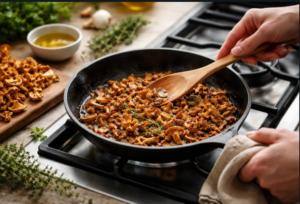
The Low-Impact Lipid Saturation: Sliced into thick cubes, the mushrooms are submerged in olive oil at a temperature no higher than 70°C. This is an Essence Preservation Strategy, allowing umami molecules to dissolve slowly without destroying the delicate cellular structure of Amanita caesarea.
The Pine Nut Toasting Threshold: The pine nuts are added to the oil only when the mushrooms have become translucent. They must "toast" directly in the mushroom infusion until they reach an amber color. This activates the Pinene-Glutamate Synergy within the pan itself.
The Verjus Brightening Finish: Just before serving, the verjus is added. Its acidity acts as a "flavor spotlight," illuminating the heavy umami notes and cutting through the lipid layer, leaving the palate refreshed.
The Umami Secret:Amanita caesarea contains a high concentration of free glutamates, which bind with the linoleic acid in pine nuts. This combination creates the Pure Umami effect, perceived by the brain as an exceptionally "expensive" and complex flavor, characteristic of elite merchant tables of the Renaissance.
To honor the Venetian heritage, choose a wine with a rich history. A Soave Classico (Vintage 2021/2022) with its volcanic minerality and almond finish will perfectly complement the pine nuts. Alternatively, a Vermentino from Liguria will add salty sea notes that emphasize the Azure Coast Luxury character of the dish, turning it into a true mycological triumph.
Imperial Lexicon: Multi-Language Names for Amanita caesarea
The Caesar's Mushroom has a linguistic heritage as rich as its flavor. From the Roman "Boletus" to modern dialects, here is the most comprehensive regional guide for global identification:
To provide the best experiences, we use technologies like cookies to store and/or access device information. Consenting to these technologies will allow us to process data such as browsing behavior or unique IDs on this site. Not consenting or withdrawing consent, may adversely affect certain features and functions.
Functional
Always active
The technical storage or access is strictly necessary for the legitimate purpose of enabling the use of a specific service explicitly requested by the subscriber or user, or for the sole purpose of carrying out the transmission of a communication over an electronic communications network.
Preferences
The technical storage or access is necessary for the legitimate purpose of storing preferences that are not requested by the subscriber or user.
Statistics
The technical storage or access that is used exclusively for statistical purposes.The technical storage or access that is used exclusively for anonymous statistical purposes. Without a subpoena, voluntary compliance on the part of your Internet Service Provider, or additional records from a third party, information stored or retrieved for this purpose alone cannot usually be used to identify you.
Marketing
The technical storage or access is required to create user profiles to send advertising, or to track the user on a website or across several websites for similar marketing purposes.