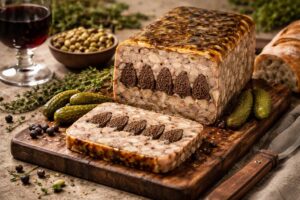
A technical study of aromatically dense cross-pollination and the stabilization of porcine-bound colloids. This post analyzes the synergy between Tuber melanosporum and fungal polysaccharides.
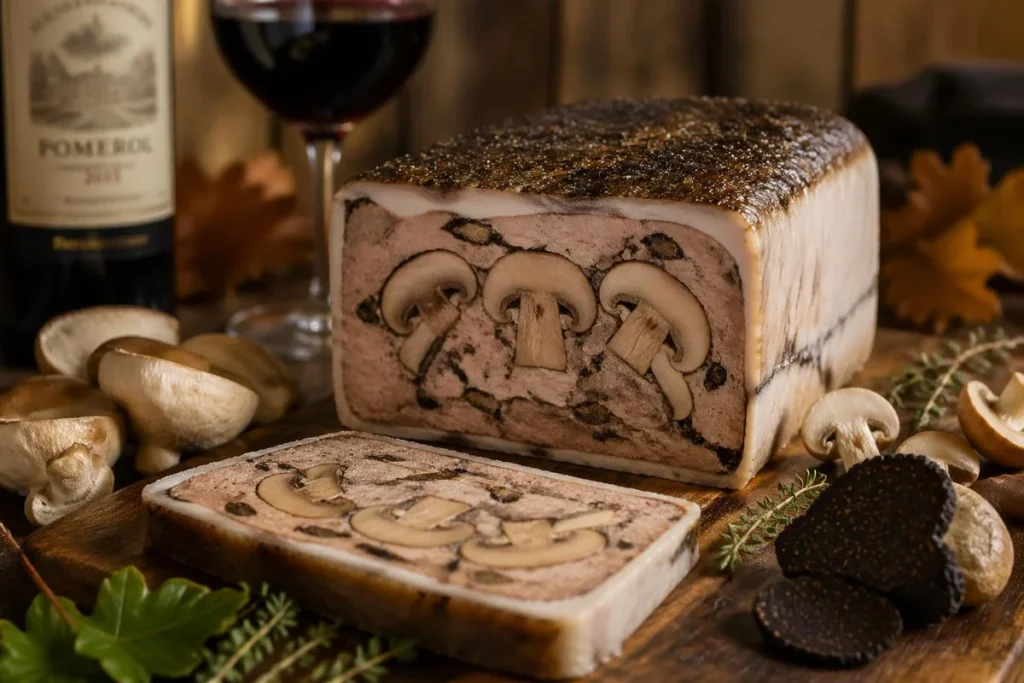
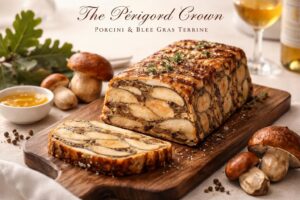
Perigord Black Truffle and Fairy Ring Terrine
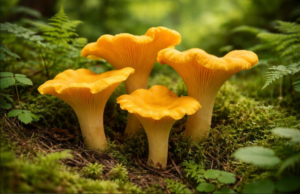
In the gastronomic heart of the Périgord region, the "terrine" is the ultimate expression of preservation as an art form. While the Tuber melanosporum (Black Winter Truffle) is the undisputed sovereign of this terroir, the integration of Marasmius oreades (Fairy Ring mushroom) provides a necessary mycological counterpoint. This dish is a technical exercise in managing two vastly different aromatic profiles: the musk-heavy, sulfuric depth of the truffle and the light, almond-scented umami of the meadow mushroom.
The Culinary Physics of This Dish
The core of this preparation is the lipid-phase stabilization of volatile aromatics. Terrines rely on a "farce" (forcemeat) composed of proteins and fats. During the slow-cooking process in a bain-marie, the lipids act as a solvent. The truffle's primary aromatic compound, dimethyl sulfide, is highly volatile; the polysaccharides in the Fairy Ring mushrooms act as a molecular anchor, slowing down the evaporation of these scents.
Furthermore, the chitinous texture of the Fairy Ring caps remains firm after the 3-hour cooking process, providing a structural "snap" that contrasts with the buttery, emulsified fats of the pork. This ensures that every slice of the terrine offers both a physical and chemical complexity that evolves on the palate.
Terroir Narrative
Périgord is a land of oak forests and limestone meadows—the "Périgord Noir." Here, the forager's year is divided between the hunt for subterranean truffles and the gathering of mushrooms from the grassy clearings above. This recipe represents a vertical slice of the Dordogne terroir, bringing together the "black gold" from beneath the roots and the "fairy circles" from the surface grass. It is a dish that requires the patience of a French "charcutier" and the precision of a molecular biologist.
Prep Time
Cook Time
Complexity
Calories
Region
60 min
3 hours
Grand Officier
340 kcal
Périgord, France
Master Recipe (1:10 Rule)
Following the 1:10 rule of charcuterie, the aromatically potent mushrooms and truffles must compose exactly 10% of the total mass of the meat farce to ensure a refined balance of flavor without masking the meat's quality.
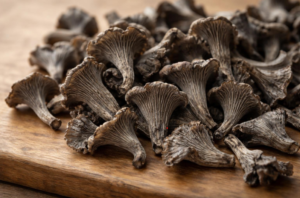
200 g Fresh Fairy Ring Mushroom caps (Marasmius oreades)
30 g Black Perigord Truffle (Tuber melanosporum), finely minced
500 g Pork Shoulder (échine), ground
250 g Pork Fatback (gras de bardière), ground
50 ml Cognac or Armagnac
15 g Sel Nitrité (Curing salt)
2 g Quatre Épices (French spice blend)
100 g Thinly sliced Lard (for lining the terrine)
The Technique
Maceration: Combine the ground meats with the salt, spices, Cognac, and minced truffles. Allow the mixture to cure in the refrigerator for 24 hours. This allows the truffle essence to permeate the lipids.
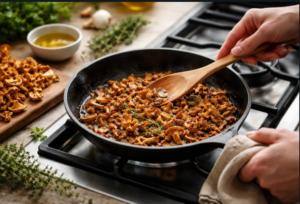
The Mushroom Preparation: Sauté the Fairy Ring mushrooms in a dry pan until their water is released, then allow them to cool completely. They must be added to the meat "cold" to maintain the emulsion.
Assembly: Line a ceramic terrine mold with the sliced lard. Pack half the meat mixture into the mold. Create a central layer of the whole mushroom caps, then cover with the remaining meat.
Bain-Marie Cooking: Cover the terrine and place in a water bath. Bake at 140°C until the internal temperature reaches precisely 68°C. This ensures the fats remain emulsified.
Pressing: Once cooked, place a weight on top of the terrine and refrigerate for 48 hours before slicing. This "press" step is what gives the terrine its professional, dense texture.
"In the Périgord, the truffle is the king, but the Fairy Ring mushroom is the advisor. One provides the power, the other provides the wisdom of the meadows." – Charcutier de Tradition, Sarlat
The Umami Profile
The umami profile of Marasmius oreades in this terrine is uniquely persistent. Because the mushroom caps are protected by the fat matrix during the long cook, their guanylate content is perfectly preserved. When eaten with the earthy truffle, the result is a complex, multi-layered savory experience. Pure Umami is proud to offer professional-grade wild mushrooms, including Porcini, Caesar's mushroom, Chanterelle, Gray Chanterelle, and Morel, for your most demanding charcuterie projects.
A wine of equal stature and earthiness is required. A Pomerol or an aged Cahors (Malbec) provides the dark fruit and truffle-like secondary notes that harmonize with the terrine. The wine's tannins will cut through the rich pork fat, while its complexity matches the mycological fusion of the dish.
The Etymological Chronicle
In the French tradition (Post A), the name Marasmius oreades carries a mythological weight. The specific epithet "oreades" refers to the Oreads, the nymphs of the mountains and meadows in Greek mythology. It was believed that the mushrooms grew where these nymphs danced in circles. In the French countryside, foragers still refer to these spots as "Ronds de fées" (Fairy Rings), a poetic acknowledgment of the species' mysterious and repeating growth patterns.
To provide the best experiences, we use technologies like cookies to store and/or access device information. Consenting to these technologies will allow us to process data such as browsing behavior or unique IDs on this site. Not consenting or withdrawing consent, may adversely affect certain features and functions.
Functional
Always active
The technical storage or access is strictly necessary for the legitimate purpose of enabling the use of a specific service explicitly requested by the subscriber or user, or for the sole purpose of carrying out the transmission of a communication over an electronic communications network.
Preferences
The technical storage or access is necessary for the legitimate purpose of storing preferences that are not requested by the subscriber or user.
Statistics
The technical storage or access that is used exclusively for statistical purposes.The technical storage or access that is used exclusively for anonymous statistical purposes. Without a subpoena, voluntary compliance on the part of your Internet Service Provider, or additional records from a third party, information stored or retrieved for this purpose alone cannot usually be used to identify you.
Marketing
The technical storage or access is required to create user profiles to send advertising, or to track the user on a website or across several websites for similar marketing purposes.