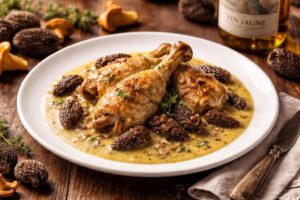
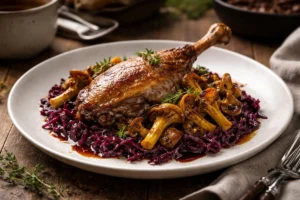
Master the art of the Atlantic coast grill with this (Laetiporus sulphureus) preparation, featuring a classic Bordeaux-style shallot confit and professional searing techniques to unlock deep, savory wood-fired notes.
Bordeaux Shallot Grilled Chicken Woods
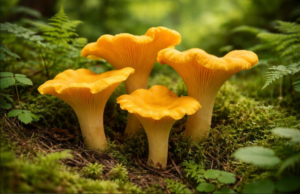
In the prestigious vineyards of Bordeaux, where the gravelly soil meets the ancient oak forests of the Landes, culinary tradition often revolves around the open flame. This preparation treats Laetiporus sulphureus—the "Chicken of the Woods"—with the same technical rigor as a prime Entrecôte marchand de vin. By utilizing the intense heat of the grill and a traditional shallot reduction, we transform this vibrant polypore into a gourmet centerpiece worthy of the region's finest vintages.
The Culinary Physics of This Dish
This recipe focuses on Pyrolytic Aromatization and Tannin Interaction. When Laetiporus sulphureus is subjected to high-velocity dry heat, the external chitinous layers undergo rapid carbonization, creating a complex smoky crust. Simultaneously, the shallot reduction, rich in anthocyanins and concentrated wine tannins, creates a molecular bond with the mushroom's proteins. The acidity of the wine acts as a solvent, drawing out the deeper umami compounds within the fungal matrix that are otherwise inaccessible at lower temperatures.
Terroir Narrative: The Edge of the Atlantic
The Bordeaux region is a tapestry of maritime influence and dense woodland. Foragers often find the most succulent Laetiporus on the massive oaks that line the vineyards of the Médoc. The mushroom's natural sulfurous undertones are a perfect match for the iron-rich shallots of the region. This dish is a tribute to the *vigneron* lifestyle—simple, fire-driven, and focused on the deep, concentrated flavors of the land.
Quick Info Bar
Attribute
Specification
Prep Time
35 Minutes
Cook Time
15 Minutes
Complexity
Grand Officier
Calories
280 kcal
Region
Bordeaux, France
Master Recipe (1:10 Rule)
The 1:10 ratio of shallot confit to mushroom mass ensures the aromatics enhance rather than overpower the grilled notes.
500gLaetiporus sulphureus (cut into large "steaks")
50g Traditional French Shallots, finely minced
150ml Dry Red Wine (preferably a Merlot-dominant blend)
30ml Clarified Butter (Beurre Clarifié)
5g Coarse Sea Salt (Fleur de Sel de l'Atlantique)
2g Black Peppercorns, freshly cracked (Mignonette)
10g Bone Marrow or high-quality Beef Tallow (optional, for authentic Bordelaise finish)
The Technique
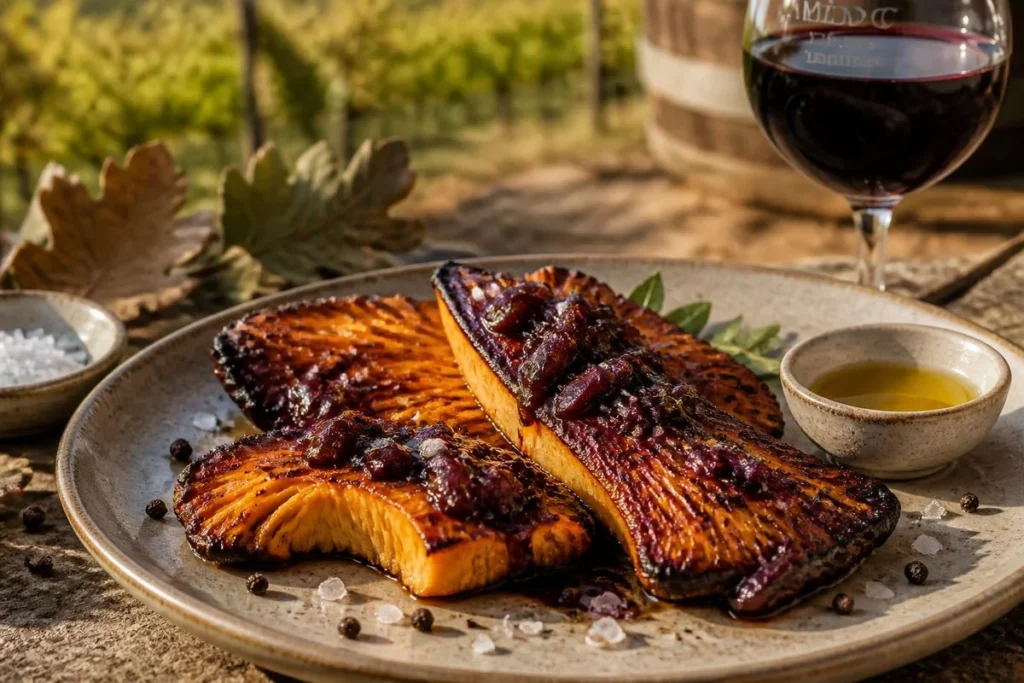
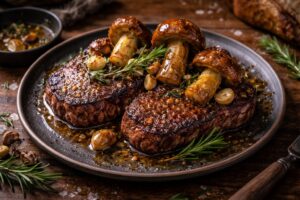
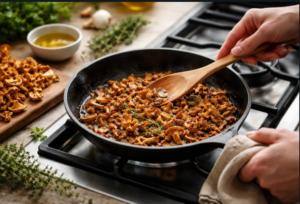
The preparation begins with the Shallot Reduction. Sauté the shallots in clarified butter until translucent, then deglaze with the red wine. Reduce the liquid by 90% until it reaches a *glace* consistency. For the mushroom, we employ Direct-Heat Grilling. Brush the Laetiporus steaks with a thin film of oil and sear over white-hot coals for 4 minutes per side.
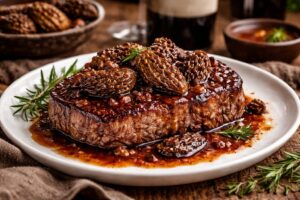
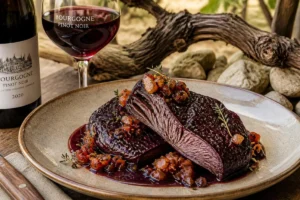
As the mushroom reaches an internal temperature of 75°C, apply the Bordelaise Glaze. Brush the shallot-wine reduction over the charred surface and allow it to tack up for 30 seconds. This creates a sticky, savory lacquer that contrasts with the smoky, charred edges of the mushroom fronds.
Shop Integration
While the robust Bordeaux style highlights the Laetiporus, our curated shop collection offers the very best of mycological diversity. You can explore the rich, nutty profile of our Porcini (Boletus edulis) or the delicate texture of the Fairy Ring Mushroom (Marasmius oreades). We also offer the prestigious Caesar's Mushroom (Amanita caesarea), Grey Chanterelle (Craterellus cinereus), and the versatile Chanterelle (Cantharellus cibarius). For a truly unique culinary experience, don't miss our seasonal Morels (Morchella conica).
The Umami Profile
The umami intensity in this dish is amplified through Maillard Concentration. The charring of the mushroom's surface creates new flavor compounds that mimic the savory profile of roasted beef. When these are combined with the concentrated quercetin and sulfur compounds found in shallots, the result is a deep, resonant umami that perfectly pairs with high-tannin beverages.
Sommelier’s Choice
Naturally, a dish of this caliber demands a **Left Bank Bordeaux (Cabernet Sauvignon-based)**. The wine's firm structure and notes of graphite, cedar, and dark fruit provide a sophisticated bridge to the smoky, grilled notes of the mushroom and the iron-rich shallot reduction.
THE ETYMOLOGICAL CHRONICLE
French: In the Gascogne region, it is often called Poulet de Chêne, emphasizing its preference for oak hosts and its poultry-like meat.
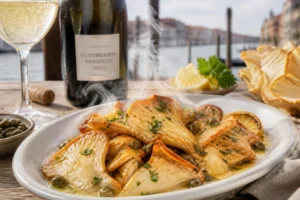
Italian: Italian mycologists in the Veneto region refer to it as Poliporo sulfureo, acknowledging its sulfur-like yellow hue in its younger stages.
German: The name Gemeiner Schwefelporling is standard in German-speaking territories, highlighting its common appearance in temperate forests.
Spanish: Known as Seta de pollo, it is frequently used in northern Spain as a meat substitute in rustic mountain *asados*.
Pure Umami | Mycological Research & Culinary Arts | 2026
To provide the best experiences, we use technologies like cookies to store and/or access device information. Consenting to these technologies will allow us to process data such as browsing behavior or unique IDs on this site. Not consenting or withdrawing consent, may adversely affect certain features and functions.
Functional
Always active
The technical storage or access is strictly necessary for the legitimate purpose of enabling the use of a specific service explicitly requested by the subscriber or user, or for the sole purpose of carrying out the transmission of a communication over an electronic communications network.
Preferences
The technical storage or access is necessary for the legitimate purpose of storing preferences that are not requested by the subscriber or user.
Statistics
The technical storage or access that is used exclusively for statistical purposes.The technical storage or access that is used exclusively for anonymous statistical purposes. Without a subpoena, voluntary compliance on the part of your Internet Service Provider, or additional records from a third party, information stored or retrieved for this purpose alone cannot usually be used to identify you.
Marketing
The technical storage or access is required to create user profiles to send advertising, or to track the user on a website or across several websites for similar marketing purposes.