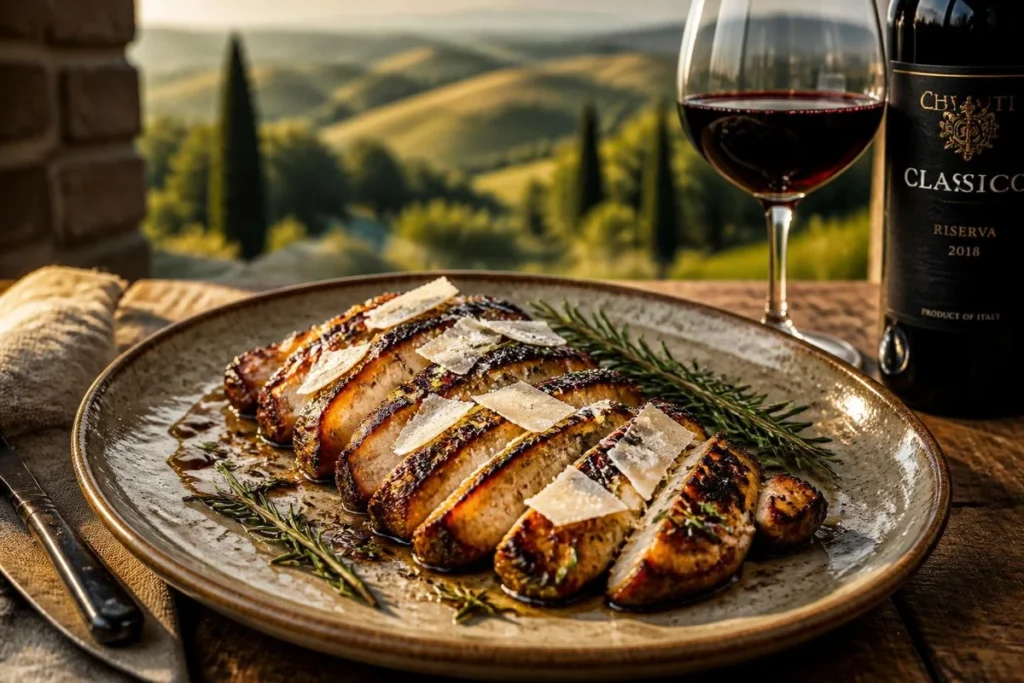
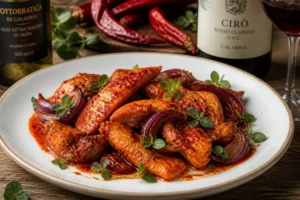
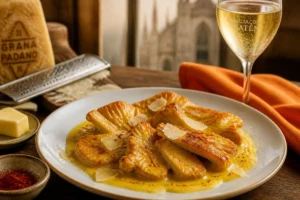
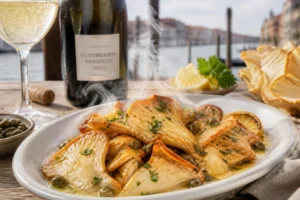
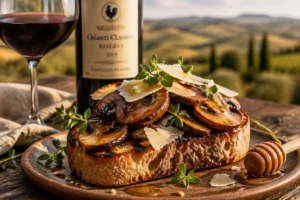
Indulge in the opulent flavors of Central Italy with this (Laetiporus sulphureus) centerpiece, featuring a luxurious truffle infusion and professional Tagliata slicing techniques to elevate the mushroom's dense, savory architecture.
Tuscan Truffle Chicken of the Woods
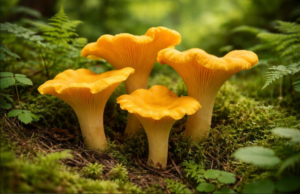
In the rolling hills of Tuscany, where the forest floor yields both the legendary truffle and the vibrant Laetiporus sulphureus, a culinary synergy is born. This preparation treats the "Chicken of the Woods" with the reverence of a prime *Bistecca*, utilizing the mushroom's remarkable capacity to absorb complex lipids. By introducing black truffle essence through a controlled infusion, we elevate this foraged polypore to the heights of Italian Alta Cucina.
The Culinary Physics of This Dish
This recipe utilizes Molecular Lipophilic Absorption. The fibrous fronds of Laetiporus sulphureus act as a biological sponge due to their micro-porous structure. When exposed to truffle-infused fats at a temperature of 55°C, the mushroom's fibers expand, allowing the aromatic thioether compounds of the truffle to move from the lipid carrier into the fungal matrix. This "flavor-locking" ensures that the deep, earthy notes of the truffle are present in every bite, rather than just on the surface.
Terroir Narrative: The Tuscan Woods
Tuscany is a land defined by its ancient woodlands—the *Macchia*. Here, the Laetiporus thrives on aged chestnut and oak, soaking up the mineral-rich essence of the soil. Traditionally, Tuscan cuisine is povera in origin but nobile in execution. This dish follows that philosophy, taking a widely available foraged mushroom and refining it through the addition of truffle and high-quality olive oil, reflecting the true spirit of the Florentine table.
Quick Info Bar
Attribute
Specification
Prep Time
50 Minutes
Cook Time
20 Minutes
Complexity
Grand Officier
Calories
340 kcal
Region
Tuscany, Italy
Master Recipe (1:10 Rule)
The 1:10 ratio of truffle-infused lipid to mushroom mass ensures an assertive but balanced flavor profile.
500gLaetiporus sulphureus (thick, meaty fronds)
50ml Cold-pressed Tuscan Olive Oil
10ml Black Truffle Oil (or 15g fresh shaved Tuber melanosporum)
5g Flaked Sea Salt
2 sprigs Fresh Rosemary
20g Parmigiano-Reggiano (aged 24 months, for finishing)
15ml Aged Balsamic Vinegar of Modena
The Technique
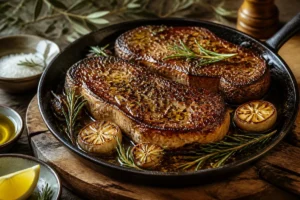
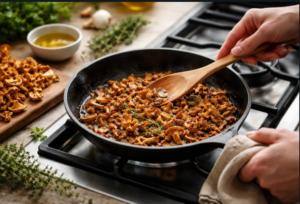
We begin with a Vacuum-Compression Infusion (if equipment is available) or a slow-heat marination. The mushroom fronds are coated in the truffle-oil blend and held at room temperature to allow the aromatics to penetrate. Next is the **High-Heat Sear**. Using a cast-iron pan, we press the fronds down to maximize surface contact, achieving a deep mahogany crust—the Maillard effect in full force.
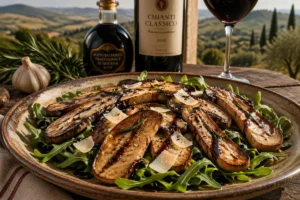
The mushroom is then finished with Aromatized Basting (Arrosé), where hot rosemary-infused oil is spooned over the fronds. Finally, the mushroom is rested and sliced into 1cm strips according to the Tagliata technique, then topped with shaved Parmesan and a drizzle of balsamic for a perfect acid-fat balance.
Shop Integration
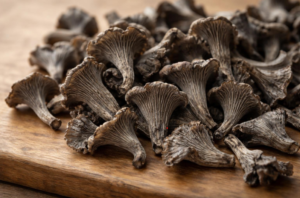
While the truffle brings out the best in Laetiporus, our shop offers a diverse selection of wild species to broaden your culinary horizons. You may explore the deep flavors of our Porcini (Boletus edulis) or the delicate, almond-like notes of the Fairy Ring Mushroom (Marasmius oreades). We also offer the regal Caesar's Mushroom (Amanita caesarea), Grey Chanterelle (Craterellus cinereus), and the classic Chanterelle (Cantharellus cibarius). For the most demanding gourmet, our Morels (Morchella conica) are a seasonal treasure.
The Umami Profile
The umami intensity of this dish is a result of Synergistic Nucleotides. The glutamate-rich Laetiporus is paired with the guanylates found in truffles and the natural umami boosters in aged Parmigiano-Reggiano. This combination creates a "flavor explosion" that lingers significantly longer on the palate than any single ingredient could achieve on its own.
Sommelier’s Choice
A dish of this magnitude requires a wine with structure and soul. We recommend a Chianti Classico Riserva. The wine's firm tannins and notes of dried cherry and tobacco harmonize beautifully with the truffle's earthiness and the savory crust of the seared mushroom.
THE ETYMOLOGICAL CHRONICLE
Italian: In Tuscan dialects, you may find it referred to as Galla di Quercia, acknowledging its frequent growth on oak trees throughout the region.
French: French mycologists label it Létipore soufré, emphasizing its brilliant color and its status as a premier edible polypore.
German: Known as Schwefelporling, the name is a literal translation of "sulfur polypore," used widely across German-speaking Alpine regions.
Spanish: In Spain, it is often called Políporo del pollo, a direct reference to the "Chicken of the Woods" moniker common in English-speaking territories.
Pure Umami | Mycological Research & Culinary Arts | 2026
To provide the best experiences, we use technologies like cookies to store and/or access device information. Consenting to these technologies will allow us to process data such as browsing behavior or unique IDs on this site. Not consenting or withdrawing consent, may adversely affect certain features and functions.
Functional
Always active
The technical storage or access is strictly necessary for the legitimate purpose of enabling the use of a specific service explicitly requested by the subscriber or user, or for the sole purpose of carrying out the transmission of a communication over an electronic communications network.
Preferences
The technical storage or access is necessary for the legitimate purpose of storing preferences that are not requested by the subscriber or user.
Statistics
The technical storage or access that is used exclusively for statistical purposes.The technical storage or access that is used exclusively for anonymous statistical purposes. Without a subpoena, voluntary compliance on the part of your Internet Service Provider, or additional records from a third party, information stored or retrieved for this purpose alone cannot usually be used to identify you.
Marketing
The technical storage or access is required to create user profiles to send advertising, or to track the user on a website or across several websites for similar marketing purposes.