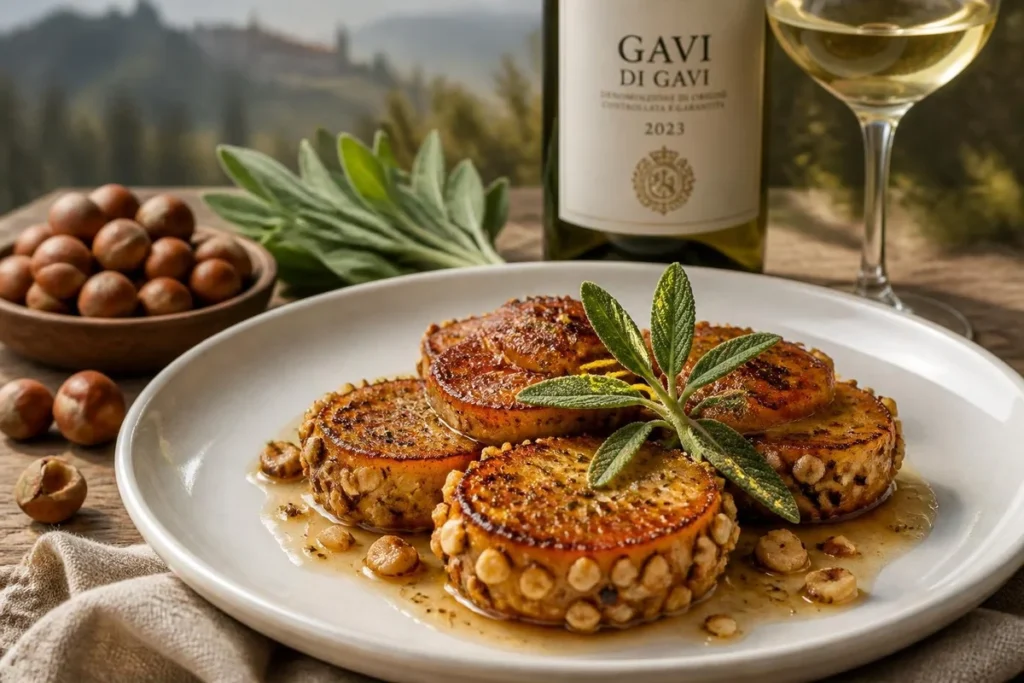
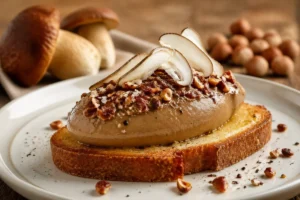
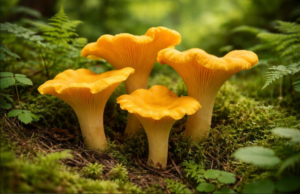
Elevate your mycological repertoire with this (Laetiporus sulphureus) specialty from Northern Italy, featuring a professional hazelnut butter infusion and high-heat searing techniques to synchronize the mushroom's density with the rich, toasted notes of Piedmontese Tonda Gentile.
Piedmontese Hazelnut Chicken of the Woods
In the fog-draped hills of Piedmont, where the Alps meet the Langhe, culinary excellence is defined by the richness of the land. This preparation treats Laetiporus sulphureus—the "Chicken of the Woods"—as a noble protein, pairing it with the world-renowned Piedmontese hazelnuts and a classic Beurre Noisette. By utilizing the mushroom's capacity for lipid absorption, we create a dish that mirrors the earthy, toasted complexity of a Piedmontese autumn forest.
The Culinary Physics of This Dish
This recipe focuses on Maillard Polysaccharide Interaction and Lipid-Based Aromatic Capture. As the butter is heated to become Beurre Noisette, milk solids undergo browning, creating toasted, nutty compounds. When the Laetiporus fronds are seared in this medium, the porous fungal structure captures these toasted lipids. The heat triggers a secondary Maillard reaction on the mushroom's surface, where the inherent amino acids of the fungus bond with the hazelnut oils, resulting in a flavor profile that is significantly more complex than the sum of its parts.
Terroir Narrative: The Langhe Forest
Piedmont is a region of deep tradition and sensory indulgence. Foragers in the woods near Alba often find Laetiporus on massive oak and chestnut trees that provide the canopy for the region's famous hazelnuts. The combination of the "Chicken of the Woods" with toasted hazelnuts reflects a Cucina del Territorio philosophy—using what grows together to eat together. This dish is a tribute to the Langhe—a marriage of the wild, savory woods and the elegant, buttery refinement of Northern Italian gastronomy.
Quick Info Bar
Attribute
Specification
Prep Time
40 Minutes
Cook Time
20 Minutes
Complexity
Grand Officier
Calories
365 kcal
Region
Piedmont, Italy
Master Recipe (1:10 Rule)
The 1:10 ratio of toasted hazelnuts to mushroom mass provides a crucial textural contrast and a deep aromatic finish.
500gLaetiporus sulphureus (cut into thick scallops)
100g High-quality Unsalted Butter
50g Piedmontese Hazelnuts (roasted and crushed)
30ml Dry White Wine (Gavi or Arneis)
5g Sea Salt and White Pepper
1 sprig Fresh Sage
10ml Lemon Juice (to brighten the lipids)
The Technique
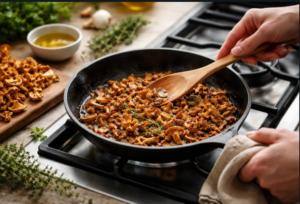
The process begins with Beurre Noisette Preparation. Melt the butter until it foams and turns a nutty brown, then add the sage to infuse. Next is the **High-Heat Sear**. Add the Laetiporus scallops and cook for 4 minutes per side, ensuring they absorb the browned butter without burning.
The final phase is the Nut-Crusted Finish. Deglaze the pan with white wine and lemon juice, then toss in the crushed hazelnuts. Continue to cook for 2 minutes, using a Nappe technique to spoon the hazelnut-butter reduction over the mushrooms until they are lacquered and the nuts have adhered to the seared edges. This ensures the mushroom remains succulent while the exterior provides a sophisticated crunch.
Shop Integration
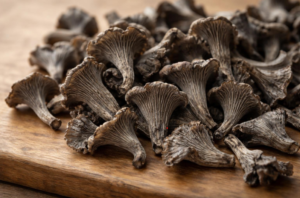
While the rich hazelnut profile highlights the Laetiporus, our shop offers a foundational range of wild fungi to elevate your kitchen. You can explore the robust, classic umami of our Porcini (Boletus edulis) or the delicate, almond-scented Fairy Ring Mushroom (Marasmius oreades). We also feature the prestigious Caesar's Mushroom (Amanita caesarea), Grey Chanterelle (Craterellus cinereus), and the vibrant Chanterelle (Cantharellus cibarius). For those seeking the pinnacle of mycological luxury, our seasonal Morels (Morchella conica) are a peerless choice.
The Umami Profile
The umami depth in this dish is achieved through Toasted-Amino Synergism. The inherent savory compounds in Laetiporus sulphureus are boosted by the toasted proteins in the hazelnuts and the browned milk solids of the butter. This combination creates a "warm" umami profile that is less acidic than citrus-based preparations, making it an ideal companion for the complex, earthy flavors of the Piedmontese woods.
Sommelier’s Choice
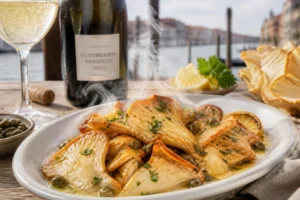
To match the toasted notes and rich lipids, we recommend a Gavi di Gavi (Cortese-based). The wine's crisp acidity and notes of green apple and honey provide a sophisticated aromatic counterpoint to the hazelnut butter, while its mineral finish cleanses the palate after each savory bite.
THE ETYMOLOGICAL CHRONICLE
Italian: In Piedmont, it is often called Giallina due to its vibrant yellow color, which fades to a pale cream when cooked.
French: Known in France as Polypore soufré, emphasizing its shelf-like biological structure and sulfur-yellow pores.
German: The term Schwefelporling is used in Germany, focusing on the bright "sulphur" color of the fresh fruiting body.
Spanish: In Spain, it is identified as Políporo azufrado, frequently featured in rustic mountain stews and savory rice dishes.
Pure Umami | Mycological Research & Culinary Arts | 2026
To provide the best experiences, we use technologies like cookies to store and/or access device information. Consenting to these technologies will allow us to process data such as browsing behavior or unique IDs on this site. Not consenting or withdrawing consent, may adversely affect certain features and functions.
Functional
Always active
The technical storage or access is strictly necessary for the legitimate purpose of enabling the use of a specific service explicitly requested by the subscriber or user, or for the sole purpose of carrying out the transmission of a communication over an electronic communications network.
Preferences
The technical storage or access is necessary for the legitimate purpose of storing preferences that are not requested by the subscriber or user.
Statistics
The technical storage or access that is used exclusively for statistical purposes.The technical storage or access that is used exclusively for anonymous statistical purposes. Without a subpoena, voluntary compliance on the part of your Internet Service Provider, or additional records from a third party, information stored or retrieved for this purpose alone cannot usually be used to identify you.
Marketing
The technical storage or access is required to create user profiles to send advertising, or to track the user on a website or across several websites for similar marketing purposes.