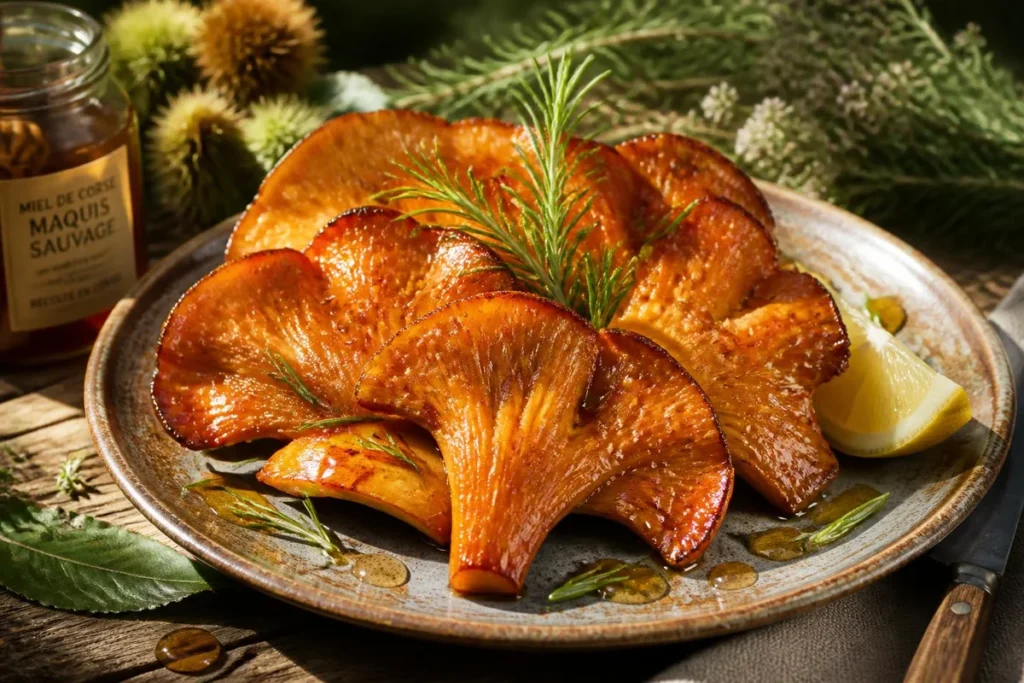
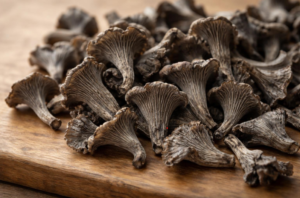
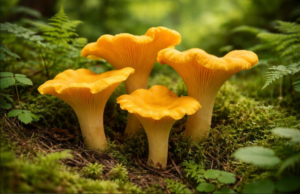
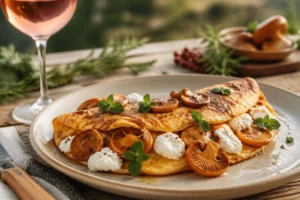
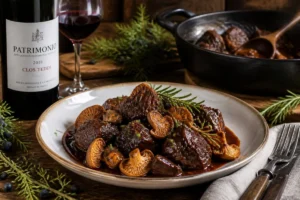
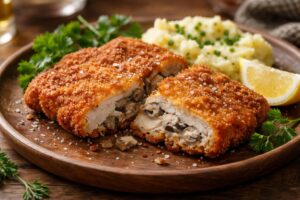
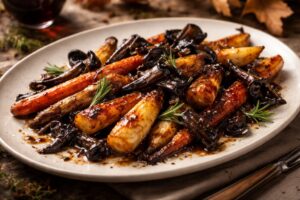
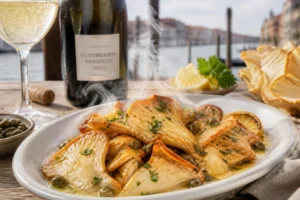
Experience the wild, aromatic essence of the Mediterranean with this (Laetiporus sulphureus) specialty, featuring a sophisticated honey-rosemary glaze and professional roasting techniques to harmonize the mushroom's meat-like texture with the fragrant Maquis of Corsica.
Corsican Honey Rosemary Chicken Woods
On the "Isle of Beauty," where the scent of the Maquis—the dense, aromatic shrubland—drifts from the mountains to the sea, culinary tradition is defined by wild, untamed flavors. This preparation treats Laetiporus sulphureus, the "Chicken of the Woods," with the technical rigor of a classic Mediterranean roast. By utilizing Corsica's world-renowned wild honey and resinous rosemary, we create a dish that mirrors the island's rugged landscape and ancient foraging heritage.
The Culinary Physics of This Dish
This recipe centers on Thermic Fructose Caramelization and Essential Oil Infusion. The high fructose content of Corsican wild honey facilitates a rapid Maillard-like reaction at lower temperatures, creating a dense, savory lacquer on the mushroom's surface. Simultaneously, the heat triggers the release of 1,8-cineole and alpha-pinene from the rosemary needles. These resinous compounds penetrate the fungal matrix through the lipid carrier (olive oil), providing a structural flavor balance to the mushroom's inherent savory glutamates.
Terroir Narrative: The Fragrant Isle
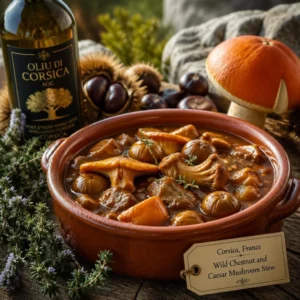
Corsica is a land of vertical forests and granite peaks. Foragers in the interior mountains often find Laetiporus on the massive, centuries-old chestnut trees that have sustained the island's population for generations. The use of honey in this dish is a tribute to the Miel de Corse AOP, a product of bees foraging on wild herbs. This dish is a sensory map of the island—a marriage of the deep, earthy forest and the sun-drenched, aromatic flora of the Mediterranean coastline.
Quick Info Bar
Attribute
Specification
Prep Time
40 Minutes
Cook Time
25 Minutes
Complexity
Grand Officier
Calories
315 kcal
Region
Corsica, France
Master Recipe (1:10 Rule)
Adhering to the 1:10 ratio of honey-lipid glaze to mushroom weight ensures a perfect lacquer without overwhelming the Laetiporus with excessive sweetness.
500gLaetiporus sulphureus (cut into thick, uniform fronds)
40ml Extra Virgin Olive Oil
15ml Corsican Wild Honey (Miel de Corse)
10g Fresh Rosemary, finely chopped
5g Sea Salt (Fleur de Sel)
10ml Lemon juice (to balance the fructose)
2g Dried chili flakes (for a subtle Corsican "kick")
The Technique
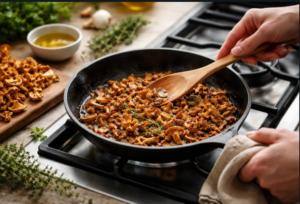
The process begins with the Infused Oil Searing. Heat the olive oil with half of the rosemary until fragrant, then sear the Laetiporus fronds over medium-high heat until they are golden and slightly charred. Next is the Glazing Phase—whisk the honey, lemon juice, and remaining rosemary together.
Lower the heat and add the glaze to the pan, using the Aromatic Arrosé technique: continuously spooning the bubbling honey mixture over the mushroom fronds as it reduces into a thick, sunset-colored syrup. The final 5 minutes of roasting in a hot oven ensures the glaze is fully set and the internal proteins of the mushroom are tender, resulting in a dish that is crispy, sticky, and deeply savory.
Shop Integration
While the honeyed rosemary profile captures the Corsican spirit, our shop offers a foundational range of wild fungi to expand your culinary horizons. You can explore the robust, classic umami of our Porcini (Boletus edulis) or the delicate, almond-scented Fairy Ring Mushroom (Marasmius oreades). We also feature the prestigious Caesar's Mushroom (Amanita caesarea), Grey Chanterelle (Craterellus cinereus), and the vibrant Chanterelle (Cantharellus cibarius). For those seeking the pinnacle of mycological luxury, our seasonal Morels (Morchella conica) are a peerless choice.
The Umami Profile
The umami intensity in this dish is achieved through Resinous-Savory Synergy. The inherent savory compounds in Laetiporus sulphureus are boosted by the floral and forest-noted sugars of the honey. This combination, reinforced by the high-heat caramelization, creates a "long-tail" flavor experience that mimics the complexity of roasted game meats found in the Corsican interior, such as wild boar or mountain goat.
Sommelier’s Choice
To match the resinous herbs and sweet-savory glaze, we recommend a Patrimonio Rouge (Nielluccio-based). This Corsican red wine possesses a rugged tannic structure and notes of sun-baked earth and red fruit that perfectly bridge the honeyed glaze and the smoky, roasted essence of the mushroom.
THE ETYMOLOGICAL CHRONICLE
French: In the Corsican mountains, it is often referred to as Polypore soufré, emphasizing its brilliant sulfur-yellow color and shelf-like growth.
Italian: Italian mycologists on the mainland refer to it as Poliporo solfureo, acknowledging its biological genus and vivid pigmentation.
German: Known as Schwefelporling in Central Europe, the name describes its shelf-like appearance and brilliant "sulfur" color.
Spanish: In Spain, it is recognized as Políporo azufrado, where it is frequently used in traditional Mediterranean roasts and savory rice dishes.
Pure Umami | Mycological Research & Culinary Arts | 2026
To provide the best experiences, we use technologies like cookies to store and/or access device information. Consenting to these technologies will allow us to process data such as browsing behavior or unique IDs on this site. Not consenting or withdrawing consent, may adversely affect certain features and functions.
Functional
Always active
The technical storage or access is strictly necessary for the legitimate purpose of enabling the use of a specific service explicitly requested by the subscriber or user, or for the sole purpose of carrying out the transmission of a communication over an electronic communications network.
Preferences
The technical storage or access is necessary for the legitimate purpose of storing preferences that are not requested by the subscriber or user.
Statistics
The technical storage or access that is used exclusively for statistical purposes.The technical storage or access that is used exclusively for anonymous statistical purposes. Without a subpoena, voluntary compliance on the part of your Internet Service Provider, or additional records from a third party, information stored or retrieved for this purpose alone cannot usually be used to identify you.
Marketing
The technical storage or access is required to create user profiles to send advertising, or to track the user on a website or across several websites for similar marketing purposes.