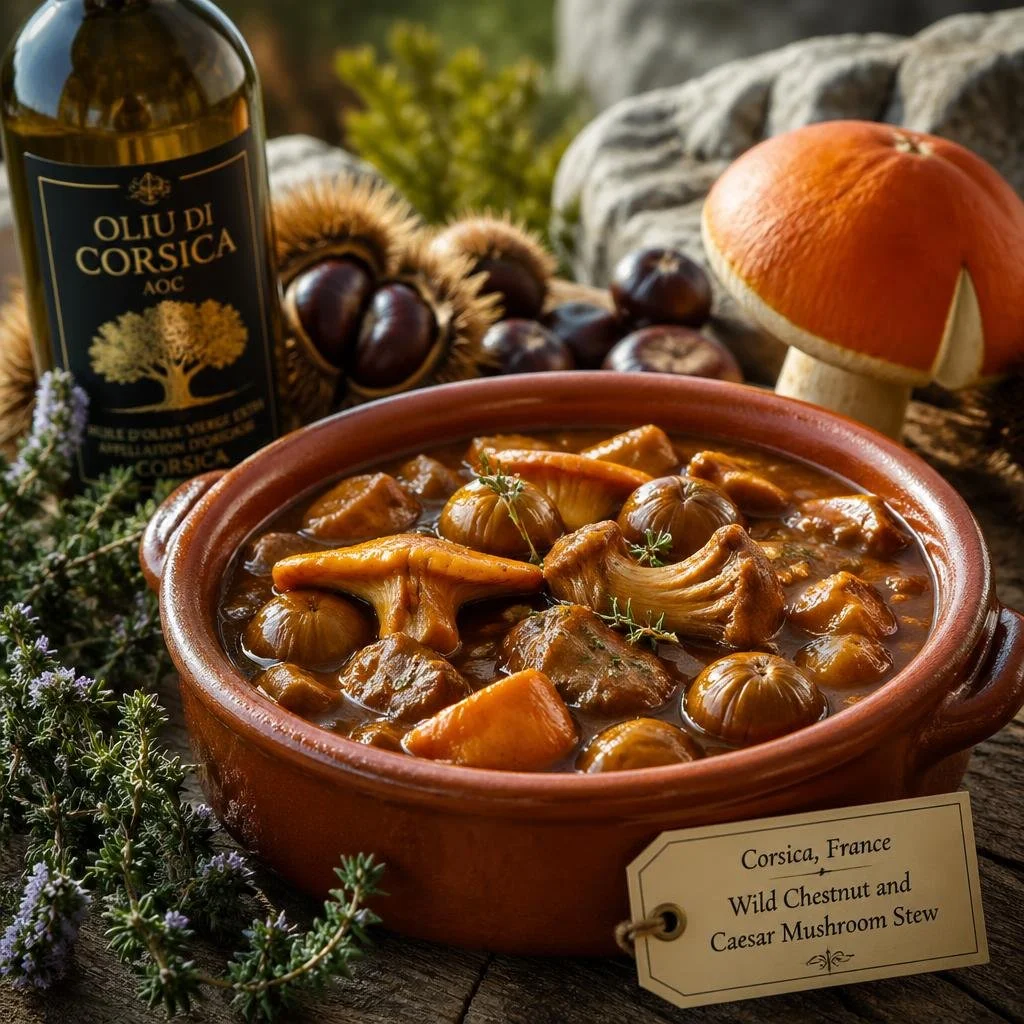
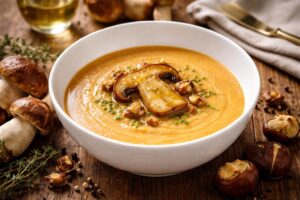
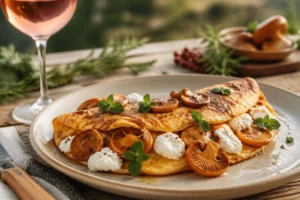
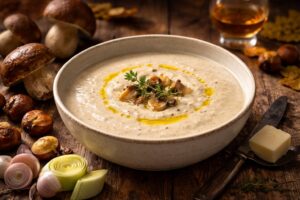
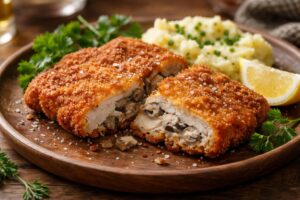
Experience the rugged, untamed luxury of Corsica with this Amanita caesarea stew, featuring the island's legendary wild chestnuts. A masterclass in woodland textural harmony.
Corsica Wild Chestnut and Caesar Mushroom Stew
Terroir Narrative
In the granite mountains of Corsica, the "Island of Beauty," the Amanita caesarea shares its habitat with the majestic Castanea sativa (Sweet Chestnut). Historically, the chestnut was known as the "bread tree" of the island, and this stew represents the pinnacle of Corsican autumnal sustenance. This dish is a dialogue between two giants of the Maquis—the resinous, wild shrubland of the island. It is a hearty yet sophisticated preparation that reflects the resilient and aristocratic spirit of Corsican mountain gastronomy.
The Culinary Physics of This Dish
The technical core of this stew is Polysaccharide Integration. Chestnuts are unique among nuts for their high starch content and low fat. During the slow-cooking process at 94°C, the chestnut starches gelatinize, acting as a natural thickening agent for the stew's base. When the Amanita caesarea is introduced, its own complex sugars (mannitol and trehalose) bind with the chestnut starch. This creates a dense, luxurious mouthfeel without the need for flour or cream, while the chestnuts provide a structural "crunch" that contrasts with the mushroom's velvet-like tissue.
Quick Info Bar
Prep Time
25 Minutes
Cook Time
35 Minutes
Complexity
Grand Officier
Calories
320 kcal
Region
Corsica, France
Master Recipe (1:10 Rule)
500g Amanita caesarea (Large caps, quartered)
200g Wild Corsican Chestnuts (Peeled and roasted)
60ml Extra Virgin Olive Oil (Corsican Oliu di Corsica AOC)
150ml Wild Boar or Beef Consommé (Light)
1 Sprig of Nepitella (Corsican wild calamint)
5g Sea Salt (Etang de Biguglia)
The Technique (Technical Steps)
Chestnut Preparation: Score the chestnuts and roast at 200°C for 15 minutes. Peel while warm and set aside.
Base Aromatics: In a heavy terracotta pot, heat the olive oil and lightly sauté the roasted chestnuts for 5 minutes to release their nutty oils.
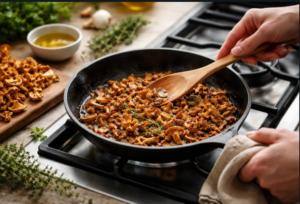
Mushroom Introduction: Add the Caesar mushrooms to the pot. Sauté for 3 minutes until they begin to release their juices.
The Slow Simmer: Pour in the consommé and add the Nepitella. Lower the heat to a minimum, cover, and let simmer for 25 minutes.
Emulsification: Remove the lid. Use a spoon to crush 3 or 4 chestnuts into the liquid to thicken the stew into a glossy, dark gold sauce.
"In Corsica, the forest does not give us food; it gives us a heritage of gold and chestnuts." — Corsican Mountain Forager
Shop Integration
The soul of a stew is the vessel. Explore our artisanal Corsican terracotta pots and precision roasting tools in the [Pure Umami Store].
The Umami Secret
Wild chestnuts contain guanylic acid, which acts as an umami multiplier when combined with the glutamates in Amanita caesarea. This synergy is particularly potent in a stew format, where the long cooking time allows the molecular chains to interlock, providing a savory depth that is rare in vegetable-based dishes.
Sommelier’s Choice
Pair this with a robust Corsican red wine, such as a Patrimonio AOC (Nielluccio grape). Its tannins and notes of red fruit and spice provide the perfect counterpoint to the earthy, starchy richness of the stew.
The Etymological Chronicle: The Spanish “Yema de Huevo”
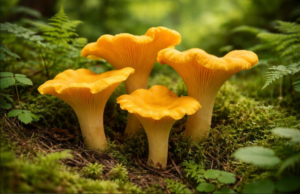
In the rural heart of Spain, particularly in the dehesas of Extremadura, Amanita caesarea is often colloquially known as the Yema de Huevo (Egg Yolk). This name is purely descriptive, bypasses the imperial Roman titles, and focuses on the mushroom's most striking feature: the brilliant, saturated yellow of its gills and stem. For the Spanish villager, the sight of a "Yema" breaking through the earth is a sign of nature's abundance. The name reflects a culinary intimacy; it treats the mushroom not as a distant royal, but as a familiar, high-protein gift from the soil, as essential and nourishing as a fresh farm egg.
To provide the best experiences, we use technologies like cookies to store and/or access device information. Consenting to these technologies will allow us to process data such as browsing behavior or unique IDs on this site. Not consenting or withdrawing consent, may adversely affect certain features and functions.
Functional
Always active
The technical storage or access is strictly necessary for the legitimate purpose of enabling the use of a specific service explicitly requested by the subscriber or user, or for the sole purpose of carrying out the transmission of a communication over an electronic communications network.
Preferences
The technical storage or access is necessary for the legitimate purpose of storing preferences that are not requested by the subscriber or user.
Statistics
The technical storage or access that is used exclusively for statistical purposes.The technical storage or access that is used exclusively for anonymous statistical purposes. Without a subpoena, voluntary compliance on the part of your Internet Service Provider, or additional records from a third party, information stored or retrieved for this purpose alone cannot usually be used to identify you.
Marketing
The technical storage or access is required to create user profiles to send advertising, or to track the user on a website or across several websites for similar marketing purposes.