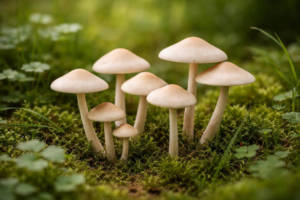
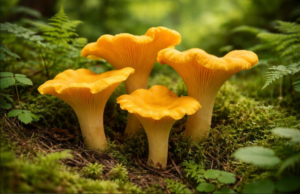
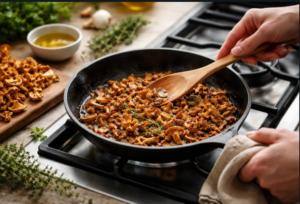
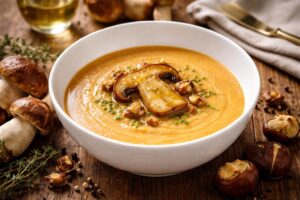
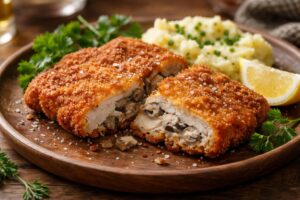
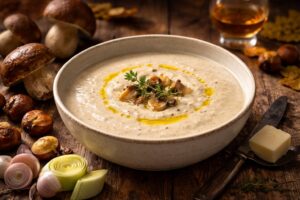
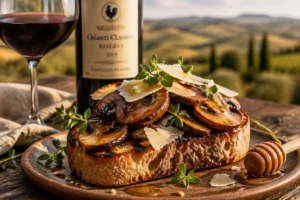
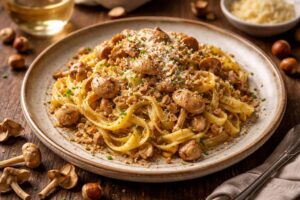
Master the ultimate autumnal pairing: Porcini and Chestnuts. A professional gourmet recipe for wild Boletus edulis and roasted chestnuts featuring a brown butter glaze and pure forest umami.
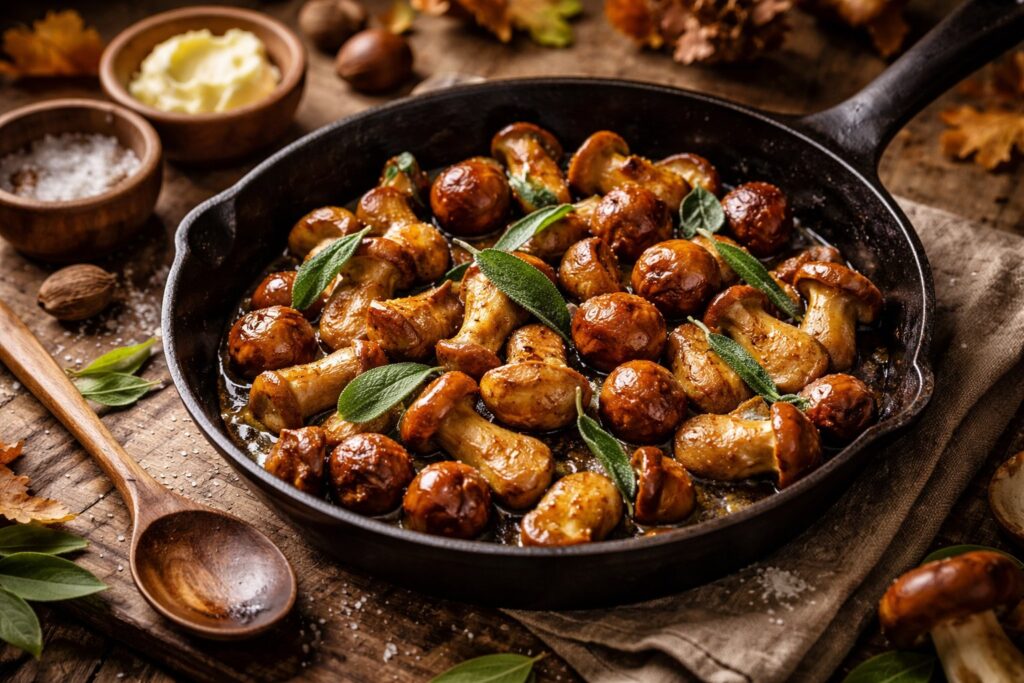
In the European Wilderness, certain species are destined to share the plate because they share the same soil. The Boletus edulis (Porcini) and the Sweet Chestnut (Castanea sativa) represent the ultimate seasonal transition. This culinary masterpiece leverages the shared "nutty" volatiles found in both the fungi and the fruit. By sautéing them together in a beurre noisette (brown butter), we create a bridge between the mushroom's savory pure umami and the chestnut's starchy sweetness.
This preparation is a tribute to the French-Alpine and Italian Piedmont traditions, where the cooling air of October signals the harvest of these two giants. It is a dish that feels like a warm blanket, defined by a palette of gold, ochre, and deep forest brown.
Sensory & Foraging Profiles: The Chestnut Floor
The Boletus edulis is often found in the "drip line" of old chestnut trees. The interaction between the tree's roots and the mycorrhizal network of the Porcini creates a flavor profile that is uniquely concentrated and floral.
Flavor Profile: The chestnuts provide a "floury" sweetness that acts as a canvas for the Porcini's bold, earth-driven complexity.
Ethical Harvesting: When foraging in the Pyrenees or Northern Italy, always leave a few chestnuts and the "over-mature" Porcini for the forest wildlife. This maintains the ecological balance of the European wilderness.
Essential Equipment
Heavy cast-iron skillet
Small paring knife (for scoring chestnuts)
Wooden spoon
The Master Recipe: Porcini & Chestnut Sauté
Ingredients
400g Fresh Boletus edulis (cut into chunks)
200g Fresh Chestnuts (roasted and peeled)
60g Cultured French Butter
1 sprig of Fresh Sage
1 small Shallot (minced)
A splash of dry Sherry or Madeira
Fleur de Sel & Freshly ground nutmeg
Culinary Steps
The Chestnut Roast: Score a cross on the flat side of each chestnut. Roast at 200°C for 20 minutes until the shells peel back. Peel while warm and set aside.
The Porcini Sear: In a hot skillet, sauté the Boletus edulis with a touch of oil. Avoid stirring for the first 2 minutes to develop a caramelized crust.
The Beurre Noisette: Add the butter and sage to the pan. Let the butter foam and turn a nutty brown color.
The Integration: Toss in the roasted chestnuts and minced shallot. Sauté for another 5 minutes, allowing the chestnuts to absorb the pure umami juices of the mushrooms.
The Deglaze: Add a splash of Sherry. The liquid will emulsify with the butter to form a thin, glossy glaze.
The Final Touch: Season with Fleur de Sel and a tiny grating of fresh nutmeg. Serve as a side to roasted poultry or as a standalone warm salad.
Substitutions & Variations
If fresh chestnuts are unavailable, high-quality vacuum-packed roasted chestnuts are a professional alternative. For a vegan version, use cold-pressed walnut oil instead of butter. To add a textural contrast, include a handful of toasted sourdough croutons at the final stage.
Pro Technique: The Sage Infusion
The secret to this culinary masterpiece is "frying" the sage in the butter until it is crisp. The sage oil infuses the butter, which then coats the Boletus edulis, cutting through the mushroom's richness with a sharp, herbal clarity.
The Umami Secret: Amylose-Glutamate Synergy
Chestnuts are unique among nuts for their high starch (amylose) content. When sautéed with Boletus edulis, this starch slightly breaks down and binds with the mushroom's free glutamates. This creates a "creamy" mouthfeel without any dairy, intensifying the perception of pure umami on the palate.
The Art of the Pairing
Pair with a Vin Jaune from the Jura or a structured Viognier. The wine's nutty, oxidative notes are a mirror for the dish. Non-alcoholic: A warm apple cider with a cinnamon stick.
Storage & Reheating
Best enjoyed immediately. To reheat: Use a pan over medium heat with a small knob of butter. Avoid the microwave, as it will make the wild-harvested mushrooms rubbery and the chestnuts dry.
Ancestral Nutrition
This dish is a powerhouse of Vitamin C (from the chestnuts) and Vitamin D (from the Porcini). In the European wilderness, this combination provided essential nutrients and slow-release carbohydrates to foragers preparing for the winter solstice.
Micro-FAQ
Q: Can I use the "green" sponge of the Porcini? A: For this sauté, it is best to use firm, white pores. If they are yellow, remove them, as they can become too soft and "slime" the chestnuts.
Q: Why nutmeg? A: Nutmeg is the "secret" spice of the French-Alpine tradition; it bridges the gap between the sweetness of the chestnut and the earthiness of the Boletus edulis.
Q: Should I boil the chestnuts first? A: Roasting is superior for this recipe as it develops the sugars and maintains a firmer texture for the sauté.
To provide the best experiences, we use technologies like cookies to store and/or access device information. Consenting to these technologies will allow us to process data such as browsing behavior or unique IDs on this site. Not consenting or withdrawing consent, may adversely affect certain features and functions.
Functional
Always active
The technical storage or access is strictly necessary for the legitimate purpose of enabling the use of a specific service explicitly requested by the subscriber or user, or for the sole purpose of carrying out the transmission of a communication over an electronic communications network.
Preferences
The technical storage or access is necessary for the legitimate purpose of storing preferences that are not requested by the subscriber or user.
Statistics
The technical storage or access that is used exclusively for statistical purposes.The technical storage or access that is used exclusively for anonymous statistical purposes. Without a subpoena, voluntary compliance on the part of your Internet Service Provider, or additional records from a third party, information stored or retrieved for this purpose alone cannot usually be used to identify you.
Marketing
The technical storage or access is required to create user profiles to send advertising, or to track the user on a website or across several websites for similar marketing purposes.